
Mountain gorillas dominate the conversation in southwestern Uganda. Fair enough. They are extraordinary animals, and for many travelers, the encounter becomes one of the defining memories of their lives.
But something quieter happens in Gorilla Hike Uganda itineraries when guests spend a morning with golden monkeys in Mgahinga. People come back laughing.
Not politely smiling. Laughing.
The mood is different from gorilla trekking. Less solemn. Less emotionally loaded. The forest feels lighter somehow.
Golden monkeys move in bursts, ricocheting through bamboo stems, hanging upside down for seconds at a time, then vanishing in flashes of orange and gold before reappearing above your head. You stop trying to photograph every moment because they move too fast. Eventually, you just watch.
That shift matters. Wildlife experiences are often marketed as monumental, transformative, almost spiritual events. Sometimes they are. Sometimes they are also allowed to be joyful.
Golden monkey trekking in Mgahinga sits in that second category.
Key Takeaways
- Golden monkeys are endemic to the Albertine Rift and, in Uganda, are only found in Mgahinga Gorilla National Park
. - The trek is generally easier and more playful than gorilla trekking, with fewer steep climbs and a faster-moving experience
. - Golden monkey permits currently cost around $100 for foreign non-residents, though Uganda Wildlife Authority tariffs occasionally change
. - Unlike gorilla trekking, golden monkey trekking has no strict minimum age of 15, making it more accessible for families
. - The experience combines exceptionally well with gorilla trekking, Lake Bunyonyi, or short safaris in southwestern Uganda
.
What Makes Golden Monkeys Different

Golden monkeys are often described as “the other primate trek” in Uganda. That undersells them badly.
These are rare Old World monkeys found only in the Virunga landscape spanning Uganda, Rwanda, and the DRC.
Scientifically classified as Cercopithecus kandti, they survive in a narrow ecological range tied closely to high-altitude bamboo forests. Habitat fragmentation remains a serious concern across the Albertine Rift.
And visually, they are startling.
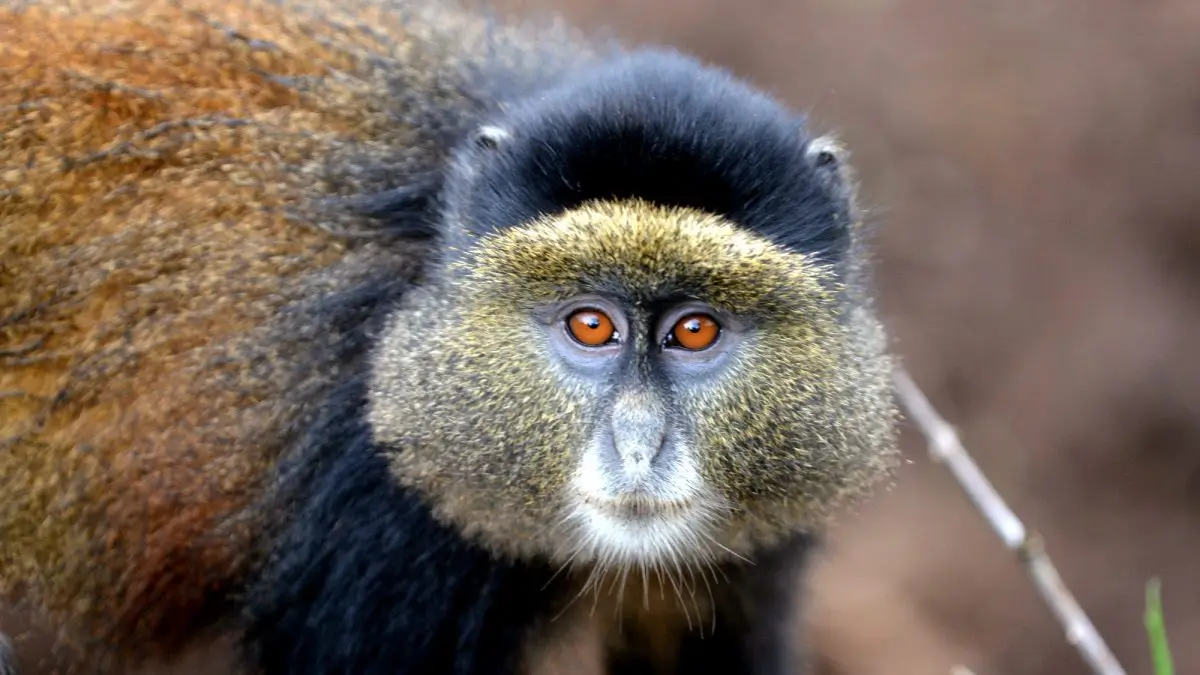
Bright golden-orange fur spills across their backs and flanks, contrasting against black limbs and expressive pale faces. In the filtered green light of Mgahinga’s bamboo zone, they almost look unreal.
Unlike gorillas, which often hold your attention through stillness and eye contact, golden monkeys pull you into motion. They are restless, social, and theatrical.
Juveniles chase each other through branches. Adults strip bamboo shoots with astonishing speed. Entire troops erupt into movement with no warning.
The atmosphere feels less like a wildlife documentary and more like controlled chaos.
If you have already read our guide on what a gorilla trekking experience actually feels like, the contrast becomes clear very quickly.
Where Golden Monkey Trekking Happens

In Uganda, golden monkey trekking takes place exclusively inside Mgahinga Gorilla National Park.
That detail matters because Mgahinga is often overshadowed by Bwindi. Travelers researching gorilla trekking tend to fixate on permit availability, gorilla families, or which Bwindi sector to choose. Meanwhile, Mgahinga quietly offers one of the most balanced primate experiences in East Africa.
The park sits within the larger Virunga Massif, shared with Rwanda’s Volcanoes National Park and Virunga National Park in Congo. Three volcanoes rise from the landscape here, creating steep forested slopes, bamboo belts, and mist-heavy montane terrain.
The bamboo forest is the key ecological detail.
Golden monkeys depend heavily on bamboo shoots and vegetation found in this zone. That means treks often happen in relatively open forest compared to the dense undergrowth of parts of Bwindi. Visibility can be surprisingly good.
For travelers wondering whether to choose Bwindi or Mgahinga for their gorilla trek, our comparison of Bwindi vs Mgahinga breaks down the differences more honestly than most generic safari blogs do.
What the Trek Actually Feels Like

Most treks begin early in the morning at the park headquarters near Ntebeko.
After a ranger briefing, groups head into the forest with guides and trackers who have already located the monkey troop. The pace is usually moderate. That word matters because safari marketing often lies about hiking difficulty.
Some operators call gorilla trekking “a simple forest walk.” Then, guests arrive exhausted and shocked after climbing muddy slopes for four hours.
Golden monkey trekking is genuinely easier for most people.
The terrain can still be slippery, especially during rainy months, and altitude affects some travelers. But compared to many gorilla treks, the hiking tends to be shorter and less physically punishing.
If you are concerned about fitness, our breakdown of how difficult gorilla trekking really is gives useful context for comparison.
Once the monkeys are found, the experience changes pace completely.
You are suddenly tracking movement in every direction. Above you. Beside you. Sometimes directly behind you. Rangers help point out individuals because your eyes initially struggle to process the speed and density of activity.
Photography becomes tricky. Gorilla trekking rewards patience and still framing. Golden monkeys force anticipation.
And honestly, many visitors fail to appreciate how technically difficult wildlife photography becomes when animals refuse to stay still for more than half a second.
The Strange Advantage of Being Less Famous

There is another reason many experienced travelers end up loving this trek.
Expectations are lower.
Gorilla trekking carries enormous emotional and financial weight. Visitors spend months planning around gorilla permits, comparing trekking costs, and debating Uganda versus Rwanda. By the time they arrive, the pressure to have a life-changing experience can become strangely intense.
Golden monkey trekking arrives without that burden.
It feels more spontaneous. More relaxed. You are not chasing a bucket-list badge. You are entering a living ecosystem and watching a species behave naturally in a habitat where it still belongs.
That subtle difference changes how people experience the forest.
Golden Monkey Permit Cost

As of current Uganda Wildlife Authority pricing, golden monkey trekking permits are generally around $100 per person for foreign non-residents, though rates vary for residents and East African citizens and can change with updated UWA tariffs.
Compared to gorilla permits, the cost is dramatically lower.
That affordability creates an interesting conservation question.
High gorilla permit prices often trigger criticism online. Some travelers see them as exclusionary or excessive. Others argue the pricing structure helps fund conservation while limiting pressure on habituated gorilla groups.
We unpack that tension more carefully in our article on why gorilla trekking costs so much.
Golden monkey trekking occupies a different space. The lower price makes the experience more accessible while still supporting park protection and local employment.
It also gives travelers who cannot justify an $800 gorilla permit a meaningful primate encounter in the Virungas.
That matters more than tourism marketing usually admits.
Can Children Do Golden Monkey Trekking

Yes. And this is one of the biggest differences between golden monkeys and gorillas.
Uganda’s gorilla trekking rules enforce a strict minimum age of 15 due to safety, behavioral unpredictability, and the physical demands of the trek. Our guide on gorilla trekking age restrictions explains why those rules exist.
Golden monkey trekking is more flexible.
Because the monkeys pose far less physical risk and the trekking conditions are generally easier, families with younger children often find this activity far more practical. Children also tend to connect with the fast movement and playful behavior immediately.
That said, parents should still think carefully about expectations. Wildlife experiences are unpredictable. Some children become fascinated. Others lose patience quickly once the novelty fades.
Good safari planning means understanding your own family honestly rather than forcing everyone through an itinerary designed for Instagram photos.
Combining Golden Monkeys and Gorilla Trekking

This is where Mgahinga becomes unusually efficient.
You can combine golden monkey trekking with gorilla trekking in the same park and avoid the logistical sprawl that sometimes complicates Bwindi itineraries.
For travelers entering through Rwanda, cross-border gorilla trekking from Kigali works especially well because Kisoro and Mgahinga are relatively accessible from Kigali International Airport. Many guests pair the activities over two or three days.
Some popular itinerary combinations include:
- 3-day Mgahinga gorilla trekking safaris
- Combined gorilla, golden monkey, and Lake Bunyonyi trips
- Short cross-border options like the 2-day trek from Kigali
Travelers with more time often combine primates with savannah parks through itineraries such as the 6-day Uganda safari or the broader gorilla and wildlife combinations that include Queen Elizabeth National Park.
What to Wear for the Trek

The same principles that apply to gorilla trekking apply here.
Wear long trousers. Bring waterproof hiking shoes with grip. Expect mud. Bamboo forests also hide stinging nettles surprisingly well, so gloves help more than many people realize.
Our practical guide on what to wear for gorilla trekking covers most of the same clothing logic needed for golden monkey tracking.
And yes, rain jackets matter even during drier months. Virunga weather changes quickly.
When to Go

Golden monkey trekking runs year-round, though conditions vary seasonally.
The drier months from June to September and December to February usually offer easier hiking and better photography conditions. Trails become less slippery, and visibility improves in the forest.
Still, the obsession with “best time” advice in safari marketing can become misleading.
Wet seasons have advantages, too. Forests become intensely green, visitor numbers drop, and the atmosphere feels wilder. Travelers willing to tolerate mud often end up having more intimate experiences because the parks feel quieter.
Our article on the best time for gorilla trekking explains these seasonal tradeoffs in more detail.
Conservation Questions Worth Asking

Tourism around charismatic wildlife often creates simplistic narratives. Visitors are encouraged to believe that every permit purchased directly “saves animals.”
Reality is more complicated.
Conservation success in the Virunga region depends on political stability, community relationships, ranger protection, land-use pressure, and long-term funding structures. Tourism contributes significantly, but it is only one piece of a fragile system.
Golden monkeys also receive less global attention than mountain gorillas despite living in similarly vulnerable ecosystems. That imbalance reflects how conservation storytelling often prioritizes emotionally iconic species over broader ecological health.
If you want deeper context, the International Gorilla Conservation Programme and Uganda Wildlife Authority provide useful information on regional conservation management and protected-area policy.
Planning Your Trip Properly

The biggest planning mistake travelers make is treating southwestern Uganda like a small, easily connected tourism zone.
Distances are longer than they appear online. Road conditions shift seasonally. Transfer times are routinely underestimated by generic travel sites.
Our guide on getting to Bwindi and Mgahinga explains the logistics more realistically.
Accommodation choice matters too. Staying in the wrong location can create exhausting transfer mornings before your trek. We cover that issue in our accommodation guide for the gorilla region.
And if you are still deciding whether the entire experience justifies the effort and cost, read our honest take on whether gorilla trekking is actually worth it. Too many safari articles assume the answer is automatically yes.
Thoughtful travel deserves more honesty than that.
FAQ
- How much does a golden monkey trek cost in Uganda?
Golden monkey trekking permits in Mgahinga are currently around $100 for foreign non-residents, though Uganda Wildlife Authority tariffs can change.
. - Is golden monkey trekking easier than gorilla trekking?
Usually, yes. The hikes are often shorter and less physically demanding, though terrain and weather still affect difficulty.
. - Can I combine golden monkey trekking with gorilla trekking?
Absolutely. Mgahinga is one of the best places in Uganda to combine both experiences efficiently within a short itinerary.
. - Are golden monkeys endangered?
Yes. Golden monkeys are restricted to the Virunga region and remain vulnerable due to habitat pressure and fragmentation.
. - Is there an age limit for golden monkey trekking?
Unlike gorilla trekking, which requires participants to be at least 15 years old, golden monkey trekking is generally more accessible for families with younger children.
.
If you are considering a primate safari in southwestern Uganda, we can help you build an itinerary that actually fits your pace, interests, and budget rather than forcing you into a generic template.
Start with our safari planning page or secure permits through our gorilla permit booking service.