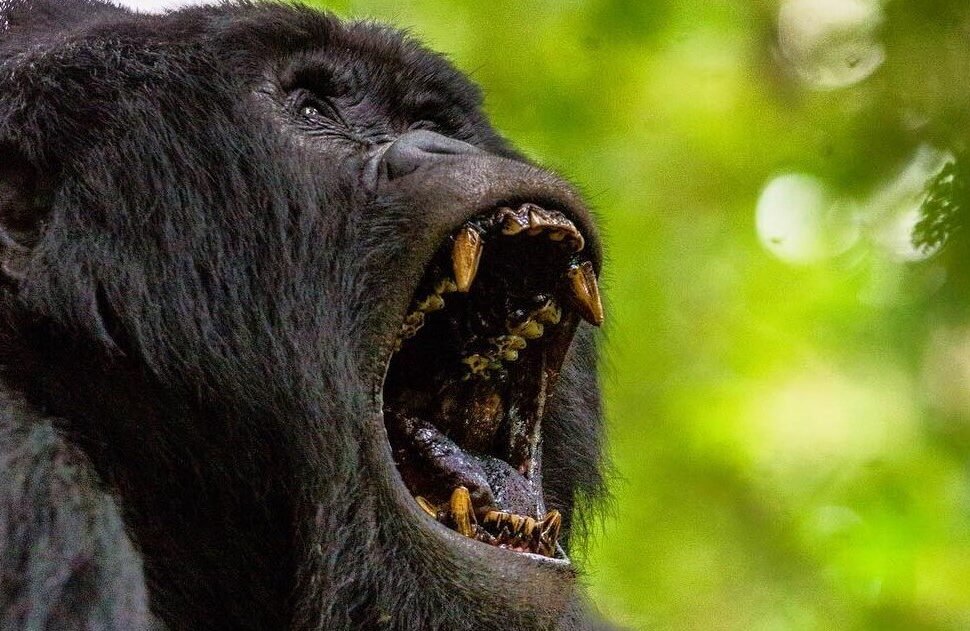


The sound arrives before the gorilla does.
First, a sharp bark echoes through the forest. Then leaves shake somewhere uphill. A low rumbling hoot follows. Suddenly, the silverback rises onto two legs and pounds his chest with cupped hands, the sound carrying through dense jungle like distant drums.
Most people interpret that moment as pure aggression.
They are usually wrong.
Chest beating is one of the most famous animal displays on Earth, yet it is also one of the most misunderstood. Gorillas are not mindless brutes announcing rage. In reality, chest beating is part of a surprisingly sophisticated communication system involving sound, posture, movement, hierarchy, warning, reassurance, and social control.
Sometimes it signals dominance. Sometimes excitement. Sometimes irritation. Occasionally, it prevents violence rather than causing it.
Understanding that difference changes how people experience gorillas in the wild. The behavior becomes less theatrical and more intelligent. More deliberate. More social.
And once you see it properly, the forest suddenly feels less silent than it first appeared.
Key Takeaways
- Gorilla chest beating is a communication behavior, not simply aggression
- Silverbacks use chest beats to signal strength, location, confidence, and social status
- Chest beating is often paired with vocalizations, branch breaking, and ground displays
- Gorillas frequently use displays to avoid physical conflict rather than start it
- Seeing natural gorilla behavior in the wild is one reason many travelers find trekking emotionally powerful
Why Gorillas Beat Their Chests

At its core, chest beating is communication.
A gorilla uses the sound to project information across a dense forest where visibility is limited. Rainforest terrain matters here. In thick vegetation, visual signals disappear quickly. Sound travels farther.
Researchers studying mountain gorillas found that chest beats can communicate body size, strength, confidence, and identity. Larger silverbacks often produce deeper resonant sounds because of their body structure and air sacs near the larynx.
In other words, a chest beat works partly like a biological announcement system.
The message can vary depending on context:
- “This group is occupied.”
- “I am stronger than you.”
- “Stay back.”
- “Pay attention.”
- “Follow me.”
- “I am agitated.”
- “I am excited.”
That complexity gets flattened in documentaries that frame every chest beat as an imminent attack. Real gorilla social behavior is subtler than that.
If you want a broader understanding of gorilla social life and intelligence, this guide to mountain gorilla behavior and biology adds useful context.
The Chest Beat Is Part of a Larger Display

A silverback rarely chest-beats in isolation.
The full display can unfold in stages, especially when tension rises between groups or when a silverback feels challenged. Primatologists sometimes describe sequences involving vocalizations, vegetation displays, bluff charges, and physical posturing.
One common pattern includes what researchers call the hoot-spit-roar sequence.
It begins with rhythmic hooting sounds. Then comes rapid vocalized exhalation, often described as spitting or coughing. Finally, the silverback may roar, rise upright, slap his chest, tear vegetation, and charge short distances while thumping the ground.
It looks explosive because it is designed to look explosive.
Yet physical fights between mature silverbacks are less common than people assume. Serious combat risks injury, and injury in the wild can become fatal. Displays often function as negotiation systems that prevent violence from escalating.
Humans do something similar socially, though in less dramatic ways. We posture. Raise voices. Signal confidence. Display status symbols.
Gorilla displays operate through comparable logic, just inside a rainforest hierarchy rather than a corporate office or political arena.
How Gorillas Actually Produce the Sound

Many people imagine gorillas punching themselves painfully in the chest.
That is not what happens.
Gorillas cup their hands while beating their chest, creating a hollow resonant sound rather than a blunt-force impact. The air sacs near their vocal system amplify the effect, helping the sound travel through the forest.
The rhythm matters too.
Some chest beats are brief and restrained. Others become rapid rolling bursts lasting several seconds. Researchers believe individual gorillas may even have recognizable chest-beat patterns.
That possibility changes the way you think about the forest soundscape. A trained ranger tracking gorillas in Bwindi or Mgahinga is not merely hearing noise. They are interpreting identity, mood, movement, and group dynamics.
During a real trek, guides often detect gorillas long before visitors see them.
That experience is described in more detail in this breakdown of the gorilla trekking experience in Uganda.
Chest Beating Does Not Always Mean Danger

This is where many travelers get confused.
A gorilla can chest-beat without being aggressive toward humans at all.
Young gorillas sometimes imitate adult displays while playing. Blackbacks, adolescent males not yet dominant enough to become silverbacks, often practice display behavior socially.
Adult silverbacks may chest-beat during moments of excitement, group coordination, or mild irritation rather than outright hostility.
Context matters enormously.
A calm silverback may chest-beat while moving his family through dense vegetation. Another may do it after noticing a distant rival group. A third may respond to human behavior that feels intrusive or unpredictable.
This is why trekking rules exist.
Visitors are instructed not to shout, run, point aggressively, or move erratically around gorillas. Respectful behavior reduces stress within the group and lowers the chance of defensive displays escalating.
If you are unsure how safe these encounters actually are, this detailed safety guide explains how ranger protocols work during treks.
Branch Breaking and Ground Thumping

Chest beating is only one part of the repertoire.
Silverbacks also communicate physically through branch breaking, vegetation throwing, ground slapping, and short bluff charges. These behaviors amplify presence. In dense rainforest, sound and movement carry social meaning.
Branch breaking deserves special attention because it is often misunderstood by tourists.
A silverback snapping vegetation may look enraged, but the behavior frequently serves as theatrical reinforcement. Think of it as punctuation within a broader communication display.
Ground thumping functions similarly. The vibration itself becomes part of the signal.
Importantly, gorillas are highly socially aware animals. They read responses from other gorillas constantly. Displays are interactive rather than random emotional outbursts.
That sophistication is one reason many travelers leave trekking with a very different perception of gorillas than the one they arrived with.
Why Gorilla Behavior Feels So Human

People often say gorillas seem human-like. That phrase can become vague and sentimental, but there is a concrete reason behind it.
Gorillas are deeply social primates with layered emotional behavior.
They discipline the young. Reconcile after tension. Show curiosity. Grieve. Protect vulnerable group members. Establish social boundaries. Communicate status. Use body language intentionally.
Chest beating belongs within that broader emotional and social framework.
The problem is that popular culture has trained generations to associate gorillas with violence. Films exaggerated aggression because aggression creates spectacle.
Even wildlife documentaries sometimes over-edit confrontational moments while ignoring the quieter reality of gorilla life, which often involves feeding, grooming, resting, and subtle social interaction.
Travelers expecting nonstop intensity are usually surprised by how calm gorillas actually are in the wild.
That contrast becomes clearer during longer encounters like the gorilla habituation experience in Bwindi, where visitors spend extended time observing gorilla behavior beyond the brief dramatic moments.
What Happens If a Gorilla Charges

This is one of the most searched questions online for obvious reasons.
Yes, gorillas can charge. But the meaning varies.
Many charges are bluff displays designed to intimidate rather than injure. A silverback may rush forward briefly, stop suddenly, vocalize loudly, slap vegetation, or veer sideways at the last second.
Still, the situation should never be treated casually.
Silverbacks are immensely strong animals capable of serious harm. Rangers carefully manage tourist positioning to reduce stress and maintain safe interaction distances. Visitors are expected to remain calm and follow instructions immediately.
If you want a more direct breakdown of what happens during these moments, this article on gorilla charge behavior explains the psychology and safety protocols involved.
Seeing Gorilla Communication in the Wild

Watching a silverback chest-beat inside a rainforest feels very different from watching a video online.
The sound is physical. You feel it in your chest before your brain fully processes it. Then silence returns almost instantly, broken only by insects and dripping leaves.
That sensory experience is part of why gorilla trekking resonates so strongly with people.
Not because the moment feels dangerous, though sometimes it can feel intense. The deeper impact comes from recognizing intelligence and awareness in another species so clearly.
For many travelers, that realization changes the entire trip.
A trek through Bwindi Impenetrable Forest or Mgahinga Gorilla National Park stops feeling like wildlife entertainment and starts feeling like an entry into another social world operating alongside our own.
That distinction matters ethically.
Responsible trekking should never reduce gorillas to photo subjects performing for tourists. The best guides actively slow visitors down and help them observe quieter behavior patterns that people normally miss.
Preparing to See Gorillas in Uganda

Travelers often spend weeks thinking about permits and logistics while overlooking the behavioral side of the experience.
That is understandable. Gorilla trekking requires planning.
Useful resources include:
- How gorilla permits work in Uganda
- How to secure a trekking permit
- Checking permit availability
- Finding last-minute permits
- Why gorilla trekking costs so much
Physical preparation matters too. The forests are steep, muddy, humid, and unpredictable.
These guides help travelers prepare realistically:
- How difficult gorilla trekking can be
- What to wear in the rainforest
- How long treks usually last
- The best seasons for trekking
Travelers comparing parks often find this comparison of Bwindi versus Mgahinga useful before choosing an itinerary.
Accommodation planning also shapes the experience more than people realize, especially because drive times between sectors can be long. This guide on where to stay near Bwindi breaks down the practical differences.
Understanding Gorilla Behavior Matters

Many wildlife experiences stay superficial.
People arrive, take photographs, leave, and retain only fragments of what they actually witnessed. Gorilla trekking can become that kind of tourism too if visitors approach it carelessly.
But understanding gorilla behavior changes the encounter.
A chest beat stops being a generic symbol of wildness and becomes communication with structure, context, and intention. You begin noticing the smaller interactions, too. The nervous juvenile. The patient female grooming nearby. The silverback quietly monitors the group while pretending not to.
The forest becomes socially alive.
That shift in perception may be the most valuable part of the entire experience.
FAQs
1. Why do gorillas beat their chests?
Gorillas beat their chests primarily to communicate. The behavior can signal dominance, excitement, location, strength, or social status, depending on context.
2. Do female gorillas beat their chests?
Yes, though far less dramatically than adult silverbacks. Younger gorillas and females sometimes perform smaller display behaviors during social interaction or play.
3. Does chest beating mean a gorilla is angry?
Not always. Chest beating can occur during excitement, group coordination, or low-level social tension without indicating an imminent attack.
4. What sounds do gorillas make besides chest beating?
Gorillas use hoots, grunts, roars, barks, screams, cough-like vocalizations, and vegetation displays to communicate within groups and across forest terrain.
5. Can tourists safely see chest-beating gorillas?
Yes, under guided conditions. Professional ranger teams monitor gorilla behavior closely during treks. This guide on what gorilla trekking actually involves explains how encounters are managed safely.
The famous chest beat endures because it feels primal and cinematic. Yet the deeper truth is more interesting than the stereotype.
A gorilla beating its chest is communicating with precision inside a complex social world. The behavior carries meaning. Context. Strategy. Sometimes a warning. Sometimes reassurance.
Seeing that behavior in the wild changes how many people think about gorillas entirely.
If you are planning to experience mountain gorillas in Uganda, you can begin through the custom safari planning page or reserve permits directly through the gorilla permit booking page.