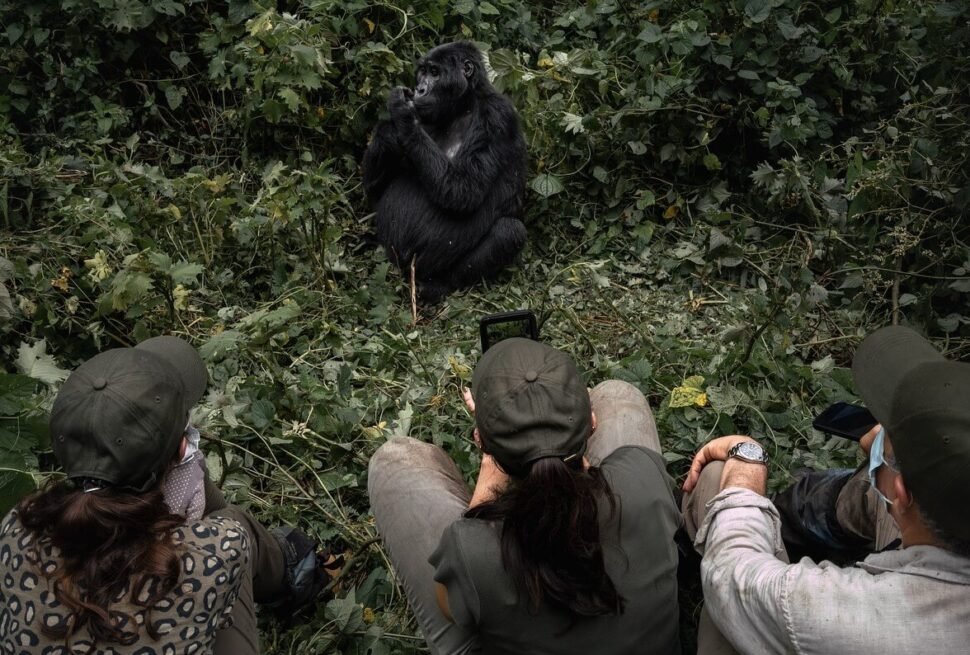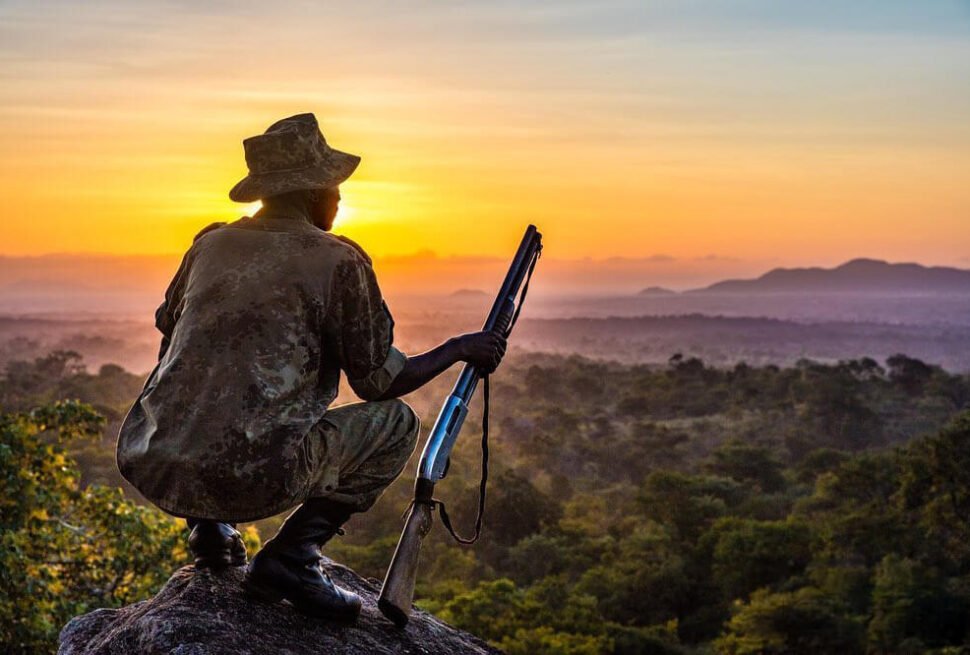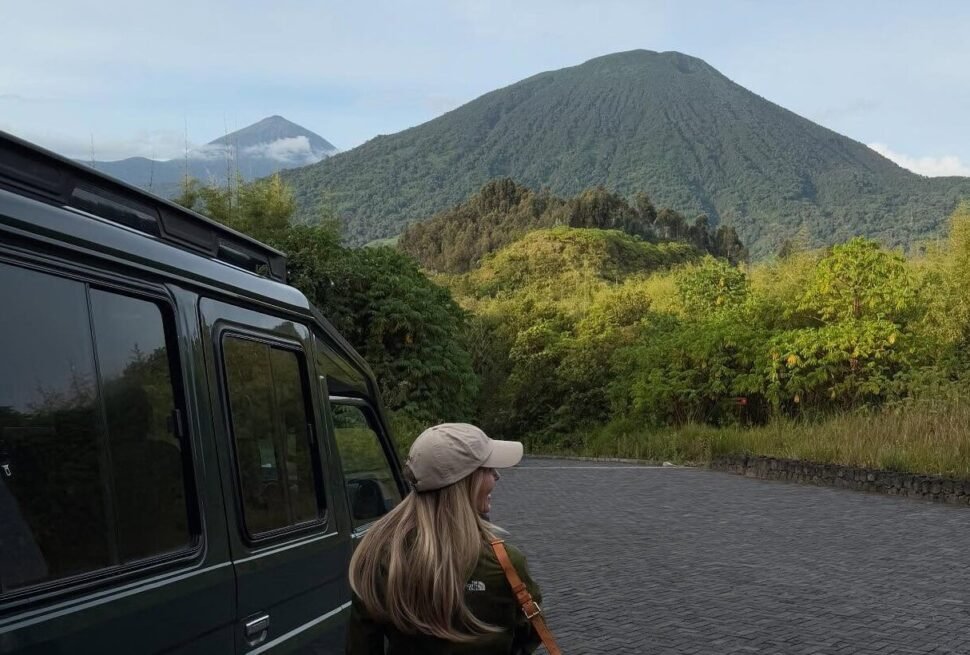

Your lodge choice for a gorilla trek matters more than it does for almost any other kind of travel. You need to sleep within a practical distance of your specific sector gate, because the trek briefing starts at 7:30 am and the gate is not always closed.
You need somewhere that feeds you a real breakfast before a potentially five-hour walk.
And you will return in the early afternoon carrying the specific weight of an extraordinary morning, and the quality of where you land afterwards shapes how the rest of that day feels.
The generic accommodation advice online for Bwindi is nearly useless. Lists of properties without sector context, price estimates that are years out of date, and lodge descriptions that could apply to any forest destination in Africa.
This guide does the opposite: specific properties, honest notes on what each actually offers, organised by the sector your permit places you in, and tiered across budget levels that reflect what real travellers spend.
One important framing note before the recommendations: Bwindi’s four sectors (Buhoma, Rushaga, Nkuringo, and Ruhija) are geographically separated across a large park.
Staying near the wrong sector gate is a genuine logistical problem, not a minor inconvenience.
The Bwindi sectors guide explains the differences across all four. Read that first if you have not yet confirmed which sector your permit falls in.
Key Takeaways
- Accommodation near Bwindi must match your assigned sector gate. Staying in Buhoma and trekking from Rushaga means a 90-minute drive before your 7:30 am briefing, which is avoidable with proper planning
. - Buhoma has the widest accommodation range across all budget tiers; Nkuringo skews toward the luxury end; Ruhija has the fewest options overall
. - Most lodges in the budget and mid-range tier include breakfast and dinner in their rates; confirm this at booking rather than assuming
. - Rates for lodges near Bwindi are quoted in US dollars and subject to seasonal adjustment; the figures in this guide reflect 2025/2026 rates but should be confirmed directly before booking
. - Your operator should recommend accommodation matched to your sector as part of the booking arrangement, not as an afterthought, after the permit is confirmed
.
A Note on How Bwindi Accommodation Works

Lodges near Bwindi do not sit inside the national park. They cluster in and around the communities adjacent to each sector gate:
- Buhoma village for the northwest sector
- Ruhija trading centre for the east
- Nkuringo ridge for the southwest
- Kisoro-area communities for Rushaga in the south.
Distance to the gate matters at every budget level.
A lodge that is 20 minutes from the gate is meaningfully better for a 6 am departure than one that is 45 minutes away, and the difference between arriving at the briefing rested versus arriving having navigated a mountain track in pre-dawn darkness is real.
When you assess any lodge’s position, ask specifically: how long is the drive to my sector gate, and what is the road condition between the lodge and the gate?
Most lodges in the mid-range and above include dinner and breakfast in their rates. Lunch is typically a packed meal arranged for trek day, included at some lodges and available to purchase at others.
Clarify the meal structure before you arrive, because the food options immediately adjacent to the sector gates are limited.
1. Buhoma Sector: The Widest Range
Buhoma has the most developed accommodation ecosystem of any Bwindi sector, reflecting its three-decade head start as the park’s primary gorilla trekking entry point.
You can spend $40 a night or $600 a night and find a genuinely appropriate option at both ends.
The sector gate sits in Buhoma village, surrounded by lodges at every tier, which means proximity to the briefing point is less of a logistical challenge here than at the other sectors.
a) Budget Accommodation at Buhoma
1. Buhoma Community Rest Camp

This is the oldest budget option in the sector and one of the most distinctive accommodation experiences near any Uganda national park.
Run by the Buhoma Community Trust, a community organisation established to distribute gorilla trekking benefits locally, the camp sits within walking distance of the sector gate and offers basic bandas (thatched cabins) with simple furnishings, shared or private bathroom options, and meals sourced largely from community gardens.
Rates run approximately $40 to $70 per person per night with meals. The facilities are basic. The hot water is reliable on a good day.
What the camp offers that no mid-range or luxury property can is a direct and transparent connection to the community benefit model that gorilla conservation depends on: your accommodation spend stays in Buhoma village rather than flowing to a Kampala-based lodge group.
For travellers who engaged seriously with the ethical case for gorilla trekking and want their money to work within that model, this is the most consistent choice in the sector.
2. Buhoma Haven Lodge

This is a simple, locally owned guesthouse on the edge of the village with private rooms, basic amenities, and a friendly atmosphere that several returning visitors specifically mention.
Rates are in a similar bracket to the Community Rest Camp. It lacks the community trust structure but offers a bit more comfort in the room.
Budget accommodation in Buhoma is not luxurious by any objective standard. The rooms are clean, the beds are functional, the showers work most of the time, and the food is filling and fresh.
What matters most at this tier is location and reliability, and both community-adjacent options in Buhoma deliver on those terms.
b) Mid-Range Accommodation at Buhoma
1. Broadbill Forest Camp

This is the most consistently recommended mid-range lodge in Buhoma and one of the better value properties near any Bwindi sector.
The camp takes its name from the African Green Broadbill, one of Bwindi’s most sought-after Albertine Rift endemics, which is visible from the camp in the early mornings.
The rooms are spacious, tented bandas set on elevated platforms in the forest, with en-suite bathrooms, hot water, and a central dining area with above-average food quality.
Rates run approximately $150 to $250 per person per night, full board.
The camp sits a short drive from the Buhoma gate. Guides at the camp can arrange forest walks and bird walks in addition to the gorilla trek, which matters for travellers spending more than one night in the sector.
Broadbill is the lodge that most operators in the mid-range bracket default to for Buhoma, and it earns that merit position.
2. Bwindi Lodge

Formerly operating under a related name in the Trekkers Tavern area, this sits adjacent to the park boundary with forest views from the veranda and an outdoor fire pit that becomes the social centre of the lodge on evenings when the temperatures drop.
Rooms are well-appointed by mid-range standards, with proper beds, reliable hot water, and a dining setup that handles the pre-trek breakfast efficiently. Rates are comparable to Broadbill.
3. Gorilla Resort Buhoma

This is a mid-range property that has attracted positive attention for its service quality relative to its price point.
The rooms are comfortable, the management is attentive, and the positioning near the village keeps access to the gate straightforward.
For solo travellers or couples who want a comfortable stay without the premium of the luxury tier, it is worth including in your comparison.
c) Luxury Accommodation at Buhoma
1. Sanctuary Gorilla Forest Camp

This is the flagship luxury property at Buhoma and one of the most celebrated eco-lodges in East Africa.
The camp sits directly on the forest boundary, with individual luxury tents elevated above the forest floor and the Bwindi canopy visible from the private deck of each tent.
The central lodge area has a full bar, a dining room with genuinely high-quality food, and a staff-to-guest ratio that produces the kind of attentive service most East African safari camps aspire to but few achieve consistently.
The camp arranges its own pre-trek briefings in coordination with UWA rangers and manages the morning logistics efficiently, which matters when your group includes guests with varying degrees of early-morning coherence.
Rates run approximately $500 to $800 per person per night, all-inclusive.
The premium is real, and so is the experience: the combination of the forest setting, the service quality, and the immediate proximity to the gate makes this the most seamless Buhoma gorilla trekking experience at any price point.
2. Mahogany Springs

This sits near Buhoma with mountain views and a design sensibility that leans toward the boutique rather than the traditional safari camp aesthetic.
The rooms are spacious and well-finished, the food is good, and the property has a quieter, more intimate atmosphere than Sanctuary’s larger footprint. Rates are in a similar bracket.
For travellers who want luxury without a large camp environment, Mahogany Springs is often the preferred alternative.
2. Rushaga Sector: Best Value Range in the South
Rushaga’s accommodation ecosystem has grown significantly in recent years as the sector has become the primary entry point for travellers arriving via Kigali and the Rwanda border crossing.
The range is not as wide as Buhoma’s, but it covers the essential tiers, and the proximity of Kisoro town (approximately 15 kilometres from the Rushaga gate) provides a practical backup option if sector-adjacent properties are fully booked.
For the full picture on why Rushaga is Uganda’s most permit-flexible sector and the home of the Gorilla Habituation Experience, the Bwindi sector breakdown covers it in detail.
a) Budget Accommodation at Rushaga
Rushaga Gorilla Camp

This is the most established budget option in the sector, run by a local family with a long connection to the park.
The accommodation is basic: simple rooms with private bathrooms, reliable meals, and an atmosphere that is more guesthouse than lodge.
What it offers is the right location, a short drive from the Rushaga gate, and a price point (approximately $50 to $80 per person with meals) that makes the economics of the trek more manageable when the permit itself costs $800.
Kisoro town, accessible from Rushaga in about 30 minutes on a paved road, offers additional budget guesthouse options for those comfortable with the early morning drive to the gate.
The town has a modest range of locally run guesthouses at $20 to $40 per room, which are functional if unglamorous.
For budget travellers whose primary expense is the permit, this approach keeps the accommodation line of the full gorilla trekking cost breakdown as low as possible.
b) Mid-Range Accommodation at Rushaga
1. Gorilla Heights Lodge

This is the standout mid-range property in the Rushaga area and has built a strong reputation among operators who regularly route trekkers through the southern sector.
The lodge sits on elevated ground with views across the surrounding hills, and the rooms, a combination of cottages and bandas, are among the most comfortable in this price bracket near any southern sector.
Full board rates run approximately $180 to $280 per person per night.
The lodge is particularly well-suited to travellers arriving via the Kigali entry route, because the morning logistics from the lodge to the Rushaga gate are efficient and the staff are familiar with early departure schedules.
For the 2-day Bwindi trek from Kigali, Gorilla Heights is a natural fit.
2. Rushaga Gorilla Havana Lodge

This is a mid-range option that has attracted positive reviews for its food quality, which is a specific and meaningful thing to be known for in a sector where the pre-trek breakfast and post-trek lunch matter considerably.
Rooms are comfortable and well-maintained. Rates are comparable to Gorilla Heights.
c) Luxury Accommodation at Rushaga
Ichumbi Gorilla Lodge

This is Rushaga’s most upmarket option and has positioned itself as a genuine luxury property rather than a mid-range lodge with premium pricing.
The rooms are spacious and designed with care, the views across the valley toward the forest are excellent, and the full-board service level is consistent with what serious luxury travellers expect.
Rates run approximately $350 to $500 per person per night.
For those booking the Gorilla Habituation Experience, which requires multiple nights in the Rushaga area and a permit cost of $1,500, a property at this level provides a logical accommodation complement to the overall trip investment.
The combination of the GHEX permit and Ichumbi’s rates makes the three-day habituation safari one of the most expensive but most distinctive gorilla experiences available globally.
3. Nkuringo Sector: Limited Options, One Exceptional Property
Nkuringo’s accommodation landscape is the most constrained of any Bwindi sector, largely because the access road’s difficulty and the sector’s physical demands have limited the development of mid-range properties that would attract a broad range of travellers.
What exists is limited in volume but specific in quality at the top end.
The physical character of the Nkuringo trek, including the steep return ascent to the ridge gate, is an important context for accommodation choice here.
The how hard gorilla trekking is post addresses this sector’s difficulty directly; the best time to go guide covers when the Nkuringo approach road is at its most and least challenging.
a) Mid-Range Accommodation at Nkuringo
Nkuringo Gorilla Camp

This occupies the ridge above the sector with views toward the Virunga volcanoes.
The camp is mid-range in price, approximately $150 to $220 per person full board, but the setting is genuinely spectacular: the volcanic panorama from the camp’s central area is the Nkuringo draw in full.
Rooms are simple but adequate, and the camp’s positioning close to the gate makes it the most practical non-luxury option in the sector.
For travellers whose budget does not extend to Clouds Mountain but who have specifically chosen Nkuringo for the escarpment views, Nkuringo Gorilla Camp delivers the landscape without the luxury rate.
b) Luxury Accommodation at Nkuringo
Clouds Mountain Gorilla Lodge

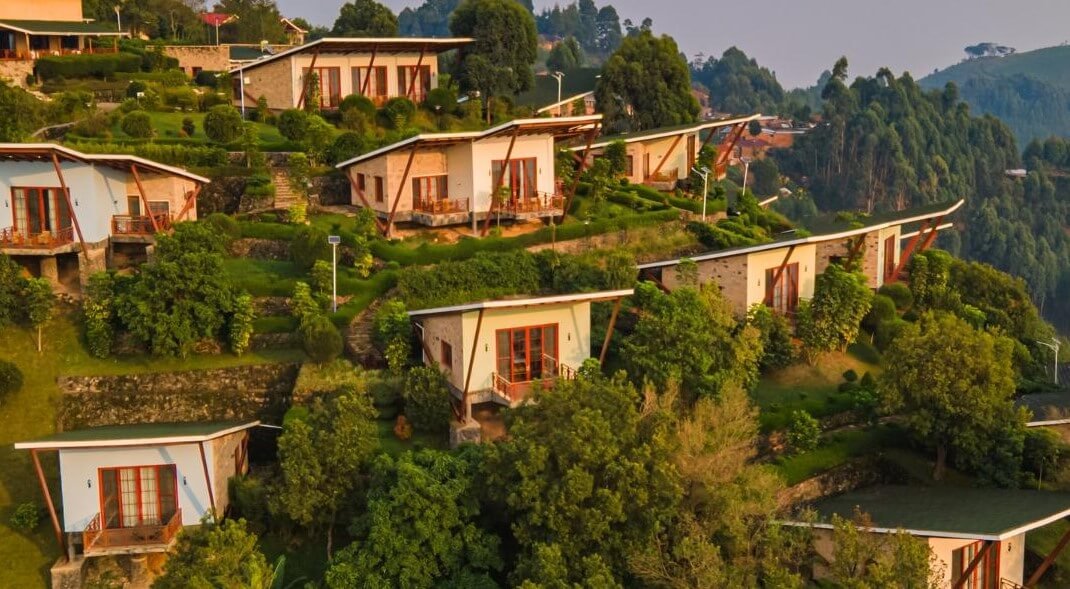
This is one of the most acclaimed eco-lodges in East Africa, and its setting on the Nkuringo ridge, with uninterrupted sightlines toward three Virunga volcanoes on one side and Bwindi’s forest canopy descending on the other, is among the finest lodge positions on the continent.
The lodge operates with a clear environmental philosophy: solar power, rainwater harvesting, locally sourced food, and an architecture that uses local materials to integrate into the ridge rather than impose on it.
The eight cottages are spacious, beautifully designed, and heated, which matters at the Nkuringo altitude on cold nights.
The dining is exceptional by any lodge standard, and the small group size, the lodge takes a maximum of 16 guests, creates an intimacy that larger properties cannot replicate.
Rates run approximately $450 to $700 per person per night, all-inclusive.
The premium is justified by the combination of design, setting, food quality, and the philosophical coherence of a property that takes its sustainability commitments seriously rather than using them as marketing language.
If the 3-day Bwindi and Lake Bunyonyi itinerary is your trip structure and Nkuringo is your sector, Clouds Mountain is the accommodation answer.
4. Ruhija Sector: Remote, Quiet, and Limited in Options
Ruhija’s accommodation situation reflects its status as Bwindi’s least visited sector.
The options are fewer, the properties are less polished in general than their Buhoma equivalents, and the access road to the sector means that staying anywhere other than properties immediately adjacent to Ruhija gate is logistically impractical for a 7:30 am briefing.
The upside of the limited accommodation is a consistent quietness that no other sector in Bwindi can guarantee. Ruhija at dawn, before anyone else is moving, is one of the most atmospheric environments in southwestern Uganda.
a) Budget and Mid-Range at Ruhija
1. Ruhija Gorilla Camp

This is the most established property near the Ruhija gate and operates at a mid-range price point of approximately $100 to $180 per person, full board.
Rooms are simple but comfortable, the staff are familiar with early trek departures, and the camp’s proximity to the gate is its most important practical feature.
The camp is the default accommodation recommendation for most operators routing trekkers to Ruhija, which it has earned by being reliable rather than remarkable.
2. Gorilla Mist Camp

It is a smaller property near Ruhija with a budget-to-mid-range positioning and a name that accurately describes what the early mornings look like when the altitude mist sits across the forest below. Rooms are basic; the setting is atmospheric.
For budget-conscious trekkers who have specifically chosen Ruhija for its solitude and availability during peak season, this camp offers the right combination of location and price.
The limited accommodation at Ruhija is a genuine planning constraint.
If your permit falls in this sector, confirm your accommodation early rather than treating it as something to sort out after the permit is secured.
Accommodation Near Mgahinga: A Note for Southern Uganda Travellers
For travellers whose permit falls at Mgahinga Gorilla National Park rather than Bwindi, Kisoro town serves as the natural base for both parks.
Properties in and around Kisoro accommodate trekkers heading to both the Rushaga sector in Bwindi and to Mgahinga’s Nyakagezi gorilla family.
Mount Gahinga Lodge

This is the premium option for Mgahinga trekkers, sitting within the park’s buffer zone with outstanding volcano views and a strong eco-lodge philosophy.
For travellers combining Mgahinga gorilla trekking with the golden monkey experience described in the Mgahinga trekking guide, or those doing the 5-day Mgahinga, golden monkeys and Lake Bunyonyi safari, Mount Gahinga is the natural luxury anchor for the itinerary.
Mid-range options in Kisoro town are adequate for a transit night but lack the forest atmosphere of properties closer to either park.
If the experience around the trek matters as much as the trek itself, positioning yourself in a property closer to the relevant gate is worth the extra effort to arrange.
Quick Reference by Sector and Budget
| Sector | Budget (~$40–$100 pp) | Mid-Range (~$150–$280 pp) | Luxury (~$350–$700 pp) |
|---|---|---|---|
| Buhoma | Buhoma Community Rest Camp, Buhoma Haven Lodge | Broadbill Forest Camp, Bwindi Lodge, Gorilla Resort | Sanctuary Gorilla Forest Camp, Mahogany Springs |
| Rushaga | Rushaga Gorilla Camp, Kisoro town guesthouses | Gorilla Heights Lodge, Rushaga Gorilla Havana Lodge | Ichumbi Gorilla Lodge |
| Nkuringo | Limited options | Nkuringo Gorilla Camp | Clouds Mountain Gorilla Lodge |
| Ruhija | Gorilla Mist Camp | Ruhija Gorilla Camp | None currently established |
| Mgahinga | Kisoro town guesthouses | Kisoro mid-range lodges | Mount Gahinga Lodge |
Rates are per person per night on a full-board basis unless otherwise noted and reflect 2025/2026 pricing.
Verify directly with properties or through your operator before booking, as lodge rates in Uganda adjust for seasonal demand and are occasionally revised.
What to Ask Before You Book

Generic lodge advice rarely covers the questions that actually determine whether your accommodation works for a gorilla trek. Before confirming any property, ask the following.
1. How far is the lodge from my sector gate, and what is the road condition between them?
A 20-minute drive on a paved road is different from a 20-minute drive on a steep, unpaved track in the dark. The specific road between your lodge and the gate matters more than the distance.
2. What time is breakfast served on trek day, and can it be ready by 6 am?
A full breakfast before a long trek is not a luxury. If your briefing is at 7:30 am and the lodge cannot serve breakfast before 7 am, you either eat inadequately or you are late.
3. Is accommodation full board, and what does that include?
Most properties quote full board but interpret it differently. Confirm whether dinner, breakfast, and lunch (or a packed lunch for trek day) are all included, and whether drinks are in the rate or charged separately.
4. Does the lodge provide packed lunches for the trek day?
You will likely return from the trek between noon and 3pm, hungry. Knowing in advance whether lunch is waiting at the lodge, available as a packed meal at the gate, or something you need to arrange separately avoids an unpleasant post-trek discovery.
5. Is there a vehicle for transfers to and from the gate?
At properties not within walking distance of the gate, confirm whether the lodge provides the transfer or whether you need to arrange this separately through your operator.
Booking Through an Operator vs Directly

Most gorilla trekking travellers book accommodation through their operator as part of a packaged arrangement.
This is almost always the more efficient approach for Bwindi, because a good operator:
- Matches accommodation to your confirmed sector rather than the other way around
- Knows which properties are consistently reliable across different budget tiers
- Can flag when a property’s quality has declined since a previous booking.
At Gorilla Hike Uganda, accommodation recommendations are sector-matched from the point of permit confirmation, not added afterwards.
If you want to understand the full cost structure, including accommodation across different budget tiers, the complete gorilla trekking cost breakdown covers every line item in detail.
According to the Uganda Tourism Board, accommodation investment near Bwindi’s sectors has grown substantially over the past decade, partly driven by permit revenue flowing into the local economy through UWA’s Revenue Sharing Programme.
Staying at locally owned or community-affiliated properties keeps more of that revenue in the communities directly adjacent to the park, which is worth factoring into your accommodation choice at any budget level.
Frequently Asked Questions

1. How close to the sector gate does my lodge need to be?
Close enough to reach the gate by 7:15 am without a stressful predawn drive on difficult roads.
In practical terms, this means staying within 30 to 45 minutes of your gate at most, with a preference for 20 minutes or under.
- At Buhoma, most lodges achieve this easily.
- At Nkuringo and Ruhija, the limited properties near the gate make this a non-issue if you are staying at the obvious sector options.
- At Rushaga, the lodges in the sector cluster around the gate correctly.
Kisoro town accommodation requires a 30-minute drive, which is manageable but worth factoring into your wake-up time
2. Can I stay in Kabale and drive to Bwindi on trek day?
Technically yes, but not advisably for most sectors.
Kabale is approximately 45 minutes from Ruhija gate on a rough road, 75 kilometres and 90 minutes from Buhoma, and a similar distance from the southern sectors.
Arriving at Buhoma from Kabale in time for a 7:30am briefing means leaving Kabale before 6am on an unpaved mountain road in the dark.
Most operators use Kabale as an overnight stop between the Kampala drive and the final sector approach, not as a base for the trek day itself.
3. Are the luxury lodges worth the premium for a one-night gorilla trekking stay?
For some travellers, yes.
The specific circumstances where the luxury premium earns its value are:
- When the lodge experience is as important as the trek itself
- When you are spending two or more nights in the sector, and the quality of the downtime matters
- When the property’s position offers something unique (Clouds Mountain’s volcanic view, Sanctuary’s forest edge setting)
- When the service infrastructure of a high-end property genuinely reduces the logistics stress of a demanding travel day.
For a single night whose primary purpose is proximity to the sector gate, the mid-range tier performs well enough that the luxury premium is a personal rather than a practical decision.
4. What is the best lodge for the Gorilla Habituation Experience?
For the GHEX at Rushaga, which involves multiple nights in the sector, Ichumbi Gorilla Lodge is the strongest accommodation match in terms of quality and position.
Gorilla Heights Lodge is the best mid-range alternative.
The habituation experience requires two nights in the Rushaga area (the trek itself is a full day, and the sector needs to be reached the evening before), so accommodation quality for the pre-and post-trek period matters more than it does for a standard one-night stopover.
The 3-day Gorilla Habituation safari builds accommodation into the overall arrangement.
5. Do I need to book accommodation separately from my gorilla permit?
You can, but it is more efficient to book through your operator as part of an integrated arrangement.
The operator:
- Confirm your sector from the permit
- Recommends accommodation matched to that sector and your budget
- Coordinates the logistics between the two.
Booking independently means managing the sector-accommodation match yourself, which requires knowing your sector before booking begins and confirming that the property you choose is actually close to your gate.
Operators with active Bwindi relationships know which properties are currently reliable and which have changed in quality since their last booking.
The right lodge for your gorilla trek is the one that sits in the right sector, at the right budget, with the pre-trek breakfast ready at the right time. Everything else is a bonus.
If you want accommodation built into your itinerary from the point of permit confirmation rather than sorted separately afterward, plan your full safari here and we will match the accommodation to your sector as the first step in the arrangement.