
In over three decades of regulated gorilla trekking across Uganda, Rwanda, and the DRC, no tourist has been killed by a mountain gorilla.
That is the statistical record. It is worth stating plainly at the outset, because the question of safety deserves a real answer before it deserves reassurance.
Here is the fuller picture: gorilla trekking involves hiking through dense tropical forest, sometimes for several hours, on terrain that is uneven, steep, and often wet.
The animals you are going to observe are wild, enormously strong, and capable of genuine aggression under specific conditions. The rangers who guide you are trained specifically to manage those conditions.
The rules governing every trekking encounter exist because careful people studied what goes wrong and designed a system to prevent it.
The question is not whether gorilla trekking carries any risk. It does.
The more useful question is what kind of risk, how well it is managed, and whether the incident record across millions of trekking visits supports the activity as genuinely safe for a prepared traveller. The answer to that question is yes, with the qualifications that follow.
Key Takeaways
- No tourist has been killed by a mountain gorilla in over three decades of regulated trekking; serious incidents are extremely rare
. - Gorillas are wild animals with genuine physical capabilities, and the rules governing trekking encounters exist specifically because of that reality, not despite it
. - The seven-metre minimum distance, the one-hour time limit, the mask requirement, and the prohibition on flash are not bureaucratic formalities — they are a considered incident-prevention system
. - The most statistically significant safety risk on a gorilla trekking trip is road travel, not the gorillas
. - Proper preparation, a reputable operator, and adherence to ranger instructions reduce the already low risk of a serious incident to something very close to negligible
.
What You Are Actually Walking Into

Start with the forest, because the gorillas are not the only variable in the safety equation.
Bwindi Impenetrable Forest is not a managed park trail. It is an ancient tropical forest with dense undergrowth, intermittent paths, root systems that rise above the ground at unexpected angles, and slopes that become genuinely slick in wet conditions.
The same is true of Mgahinga, where the volcanic terrain adds elevation and loose rock to the equation.
Twisted ankles are the most common trekking injury. They happen, particularly on the descent from steeper sections, and they happen to fit experienced hikers as well as first-timers.
Cuts and scrapes from pushing through vegetation are common enough to be unremarkable. Heat exhaustion is a risk on long treks in humid conditions.
None of these is a reason to avoid the experience, but they are reasons to treat the physical preparation and gear selection seriously rather than as afterthoughts.
The practical mitigations are straightforward. Sturdy, ankle-supporting waterproof boots are non-negotiable. Trekking poles help significantly on steep descents.
A porter carrying your day pack reduces the fatigue that produces bad footwork on the return journey. Adequate hydration throughout the trek matters more than most first-timers expect. These are not luxury considerations.
They are the difference between a trek that is physically demanding in an enjoyable way and one that produces an avoidable injury.
The Gorillas Themselves

Mountain gorillas are the largest living primates.
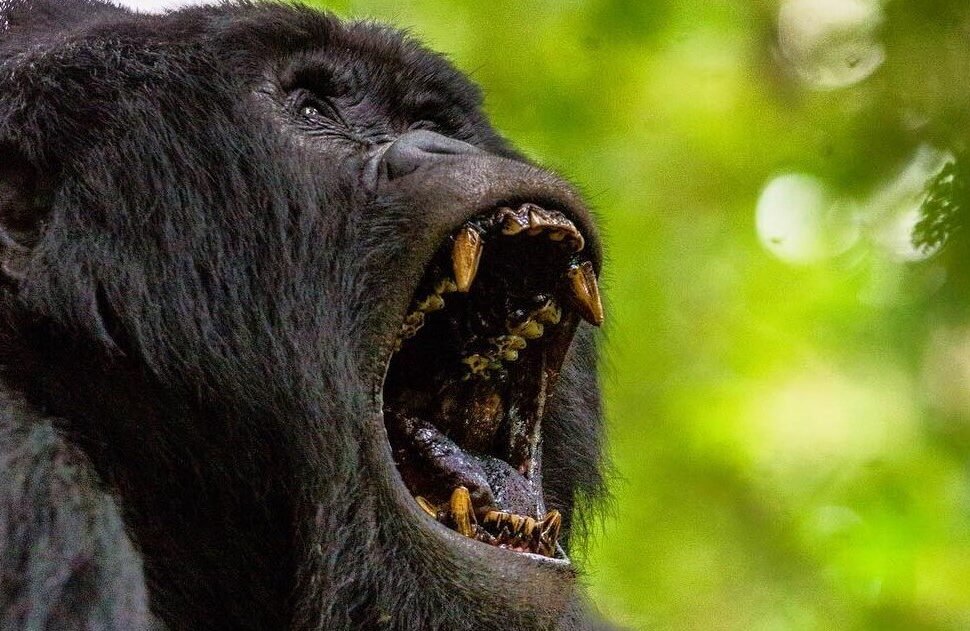
Adult male silverbacks weigh between 140 and 200 kilograms and have an upper body strength that researchers estimate at four to nine times that of an adult human male. They have large canine teeth, used primarily for threat display but capable of serious injury.
They are not dangerous in the way that predatory animals are dangerous, because they are not predators, but they are powerful, they are wild, and they are capable of aggression in specific circumstances.
Those circumstances matter, and they are predictable enough to be managed.
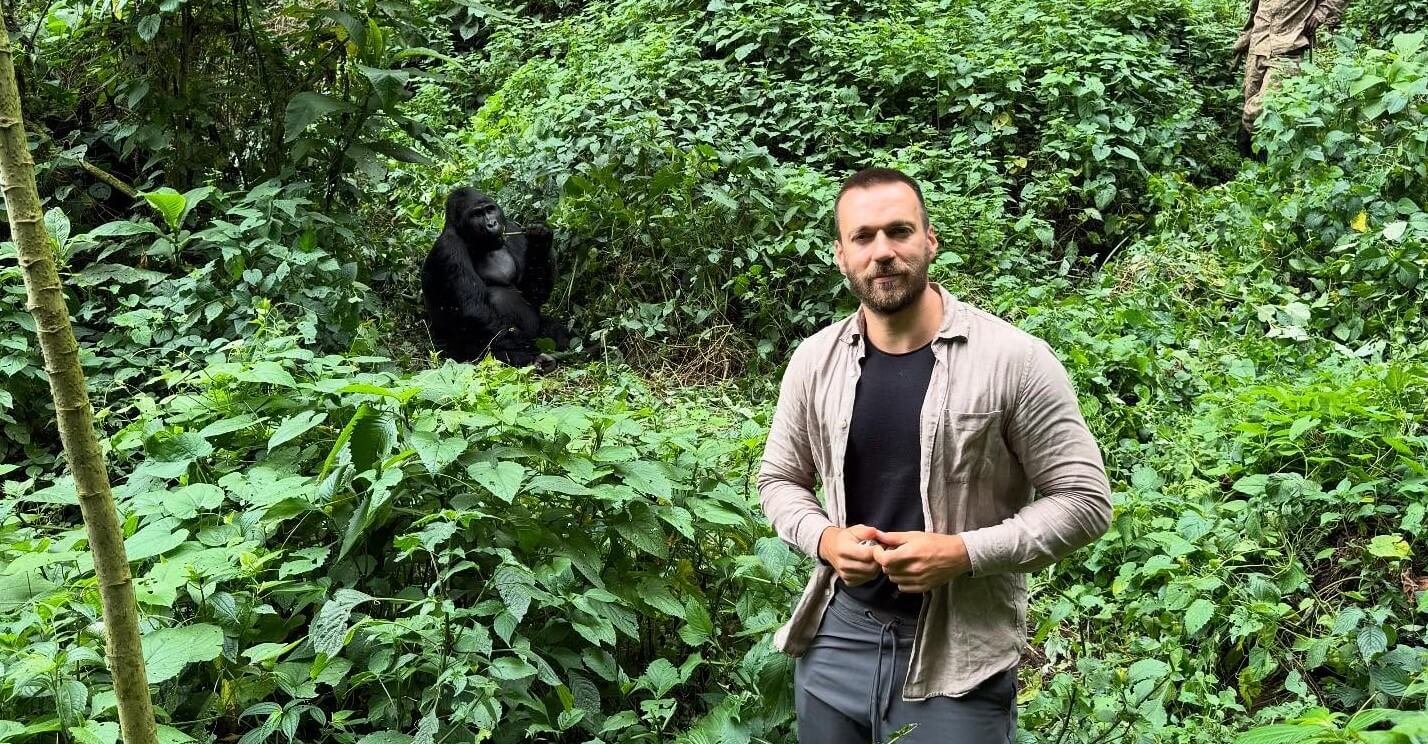
A habituated gorilla that is resting, feeding, or moving through its normal range in the presence of a small, quiet, compliant group of humans is not in a state of threat.
Habituation has, over years of careful exposure, produced animals that assess a calm group of eight people at seven metres as a known and non-threatening condition. This is the baseline state for the vast majority of gorilla trekking encounters.
The conditions that shift that baseline are also known. Sudden loud noise. Direct eye contact was held aggressively. Movement toward the animals rather than stillness when approached.
A sick trekker whose respiratory symptoms create unfamiliar smells. Flash photography, which startles. Separation of an infant from its mother by a trekker moving without ranger guidance. A group that is too large, too noisy, or too close.
The entire regulatory framework around gorilla trekking is designed to prevent these conditions from arising.
That framework is not theoretical. It is the product of decades of field experience, incident analysis, and behavioural research, and it works.
The Protective System in Detail

1. Habituation
The gorilla families accessible to tourists are habituated, meaning they have undergone a multi-year process of graduated human exposure until they reliably maintain normal behaviour in the presence of a small number of quiet observers.
A wild, unhabituated gorilla would react to human presence with fear or aggression.
A fully habituated gorilla has, in effect, incorporated the presence of the specific trekking protocol into its model of normal experience.
This does not mean habituated gorillas are tame, domesticated, or incapable of aggression. It means they have learned that a small, quiet group at a respectful distance is not a threat to them.
That learned tolerance is the foundation of safe trekking, and it is continuously maintained by daily monitoring visits from UWA rangers even on non-trekking days.
2. Ranger Guidance Throughout
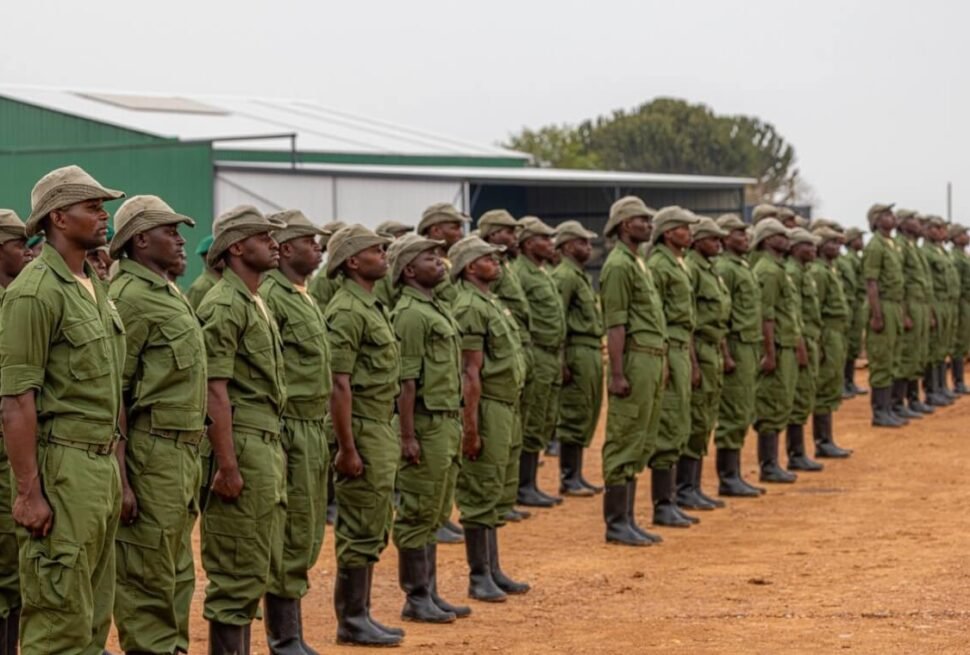
Every gorilla trekking group in Uganda is led by Uganda Wildlife Authority rangers. These are not tour guides who have attended a wildlife briefing.
They are park staff trained specifically in gorilla behaviour, conflict de-escalation, and emergency response in forest environments.
A typical trekking group has a lead ranger and at least one additional ranger, and in some sectors, armed escorts accompany the group through areas adjacent to the park boundary.
The rangers read the gorilla family’s mood in real time.
They position the group, manage distances, redirect trekkers when a family member moves unexpectedly close, and make the call to extend, shorten, or modify the encounter based on what the animals are communicating.
Their instructions during an encounter are not suggestions. Following them immediately and without negotiation is the most important safety behaviour a trekker can practise.
3. The Seven-Metre Rule
A minimum of seven metres between trekkers and gorillas must be maintained at all times. This distance is not arbitrary.
Researchers established it as the threshold at which human respiratory pathogens are significantly less likely to transmit to the gorillas, and at which the gorillas’ flight-or-fight assessment of human proximity typically remains in the tolerable range.
In practice, the gorillas do not enforce this from their side. Juveniles approach.
Silverbacks shift position. Mothers with infants move through the group’s space. When this happens, the rangers manage the trekkers’ position, not the gorillas’ movement.
You hold still, you crouch if instructed, and you let the animals decide when they are comfortable again. The seven metres is the baseline, not a guaranteed perimeter.
4. The One-Hour Limit
Sixty minutes from first clear visual contact. This rule protects the gorillas more than it protects the trekkers.
Extended human presence elevates the stress of habituated animals over time, and limiting the daily contact window is central to maintaining the quality of habituation across years and decades of trekking.
A family group that was over-exposed to human contact would gradually show behavioural changes that would compromise both the conservation model and the safety of future encounters.
Understanding this makes the one-hour limit feel different from a commercial constraint. It is a considered scientific boundary, and adhering to it is part of what makes the next group’s encounter as safe as yours.
5. The Mask Rule
Gorillas share approximately 98.3% of human DNA.
They have no acquired immunity to common human respiratory pathogens and are highly susceptible to the illnesses that most humans carry and recover from with minimal consequence.
A respiratory infection transmitted to a gorilla family can move through the group with serious effects on individuals, particularly infants and elderly members.
If you are unwell on the morning of your trek, UWA requires you to wear a face mask throughout the encounter. Rangers carry masks and enforce this without exception.
If your symptoms are severe, you should not trek at all, regardless of what your permit costs and how far you have travelled. This is not a rule that benefits from creative interpretation.
Responsible operators ask about trekker health the evening before and the morning of the trek. If you feel symptoms developing, disclose them.
The gorilla families’ health is part of the conservation system your permit is funding.
6. The Flash Prohibition
Flash photography startles habituated gorillas out of their settled state and can trigger a stress response that ends an encounter early or produces a charge.
The rule applies without exception to cameras, phones, and any other device with a flash function. Switch the flash off before you enter the forest. Check it again when the ranger briefs the group.
The cost of ignoring this rule falls not just on your group but on the gorilla family and every group that treks with them afterwards.
Has Anyone Ever Been Injured on a Gorilla Trek?

This question appears regularly in forums and Reddit threads, and it deserves a direct answer rather than evasion.
Incidents have occurred. Rangers and trackers, who spend far more time in close proximity to gorilla families than tourists do, have experienced charges and, in rare cases, physical contact with animals.
Tourists have experienced mock charges, where a silverback runs toward the group and stops short, a display rather than an attack, and have occasionally been knocked over or sustained minor injuries when a gorilla moved through a group unexpectedly close.
Serious injuries to tourists are extremely rare. There is no documented case of a tourist death caused by a gorilla in the regulated trekking programme across Uganda, Rwanda, and the non-conflict periods of the DRC.
The incident record across what is now well over a million individual trekking visits represents a safety profile that compares favourably with most adventure activities and with many mainstream travel experiences.
The 1999 incident at Bwindi’s Buhoma sector, in which tourists were killed by armed Interahamwe militia crossing from the DRC, is sometimes cited in discussions of gorilla trekking safety.
It is the most serious incident in Bwindi’s history, and it involved human violence, not gorillas. The security architecture around the park has been substantially strengthened since, and no comparable incident has occurred in the 25 years following.
Treating it as current intelligence about gorilla trekking safety requires a significant misreading of what happened and when.
The actual injury risk from gorillas is real in principle and statistically minimal in practice, particularly within the regulated trekking programme as it currently operates.
The Real Risk: Road Travel

Every honest discussion of safety on a gorilla trekking trip should include this, and most do not.
The most statistically significant risk for tourists visiting Bwindi is the road journey to and from the park. Uganda’s road accident rate is high.
The approach roads to Bwindi’s sectors, particularly Nkuringo and Ruhija, involve steep, unpaved terrain that requires experienced drivers in capable vehicles.
Night driving on mountain roads near the park is avoidable and should be avoided.
A professional driver-guide with specific experience on these routes, in a properly maintained 4WD vehicle, with a sensible itinerary that plans for daylight arrival at the lodge, is not a luxury consideration.
It is the most effective safety decision you make for the entire trip. The gorilla encounter has a robust protective system behind it. The road journey has the operator you booked with.
This is one of the more important reasons to book with a reputable, licensed Ugandan operator rather than attempting to self-arrange transport to the park.
The Is Uganda Safe page covers road safety and other country-specific considerations in full.
What a Gorilla Charge Actually Is

Given that charges are the scenario most trekkers fear and most travel writing sensationalises, a clear account is useful.
Gorillas charge. It is a normal part of the silverback threat display repertoire, used to assert dominance and communicate displeasure.
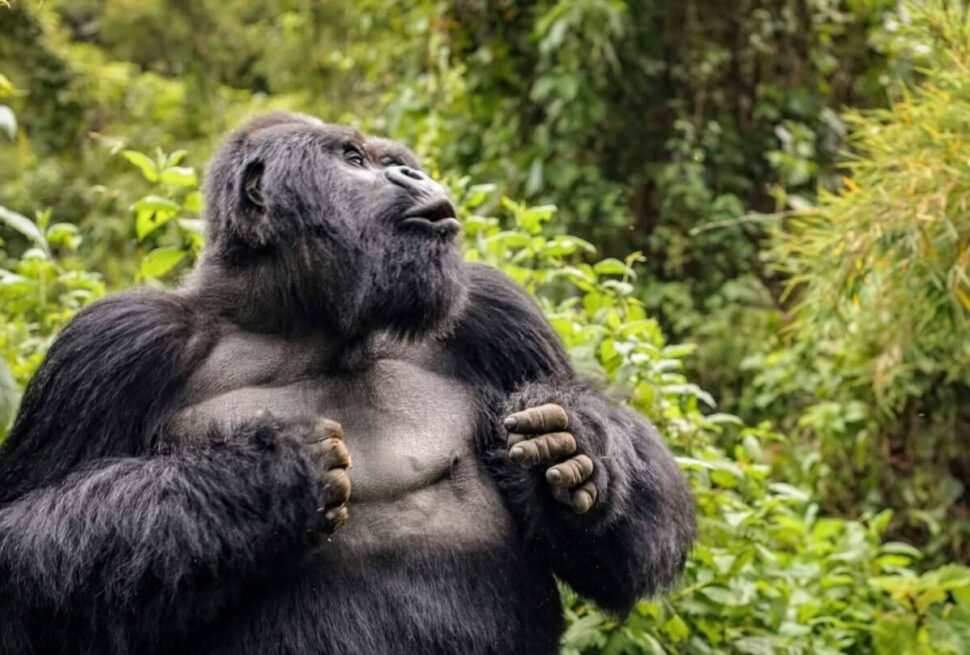
A full charge involves the silverback running bipedally toward the perceived threat, often accompanied by hooting, branch-breaking, and chest-beating, and typically stopping short of actual contact. The charge is a message, not an attack.
The difference between a mock charge and genuine aggression is something experienced rangers read in the preceding seconds of behaviour, which is why their instruction to crouch, look away, and stay still is the correct response even if every instinct is telling you otherwise.
Running triggers a pursuit response. Standing upright and making direct eye contact signals a challenge. Crouching and averting your gaze signals submission and non-threat, which is what the silverback is trying to establish.
Following the ranger’s instruction in those seconds is not optional safety advice. It is the behavioural response that ends the encounter without escalation.
Trekkers who have experienced mock charges report uniformly that the rangers’ calm management of the situation was the single factor that prevented panic, and that the charge itself, in retrospect, was one of the most intensely memorable parts of the experience.
That is not a reframe designed to make something frightening sound appealing. It is what people who have been through it consistently say.
The Ethical Dimension of Safety

There is a version of the gorilla trekking safety question that rarely gets asked, which is whether the trekking programme is safe for the gorillas.
The short answer, supported by the population recovery from approximately 620 individuals in the late 1980s to over 1,000 today, is that the regulated trekking model has been net positive for the species.
According to research published through the Dian Fossey Gorilla Fund, the combination of permit-revenue-funded protection, community engagement, and veterinary intervention has produced conservation outcomes that would have been impossible without the economic model that tourism provides.
The longer answer acknowledges real tensions. Disease transmission from humans to gorillas is a genuine ongoing risk. The stress of daily human presence on habituated families, even a well-managed presence, is measurable.
The habituation process itself changes gorilla behaviour in ways that increase vulnerability to human contact and poaching risk.
Researchers and conservationists continue to study these trade-offs.
The current consensus is that the benefits of the protection funding generated by tourism substantially outweigh the risks of managed human contact, particularly given the alternative, which is inadequately funded parks, reduced ranger presence, and habitat encroachment.
That consensus is not complacency. It is the product of ongoing monitoring and a willingness to adjust the trekking model when evidence requires it.
Who Should Think Carefully Before Booking
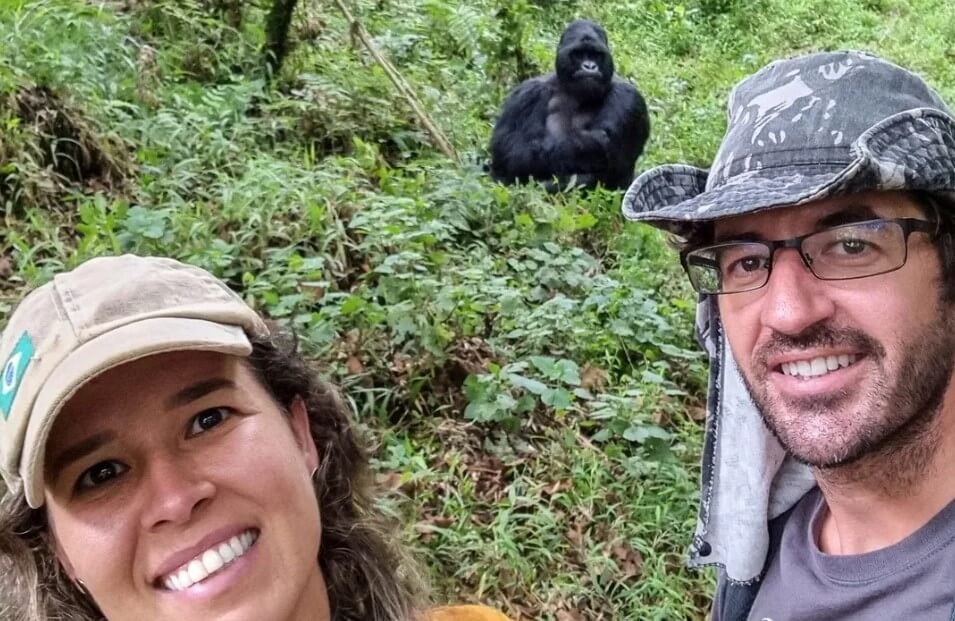
Gorilla trekking is appropriate for most healthy adults with a reasonable level of fitness and the willingness to follow ranger instructions precisely. It is not appropriate for everyone.
If you are currently ill with a respiratory infection, you should not trek. Postpone if you can; if your permits are non-refundable, discuss options with your operator, but do not trek while actively sick.
If you have significant mobility limitations, the terrain in some sectors will be genuinely problematic.
Buhoma is the most accessible sector in Bwindi, and porters are available and helpful, but some sections of every trek require physical agility that mobility aids cannot easily accommodate.
Discuss your specific situation with your operator before booking, rather than after.
If you are pregnant, consult your medical provider. The physical demands, the altitude at higher sectors, and the unpredictability of the terrain make trekking a decision that requires individual medical assessment rather than a general clearance.
Children under 15 are not permitted to trek. This is a UWA rule applied without exceptions, grounded in disease transmission risk and the behavioural unpredictability that younger children introduce into close-proximity wildlife encounters.
Preparing for the Safest Possible Trek

The following preparation is not excessive caution. It is the standard that experienced trekkers apply as a matter of course.
- Footwear. Waterproof hiking boots with ankle support. Not trail runners, not sandals, not anything without a proper sole that grips on wet root and mud.
This is the single most protective piece of equipment for avoiding the most common injury.
. - Clothing. Long trousers and long sleeves in neutral colours. The clothing protects against vegetation cuts, insect bites, and the temperature drop in higher sectors.
Avoid black, which attracts insects and can agitate gorillas.
. - Gloves. Lightweight gardening gloves for gripping vegetation on steep sections. Worth carrying even if you do not think you will need them.
. - Rain gear. A packable poncho or waterproof jacket.
Forest weather changes quickly, and wet clothing on the descent from a long trek is miserable in a way that good rain gear completely prevents.
. - Porter. Hire one. In every sector. The $20 to $30 cost is not the point.
The point is that a lighter body with free hands moves more safely on difficult terrain, and a porter who knows the forest adds a layer of practical knowledge to your experience beyond carrying your bag.
. - Health. Malaria prophylaxis, yellow fever vaccination (mandatory for Uganda entry), and adequate travel insurance with emergency medical evacuation cover are the non-negotiable health foundations.
The Uganda gorilla trekking permits page and the safety page cover health requirements in detail.
.

Frequently Asked Questions
1. Has anyone ever been attacked by a gorilla while trekking?
Minor incidents have occurred, typically involving unexpected close contact when a gorilla moves through a group rather than deliberate aggression.
Serious injuries to tourists from gorilla contact are extremely rare in the regulated trekking programme, and no tourist death caused by a gorilla has been documented across Uganda, Rwanda, and the DRC’s trekking history.
Rangers and trackers, who spend significantly more time in proximity to the animals, have experienced more frequent contact incidents, most of which are minor.
2. What should I do if a gorilla charges at me?
Crouch down. Look at the ground. Do not run, do not shout, and do not make direct eye contact. Stay completely still and let the ranger manage the encounter.
A gorilla charge is almost always a mock charge, a display of dominance that stops short of contact when the perceived threat does not escalate.
The ranger will have given you this instruction at the briefing. Internalising it before the encounter, so it is available under pressure, is more useful than reading it after.
3. Is gorilla trekking safe for older travellers?
Yes, for most older travellers in reasonable health. Age itself is not a disqualifying factor, and many experienced trekkers are in their 60s and 70s.
The relevant variables are cardiovascular fitness, joint stability, and the ability to navigate uneven terrain for two to four hours.
Sector selection matters: Buhoma is the most accessible in Bwindi. Porters significantly reduce physical demand. If you have specific health concerns, discuss them with both your doctor and your operator before booking.
4. Is gorilla trekking dangerous because of the DRC conflict nearby?
Bwindi’s trekking sectors are not in active conflict zones.
The security incident at Buhoma in 1999, which involved armed militia from the DRC, occurred 25 years ago under circumstances that no longer exist, and the security architecture around the park has been substantially reinforced since.
The western Uganda regions adjacent to the active DRC conflict carry separate travel advisories that do not overlap with the gorilla trekking areas.
Your operator monitors security conditions and would modify or cancel itineraries if a genuine current risk existed.
5. How do I know if my tour operator is running safe treks?
Licensed Ugandan tour operators are accredited by the Uganda Tourism Board and operate under UWA permit agreements that require compliance with trekking regulations.
A reputable operator uses professional drivers with specific experience on Bwindi’s approach roads, books accommodation close enough to the relevant sector gate to avoid pre-dawn or post-dusk mountain driving, briefs clients thoroughly the evening before the trek, and works only with UWA-registered ranger guides.
Questions worth asking any operator: what vehicle do they use, who drives, and what is their protocol if a client becomes ill the morning of the trek.

The record across thirty-plus years of regulated gorilla trekking is the most honest answer to the safety question: millions of visits, a robust protective system, and a statistical incident profile that makes the activity genuinely safe for prepared, instruction-following travellers.
If you are ready to plan a trek, we will build the right itinerary around your dates and fitness level.
If you have specific safety questions before committing, our FAQs or a direct conversation with our team will give you clearer answers than any forum thread.