
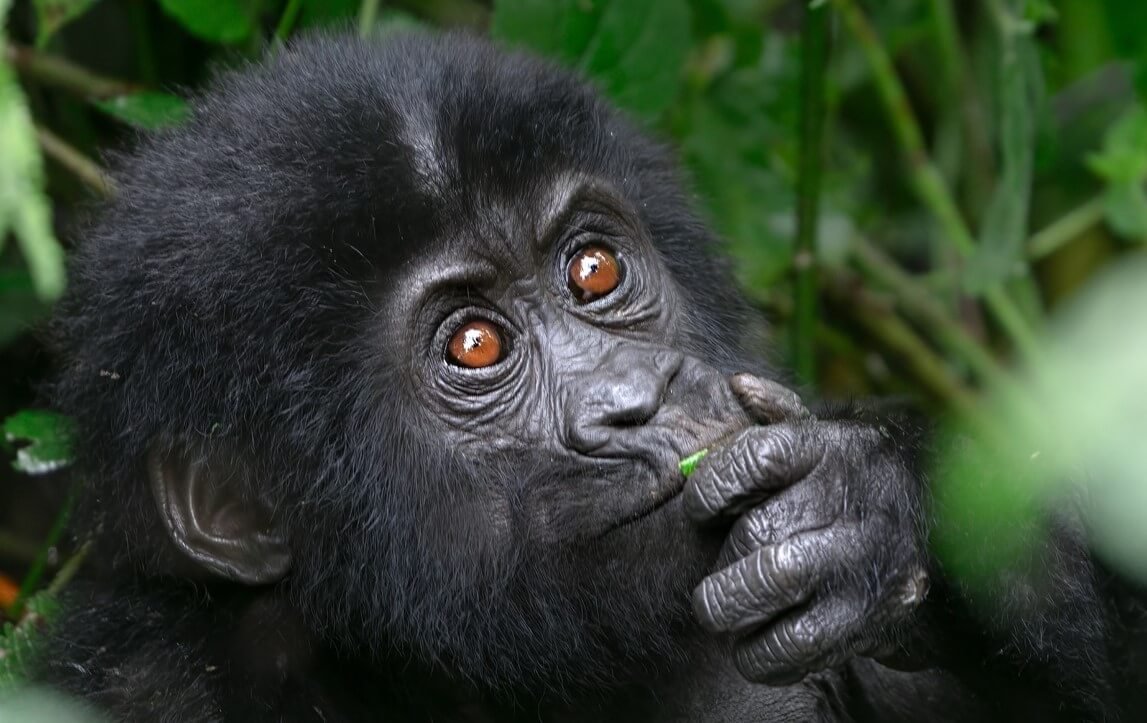
Fewer than 1,100 mountain gorillas remain on Earth. Roughly half of them live in one place: a 321-square-kilometre patch of ancient forest in southwestern Uganda called Bwindi Impenetrable National Park.
That concentration alone tells you something about the stakes here — and about why gorilla trekking in Bwindi draws travelers willing to budget $800 just for a single permit.
This guide covers everything: the four trekking sectors, the gorilla families you can track, what a trek day actually feels like, permit logistics, the best seasons, getting here from Kampala or Kigali, and how to build a broader Uganda safari around it.
Read it once, and you’ll plan with the confidence of someone who’s already been.

Key Takeaways
- Bwindi hosts over 20 habituated gorilla families across four distinct sectors, the largest concentration of trackable gorilla groups anywhere on Earth.
. - A Uganda gorilla permit costs $800 per person, compared to $1,500 in Rwanda. The same endangered mountain gorillas, at nearly half the price.
. - Permits sell out 3 to 6 months in advance during peak season (June to September, December to February). Book before you book your flights.
. - Gorilla trekking in Bwindi is possible year-round. The rainy season (March to May, October to November) brings emptier trails, lush scenery, and better lodge rates.
. - The trek is more than a wildlife sighting. It’s also a window into one of Africa’s most complex conservation stories: one involving a forest, a species, and the communities who lived here long before the park existed.
.
Why Bwindi Is in a Category of Its Own
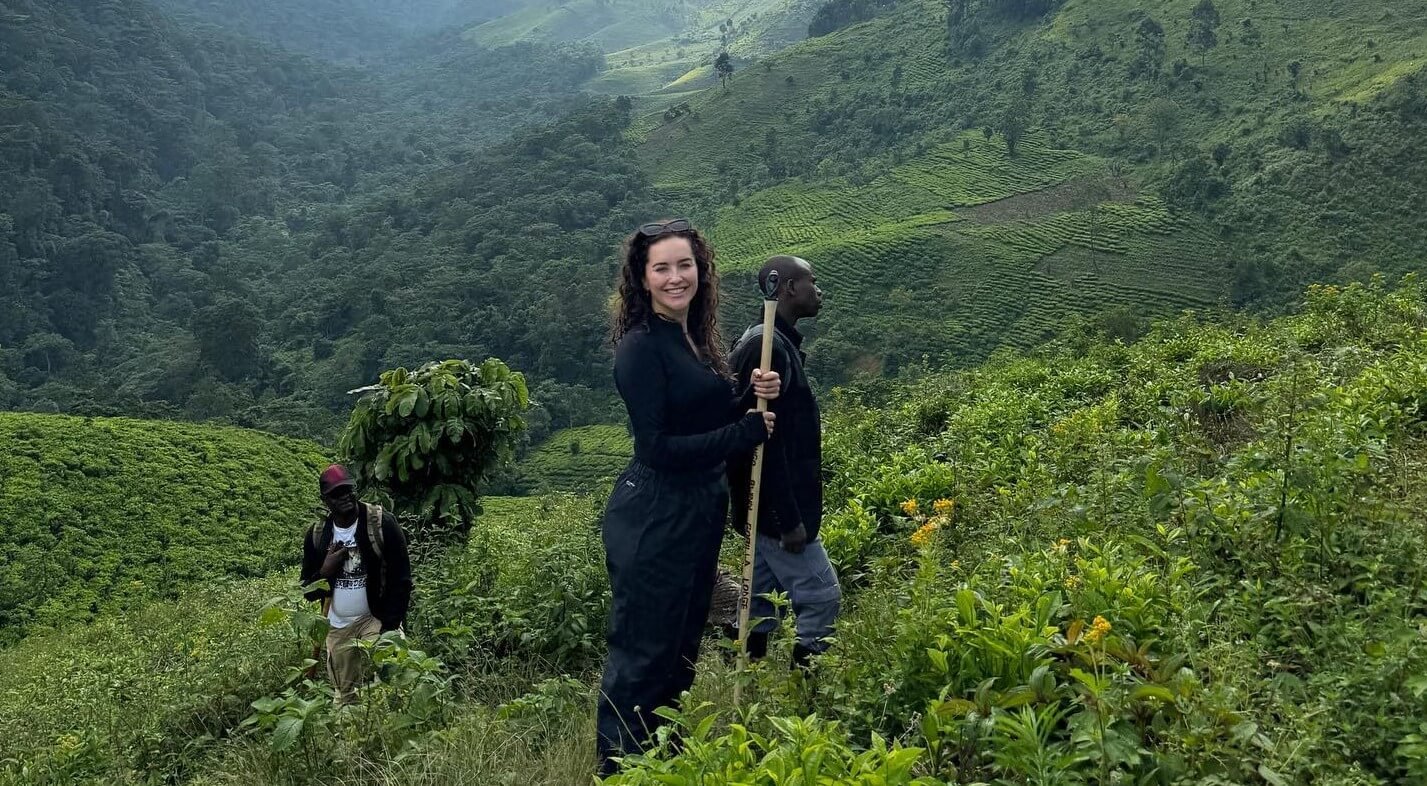
Most gorilla destinations offer one, maybe two habituated families. Bwindi has more than twenty.
That abundance is the product of decades of painstaking habituation work — a process where researchers and rangers spend months, sometimes years, exposing wild gorilla groups to a daily human presence until the animals become calm enough for visitors to approach safely.
Each family represents years of careful, unglamorous fieldwork.
Beyond the numbers, Bwindi is ecologically exceptional.
As a UNESCO World Heritage Site, the forest contains over 1,000 plant species, 120 mammal species, and more than 350 bird species — around 70 of which are Albertine Rift endemics found nowhere else on the continent.
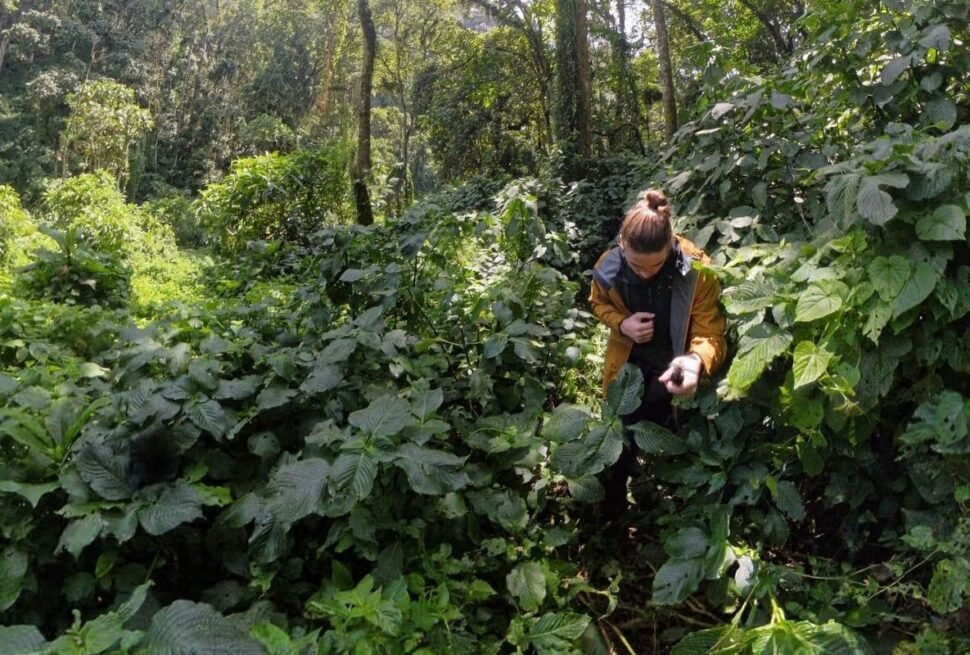
The name “impenetrable” isn’t metaphorical marketing; the canopy is genuinely dense enough in places that sunlight barely reaches the ground. Hiking through it feels nothing like a managed game reserve. It feels like entering something that existed long before humans had opinions about it.
There’s also a harder story worth knowing. The Batwa people — hunter-gatherers who inhabited Bwindi for centuries — were evicted from the forest in 1991 when it was gazetted as a national park.
They received no land in return and remain among Uganda’s most economically marginalized communities today.
A meaningful part of your permit fee flows into community revenue-sharing programs, and visiting a Batwa cultural village is increasingly part of many Bwindi itineraries.
Whether that exchange adequately addresses the displacement is a question that doesn’t have a clean answer, but it’s worth sitting with rather than glossing over.
The Four Sectors of Bwindi
Bwindi is divided into four trekking sectors, each with its own terrain, gorilla families, and visitor profile. Choosing the right one for your fitness level, schedule, and travel style matters more than most operators let on.
1. Buhoma

Located in the north, Buhoma is where gorilla trekking Bwindi began in 1993. It’s the most accessible sector — closest to Queen Elizabeth National Park and the most established in terms of lodge infrastructure.
Mubare, the first group ever habituated in Uganda, lives here, as do Habinyanja, Rushegura, Katwe, and Binyido families.
Trails are relatively moderate, and the sector fills up fastest during peak season. If you’re coming from Kampala and want a smoother entry into the forest, Buhoma is the natural starting point.
2. Ruhija

Ruhija sits at a higher elevation in the east of the park, cooler and quieter than its northern counterpart.
Four families trek here: Bitukura, Oruzogo, Kyaguriro, and Mukiza. Kyaguriro was reserved for research purposes for years before opening to tourism, which gives trekking there a slightly rawer quality.
Ruhija is also one of Uganda’s premier birding destinations, making it the right base for travelers who want gorillas in the morning and rare Albertine endemics in the afternoon.
3. Rushaga

The southern sector has the highest concentration of gorilla families in Bwindi — Nshongi, Mishaya, Bweza, Busingye, Kahungye, Mucunguzi, and Rwigi, among others.
It’s also the only sector offering the Gorilla Habituation Experience, which gives small groups up to four hours with a semi-habituated family instead of the standard one.
Rushaga is a solid option for travelers coming from Kigali via the Kisoro route, as the border crossing cuts the road journey to around four hours.
4. Nkuringo

The most physically demanding sector, and many experienced trekkers’ favorite.
Nkuringo sits on a high ridge with dramatic views over the Virunga volcanoes — on clear days, you can see into the DRC and Rwanda simultaneously. The terrain is steep enough that the sector is genuinely unsuitable for anyone with significant mobility limitations.
But for fit travelers willing to work for it, Nkuringo’s remoteness and the cinematic quality of the landscape make it feel like a different experience altogether.
The Christmas and Nkuringo gorilla families live here, along with the Posho group currently in habituation.
The Gorilla Families of Bwindi

Each of Bwindi’s habituated groups has a distinct personality, history, and internal dynamic — shaped by the silverback leading it, past splits and mergers, and the terrain each family tends to occupy.
1. Mubare (Buhoma)
This was Uganda’s first habituated group and carries a lineage stretching back to the very beginning of the country’s gorilla tourism program.
It’s a compact family that has weathered leadership changes and remained resilient — a good choice for first-time trekkers who want historical weight with their encounter.
2. Rushegura (Buhoma)
This one, which split from Habinyanja in 2002, is known for staying close to the lodge areas. Shorter hikes often result.
The group is also notable for a higher frequency of twin births, a rare occurrence in mountain gorillas that researchers continue to study.
3. Oruzogo (Ruhija)
This is one of the larger, more active families in the park. Infants, adolescents, and multiple silverbacks interact constantly, making it one of the most behaviourally rich encounters in Bwindi.
4. Nshongi (Rushaga)
This was once the largest group ever recorded in Bwindi — over 30 members. Several splits have reduced its size since, but it remains large by any standard, with scenic trekking routes that wind along forest streams.
5. Kahungye (Rushaga)
Known for its strong female presence and the number of nursing mothers in the group.
Emotionally, it’s one of the most affecting encounters you can have — watching a gorilla mother interact with an infant triggers something that’s hard to explain and impossible to forget.
6. Bitukura (Ruhija)
Often described as the most peaceful family in the park. The habituation process took just over a year — unusually fast — and the group’s ease around humans is evident from the moment you find them.
A full breakdown of all 20+ families, including trek difficulty and ideal visitor profile for each, is available on our dedicated gorilla families page.
Bwindi Gorilla Trekking Permits

Gorilla trekking Bwindi requires a permit issued by the Uganda Wildlife Authority (UWA). There are no exceptions, no walk-ins, and no substitutions. Permits are tied to your passport, non-transferable, and limited to eight visitors per gorilla family per day.
Current permit prices:
| Visitor Category | Standard Trek (1 hour) | Gorilla Habituation (4 hours) |
|---|---|---|
| International visitors | $800 | $1,500 |
| Foreign residents of Uganda | $700 | $1,000 |
| Other African nationals | $500 | $1,000 |
| East African citizens | UGX 300,000 | UGX 750,000 |
The Rwanda comparison is worth understanding properly. Rwanda charges $1,500 per permit for Volcanoes National Park — the same species, the same one-hour encounter, at nearly double the Uganda price.
The quality differential between the two countries is largely one of infrastructure and logistics, not ecological experience. Rwanda’s trails are shorter and its lodges are more premium on average.
Uganda’s forest is wilder, the permit is significantly cheaper, and the number of gorilla families available is substantially higher. For most travelers, Bwindi gorilla trekking represents the better-value encounter.
Booking works through registered tour operators rather than directly through UWA’s online portal, which can be unreliable during high demand.
We handle permit acquisition as part of every itinerary we build, confirming availability before any deposit is taken.
During peak months — particularly July, August, and the December holiday period — permits in popular sectors like Buhoma and Rushaga sell out months in advance.
If your travel window is fixed, locking in permits first and building the rest of the itinerary around them is the smarter sequence.
For a complete breakdown of the booking process, what information you need, and how permits are handled, see our full Uganda gorilla permits guide.
What Trek Day Actually Looks Like

Briefing begins at 7:30am at the sector’s park headquarters.
Trekkers are divided into groups of eight and assigned to a specific gorilla family. The assignment factors in permit availability and, sometimes, your stated fitness level — though you won’t always get to choose.
If you have mobility concerns or genuinely need an easier trek, flag this with your operator before arrival, not on the morning of the trek.
Before you leave the briefing point, a team of advance trackers has already been in the forest since dawn.
They followed the gorilla family from last night’s sleeping nests, radioed in the family’s position, and are waiting near the group when your guide receives their coordinates.
The process is more systematised than the brochure language of “tracking wild gorillas” implies — which is both reassuring (you almost certainly will see them) and worth knowing in advance, so the experience doesn’t feel anticlimactic.
Trek duration varies from 30 minutes to five hours depending on where the family has moved that morning. There’s no average; Bwindi’s terrain doesn’t cooperate with averages.
When you reach the family, you have exactly one hour. Rangers enforce this.
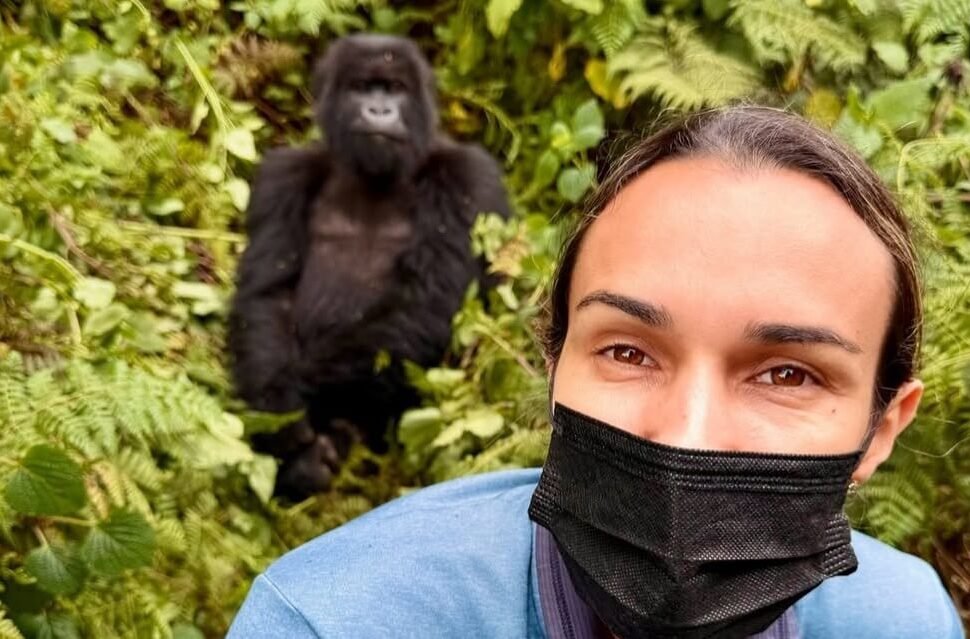
During that hour, you maintain a minimum of seven metres from any gorilla — though the gorillas themselves are unaware of this rule and sometimes approach closer. If one does, you move back slowly, avoid direct eye contact, and do not run under any circumstances.
A mock charge from a silverback, rare but possible, requires the same response: crouch, look down, stay still. Your guide will have briefed you on all of this at the park headquarters.
What happens during that hour is genuinely difficult to describe without sounding like a brochure. Gorillas share 98% of their DNA with humans.
Watching a juvenile wrestle with a sibling, or a silverback yawn and scratch his chin and look directly at you with what can only be described as mild curiosity, produces a recognition that sits somewhere between wildlife encounter and something more unsettling.
Most people don’t speak much afterward, at least not immediately.
Porters are available for hire at the trailhead and are worth engaging — not purely for load-bearing, but because the fees represent direct income for local community members.
On steep sectors like Nkuringo, a porter’s steadying arm on the descent is practically functional.
Best Time for Gorilla Trekking Bwindi

Bwindi is a rainforest. Rain happens year-round regardless of season, which is worth stating plainly before discussing “dry season” and “wet season” as though they represent binary conditions.
a) Dry seasons (June to September, December to February)
These bring drier, firmer trails and slightly better photography conditions. Permits are hardest to secure during these months, particularly July and August, and lodges run at premium rates.
First-time trekkers, travelers with limited flexibility, and anyone visiting Uganda during a summer holiday window should target this period — and should book permits six months out minimum.
b) Rainy seasons (March to May, October to November)
These are genuinely underrated. Gorilla families tend to range less widely when food is abundant, which can actually shorten the hike to the group.
The forest turns a deeper green, mist moves through the canopy in ways that make for more atmospheric photographs than clear-sky days.
Trails get muddy — gaiters and a waterproof pair of boots aren’t optional — but the experience itself is rarely diminished.
Luxury lodges routinely offer 30-50% discounts during low season, making this window particularly compelling for travelers who want premium accommodation without premium pricing.
The one firm conclusion: there is no bad month for Bwindi gorilla trekking. There are simply different trade-offs.
A month-by-month breakdown of conditions, permit availability, and sector-specific advice is available in our full best time to visit guide.
What Else Bwindi Offers Beyond Gorillas
Gorilla trekking is the draw, but Bwindi rewards travelers who stay longer and look beyond it.
1. The Gorilla Habituation Experience

Available in Rushaga, this is the most compelling alternative to the standard trek. For $1,500 per person, you spend up to four hours with a semi-habituated gorilla family alongside researchers documenting the group’s progression.
The family isn’t yet fully accustomed to humans, which means behaviour is less performative and more raw. Scientists genuinely welcome this format: additional permit fees subsidize the habituation process itself.
Only four permits are issued per day, making this one of the least crowded wildlife encounters in Uganda.
2. Batwa cultural visits

These put you in contact with the communities whose displacement created the park you’re trekking in. The experience varies in quality depending on the operator.
Avoid providers who treat it as a performance. The better visits involve conversation, traditional knowledge about forest plants and animals, and a more honest account of what the Batwa’s eviction from Bwindi actually meant for their communities.
It’s harder than a standard cultural excursion and more worthwhile for it.
3. Birding

Over 350 species have been recorded in Bwindi, including 70 Albertine Rift endemics.
The African Green Broadbill, the Shelley’s Crimsonwing, and the Grauer’s Rush Warbler are regularly sighted in Ruhija — all among the most sought-after ticks in East African birding.
A dedicated birding morning before or after your gorilla trek adds almost nothing in cost and a substantial amount in biodiversity.
4. Chimpanzee sightings

These occur opportunistically during gorilla treks, particularly in sectors where chimp territory overlaps. Bwindi is one of the very few places on Earth where mountain gorillas and chimpanzees share habitat. A sighting isn’t guaranteed, but it’s a genuine possibility.
Getting to Bwindi
.
1. From Kampala by road
The drive takes 7 to 9 hours depending on your destination sector and road conditions. The Buhoma route via Kabale is the most travelled.
Rushaga and Nkuringo are accessed via Kisoro. Road quality has improved significantly in recent years but remains unpaved and 4WD-required for the final approach to most lodges.
2. From Kigali by road
Travelers flying into Rwanda rather than Uganda have a significant time advantage for the southern sectors. Kigali to Rushaga or Nkuringo via the Cyanika or Katuna border takes roughly 4 to 5 hours — substantially less than the Kampala route.
This makes a Kigali arrival a logical choice for anyone whose itinerary is centered on Bwindi without other Uganda parks.
We run gorilla treks from Kigali specifically for this reason.
3. By charter flight
A charter from Entebbe to Kihihi airstrip (serving Buhoma) or Kisoro airstrip (serving Nkuringo and Rushaga) reduces travel time to under two hours.
It’s the premium option and priced accordingly, but it eliminates a full day of driving on each end of the trip. Several of our itineraries are structured around fly-in access for guests who value time efficiency.
Our Bwindi Gorilla Trekking Itineraries
We’ve built Bwindi itineraries for travelers with different time budgets, starting points, and goals. Below are four of the most popular. Each can be customized — different sectors, different gorilla families, different combinations of activities.
- 1-Day Gorilla Trek from Kigali
- 3-Day Bwindi Gorilla Trekking & Lake Bunyonyi
- 3 Days Gorilla Habituation Experience in Bwindi
- 4-Day Uganda Safari – Gorilla Trekking in Bwindi & Chimpanzee Trekking in Kibale
- 6-Day Uganda Safari | Kibale, Queen Elizabeth, Bwindi & Lake Bunyonyi
Not sure which itinerary fits your schedule? Tell us your travel dates and we’ll work backward from permit availability to build the right trip.
Practical Preparation

1. Fitness
Standard gorilla trekking Bwindi requires a reasonable level of fitness but no special athletic training. You should be able to walk on uneven terrain for two to four hours without significant difficulty.
Nkuringo is the exception — its steep descents are genuinely demanding and warrant honest self-assessment. The Gorilla Habituation Experience is also more physically intensive than the standard trek given its duration.
2. What to pack
- Waterproof ankle-supporting hiking boots are the single most important item.
- Long trousers and long sleeves protect against nettles and thorns.
- Neutral colors are recommended.
- Bring a rain jacket regardless of season, insect repellent, and a small daypack.
- Leave perfume, scented lotions, and cologne at the lodge — strong scents disturb the gorillas and, in some cases, attract insects you’d rather avoid.
For a complete packing checklist, see our guide on what to wear for gorilla trekking.
3. Health
Gorillas share enough genetic material with humans to contract our respiratory diseases. If you’re ill on trek day, you cannot go. This isn’t a policy gray area.
Most operators and the Uganda Wildlife Authority will reschedule affected permits, but it’s worth confirming rescheduling terms before you book.
Arrive in Uganda healthy and maintain basic hygiene precautions in the days before your trek.
4. Accommodation
Bwindi has lodges across every price point, from $80-per-night budget guesthouses to $500-plus luxury properties.
The better lodges — Mahogany Springs, Buhoma Lodge, Clouds Mountain Gorilla Lodge — book out far in advance during peak months.
We recommend locking in accommodation at the same time as permits, particularly for Buhoma and Nkuringo sectors where high-end inventory is limited.
Frequently Asked Questions

1. How long does gorilla trekking in Bwindi take?
The briefing begins at 7:30am. Trek duration ranges from 30 minutes to five hours depending on where the gorilla family has moved that morning.
Once you locate the group, you spend exactly one hour with them. Most people are back at their lodge by midday to early afternoon, though longer treks can push that to late afternoon.
2. Can I choose which gorilla family I track?
Not typically. Group assignment happens during the briefing and depends on permit availability for each family.
You can express a preference to your operator in advance, and we can sometimes guide the assignment, but it’s not guaranteed. What you can choose is the sector, and from there the range of families narrows meaningfully.
3. Is gorilla trekking in Bwindi safe?
Yes. Uganda Wildlife Authority rangers accompany every group, and the gorilla families are thoroughly habituated. Serious incidents are extremely rare.
The primary practical concerns are the physical demands of the terrain and, in rainy season, slippery trails. Follow your guide’s instructions, don’t run if charged, and you’ll be fine.
For a fuller breakdown, our gorilla trekking safety guide covers common concerns in detail.
4. What’s the difference between the standard trek and the Gorilla Habituation Experience?
The standard trek gives you one hour with a fully habituated gorilla family. The Gorilla Habituation Experience (available only in Rushaga sector) gives you up to four hours with a semi-habituated group and costs $1,500 per permit.
The family isn’t fully accustomed to visitors, which makes for more spontaneous, less predictable behaviour. It’s significantly longer, more immersive, and limited to four people per day.
5. Can I combine Bwindi with other Uganda parks?
Absolutely. Bwindi sits within a day’s drive of:
- Queen Elizabeth National Park (famous for tree-climbing lions and the Kazinga Channel boat cruise)
- Kibale Forest National Park (home to the highest density of chimpanzees in Africa)
- Lake Bunyonyi
- Mgahinga Gorilla National Park
Longer Uganda itineraries can include Murchison Falls in the north, where you can see elephant, lion, hippo, and Nile crocodile alongside the world’s most powerful waterfall.
Most of our itineraries of five days or more combine Bwindi with at least one other major destination.
Plan Your Bwindi Gorilla Trek
Permits sell months in advance. Availability shifts quickly. If you have dates in mind, the right move is to start the conversation now rather than after you’ve booked your flights.
Fill in our inquiry form and we’ll check permit availability for your travel window, recommend the right sector based on your fitness level and itinerary, and build out a full quotation with accommodation and transport.
Alternatively, WhatsApp us directly. We’re based in Uganda, in the same time zone as Bwindi, and we answer quickly.
Request a Quote →