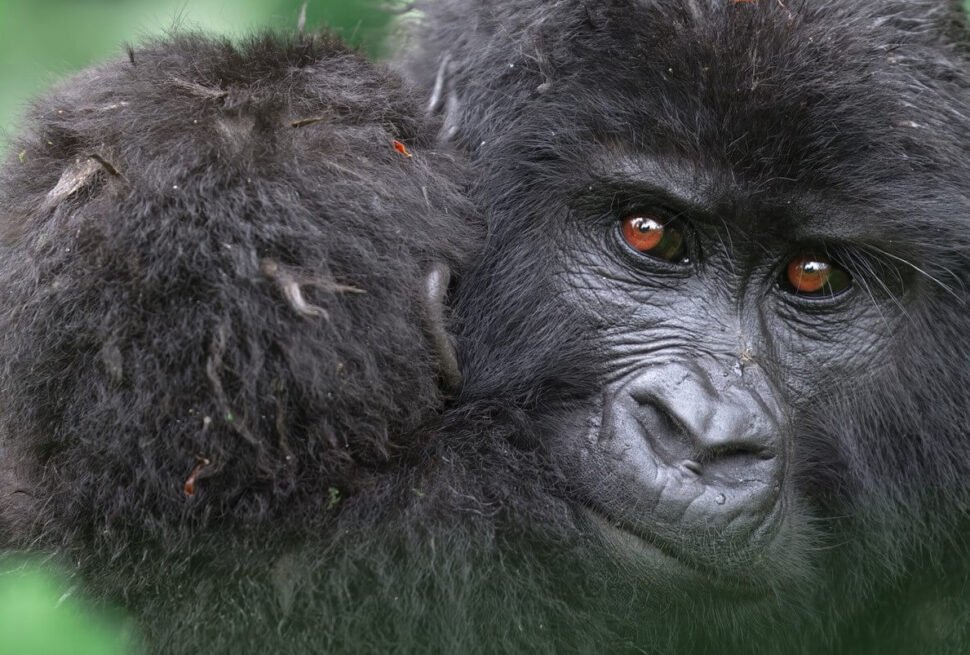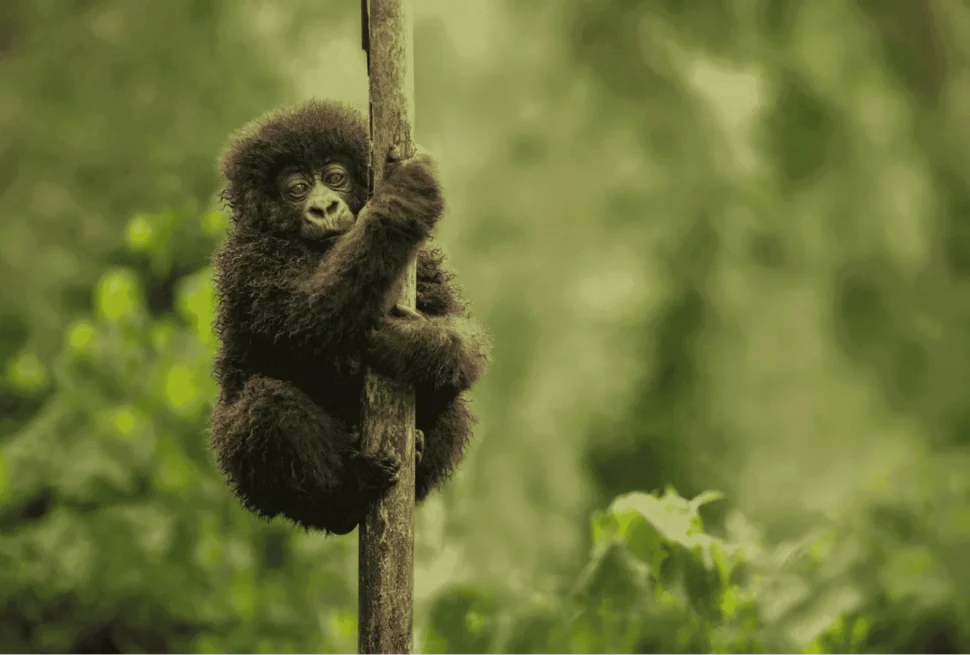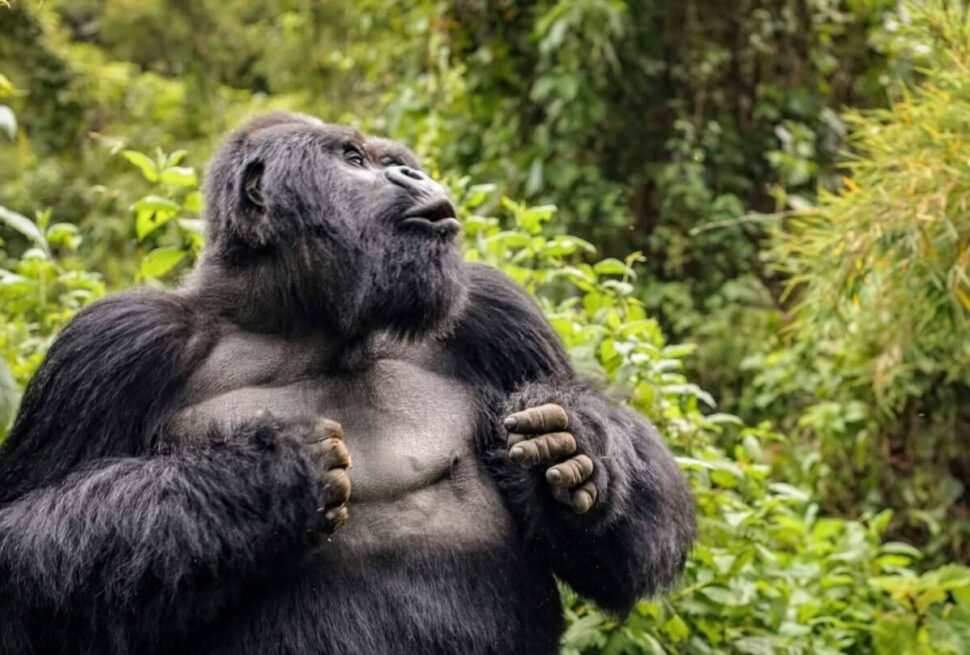

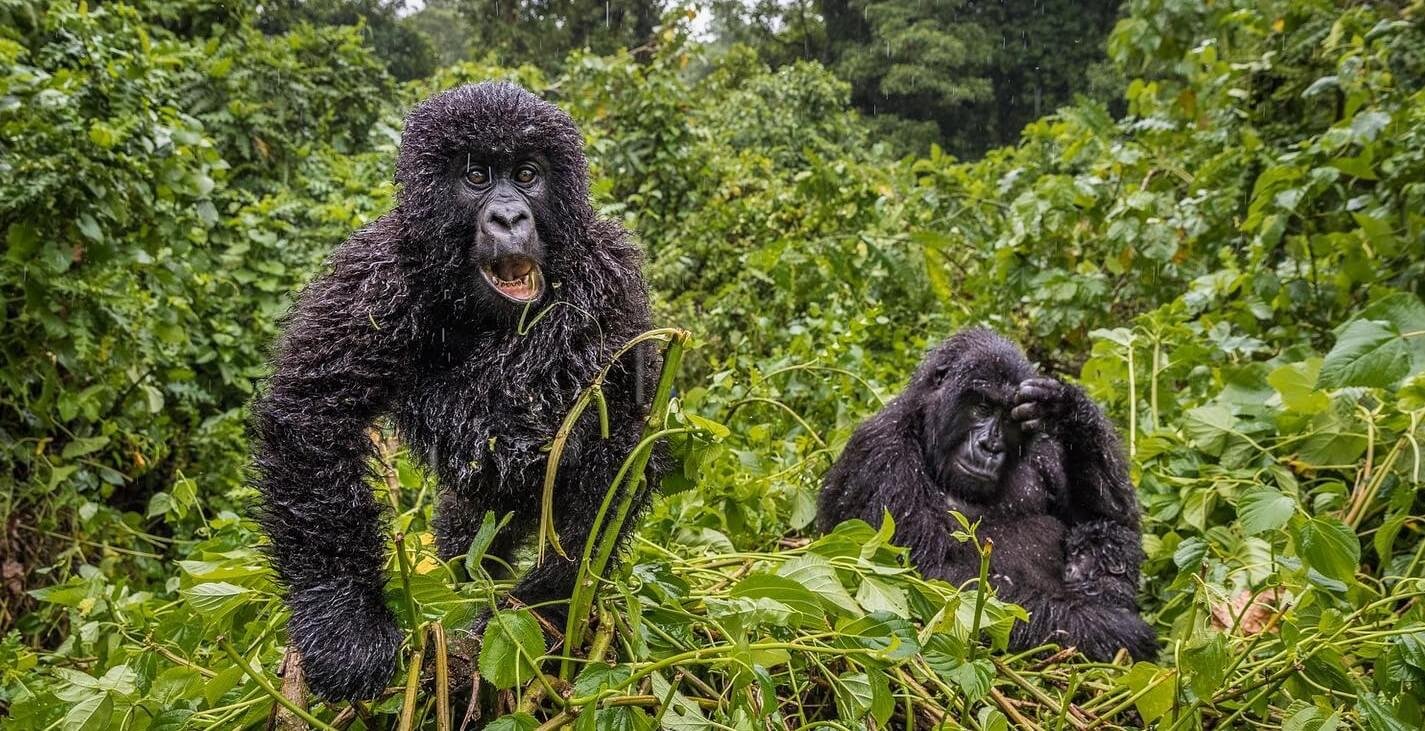
In 2008, there were roughly 680 mountain gorillas left on Earth. Today, the population has climbed past 1,000.
That matters because almost every modern conservation story seems to move in the opposite direction. Species decline. Habitats shrink. Governments stall. Funding dries up.
Yet mountain gorillas, one of the world’s most vulnerable great apes, managed a measurable recovery inside a region marked by political instability, poverty, armed conflict, and intense human population pressure.
The achievement is real. But the simplified version often told to tourists misses something important.
Mountain gorillas did not recover because humans suddenly became kinder to nature. They recovered because conservation became economically valuable, scientifically coordinated, and aggressively protected.
Tourism played a central role. So did veterinary medicine, ranger patrols, local community involvement, and unusual cooperation between Uganda, Rwanda, and the Democratic Republic of Congo.
That complexity matters if you are planning a trek. A gorilla permit is not merely a ticket into the forest. It is part of a fragile financial system that currently keeps one of humanity’s closest relatives alive.
Key Takeaways
- The mountain gorilla population has grown from around 680 individuals in 2008 to more than 1,000 today
- Carefully regulated gorilla tourism helped fund anti-poaching patrols, veterinary care, and local conservation programs
- Uganda, Rwanda, and the DRC coordinate conservation efforts across borders despite political tensions
- Mountain gorillas are still endangered and remain vulnerable to disease, habitat pressure, and regional instability
- Responsible gorilla trekking directly contributes to long-term conservation funding
How Many Mountain Gorillas Are Left Today

According to the latest surveys from the International Gorilla Conservation Programme and the International Union for Conservation of Nature, there are now just over 1,000 mountain gorillas remaining in the wild.
They exist in only two isolated populations.
One lives in the Virunga Massif, a volcanic forest region shared by Uganda, Rwanda, and the DRC. The other inhabits Uganda’s dense Bwindi Impenetrable Forest.
If you are planning a trek in Uganda, your experience will likely take place either inside Bwindi Impenetrable National Park or in Mgahinga Gorilla National Park, which is part of the larger Virunga ecosystem.
The number itself sounds reassuring. Over 1,000 feel stable. Healthy, even.
It is not.
A population barely above 1,000 individuals remains extremely fragile. Mountain gorillas occupy a limited range surrounded by dense human settlements.
They face risks from respiratory disease, habitat fragmentation, snares meant for other animals, political instability, and the genetic limitations that come with such a small breeding population.
So yes, this is a conservation success story. But it is a conditional one.
Why Mountain Gorillas Nearly Disappeared

Mountain gorillas survived where many large mammals did not because their habitat is difficult for humans to fully exploit. High-altitude forests, steep volcanic terrain, and thick jungle created natural protection.
Even so, their numbers collapsed during the twentieth century.
Poaching was part of the problem, though the reality is more nuanced than many safari brochures suggest. Mountain gorillas were rarely hunted on an industrial scale for meat.
More often, they became collateral damage from snares set for antelopes and bush pigs. Infants were sometimes captured illegally for trafficking, which often led to adults being killed defending them.
Habitat loss was equally severe.
As human populations expanded across Rwanda, Uganda, and eastern Congo, forests were cleared for agriculture and settlement.
Political violence compounded everything. During periods of armed conflict in the region, conservation infrastructure weakened dramatically. Rangers were attacked. Tourism stopped. Funding disappeared.
By the early 2000s, mountain gorillas were one of the rarest great apes on Earth.
Many experts expected a continued decline.
The Uncomfortable Reality About Gorilla Tourism

There is a contradiction at the center of gorilla conservation.
Humans threaten gorillas. Humans also fund their survival.
Without tourism revenue, mountain gorilla conservation at its current scale would likely collapse.
Permit fees fund ranger salaries, veterinary programs, park operations, community revenue-sharing initiatives, and anti-poaching patrols. In Uganda, a significant portion of gorilla tourism income supports the management of protected areas and nearby communities.
This is one reason gorilla trekking is expensive. The high cost is partly intentional. Conservationists learned decades ago that mass tourism would damage the very ecosystem visitors come to see.
Strict visitor limits matter.
Only a small number of people may visit each habituated gorilla family per day. Viewing time is restricted. Distance rules exist to reduce disease transmission. Travelers showing signs of illness may be denied access.
That last point became especially important during COVID-19. Mountain gorillas share roughly 98 percent of human DNA and remain highly vulnerable to respiratory infections. A common flu virus can become deadly inside a gorilla group.
The ethics of wildlife tourism deserve scrutiny. Some forms of tourism absolutely exploit animals. But in the case of mountain gorillas, carefully controlled trekking has become one of the strongest financial arguments for preserving forest habitat rather than converting it into farmland.
If you want a deeper breakdown of that debate, this guide to the ethics of gorilla trekking examines the issue in more detail.
The Role of Gorilla Doctors

One of the least discussed reasons for mountain gorilla recovery is veterinary intervention.
The organization Gorilla Doctors operates across Uganda, Rwanda, and the DRC, providing direct medical care to wild gorillas when intervention becomes necessary.
That is controversial in some conservation circles.
Traditional conservation philosophy often argues that wildlife should remain untouched by human medical systems. But mountain gorillas no longer live in an untouched wilderness. Their survival already depends heavily on human-managed systems, protected borders, tourism revenue, and ranger monitoring.
Once you accept that reality, veterinary intervention becomes harder to dismiss.
Gorilla Doctors treat injuries from snares, monitor disease outbreaks, conduct health assessments, and respond to emergencies that would otherwise wipe out vulnerable individuals. Their work has directly increased survival rates among habituated gorilla groups.
Importantly, they do not intervene in every situation. Natural ecological processes still matter. The goal is not domestication. It is targeted conservation medicine inside a highly pressured ecosystem.
Rangers Rarely Appear in the Marketing

Most tourists remember the gorillas. Few remember the ranger standing quietly behind them with an AK-47.
Yet armed rangers are central to this conservation story.
Across Uganda, Rwanda, and eastern Congo, ranger teams patrol forests daily, removing snares, tracking gorilla groups, monitoring illegal activity, and protecting tourists and wildlife alike. Some have died doing this work.
That reality complicates the romantic image often sold in wildlife tourism marketing. Conservation in Central and East Africa is not simply about beautiful forests and meaningful encounters. It also involves enforcement, political negotiation, poverty reduction, and physical risk.
In Uganda, the Uganda Wildlife Authority has built one of Africa’s strongest gorilla protection systems. Rwanda has invested heavily in conservation-linked tourism infrastructure. Even in the DRC, despite severe instability, conservation teams continue operating under extremely difficult conditions.
The recovery of mountain gorillas required all three countries to cooperate around a shared ecological system that ignores national borders.
That cooperation is unusually significant.
Why Uganda Became Central to Gorilla Conservation

Uganda now holds roughly half of the world’s remaining mountain gorillas, largely within Bwindi Impenetrable National Park.
Bwindi matters because it protects a genetically unique population living outside the Virunga volcano chain. The forest itself is ancient, biologically dense, and difficult to access. Trekking conditions can be physically demanding, particularly during wet months.
If you are unsure what the experience actually feels like on the ground, this detailed breakdown of the gorilla trekking experience offers a more realistic picture than most glossy travel summaries.
Travelers also frequently underestimate the logistics involved. Roads are long. Forest weather changes quickly. Trekking routes vary daily depending on gorilla movement.
Planning matters.
Useful resources include:
- How to reach Bwindi
- An explanation of Bwindi’s trekking sectors
- Where to stay near the forest
- The best seasons for trekking
For travelers comparing destinations, Uganda versus Rwanda gorilla trekking is worth reading carefully before booking.
Conservation Success Does Not Mean the Crisis Is Over

There is a tendency to frame conservation as either failure or victory.
Reality is less clean.
Mountain gorillas remain endangered. Their numbers improved because conservation pressure intensified and because tourism revenue created long-term incentives to keep forests intact. But those systems remain vulnerable.
Disease remains one of the greatest threats. Climate change may alter forest ecosystems over time. Population pressure around protected areas continues to increase. Political instability in eastern Congo still affects regional conservation security.
Even tourism itself carries risks.
Poorly managed trekking can stress gorilla groups or increase disease exposure. That is why choosing responsible operators matters.
Smaller group sizes, proper briefing standards, and strict adherence to park regulations are not marketing details. They are conservation measures.
If you are still evaluating whether the experience justifies the cost and effort, this reflection on whether gorilla trekking is worth it approaches the question honestly rather than romantically.
What Your Gorilla Permit Actually Supports

A gorilla permit funds far more than one hour with a gorilla family.
It helps sustain ranger patrols, habitat protection, veterinary programs, research, local employment, and community revenue-sharing systems that reduce pressure on protected forests.
That broader context changes how many travelers view the expense.
Useful planning resources include:
- Uganda gorilla trekking permits explained
- A breakdown of trekking costs
- How permits are booked
- Permit availability updates
- Last-minute permit options
Travelers coming through Rwanda often consider cross-border trekking from Kigali because it reduces driving time to southern Bwindi.
Others prefer longer itineraries that combine gorillas with broader wildlife experiences, including the 5-day Uganda primates safari, the 8-day wildlife safari, or the more extensive 10-day primate and wildlife journey.
Shorter options also exist for travelers with limited time:
Why This Conservation Story Resonates

People often describe gorilla trekking as life-changing. Sometimes that language becomes exaggerated and sentimental.
Still, there is something unusually affecting about sitting quietly in a rainforest while a wild mountain gorilla watches you back.
Part of that feeling comes from proximity. Gorillas move with startling familiarity. Their social behavior, expressions, and body language feel deeply recognizable.
But another part comes from understanding how improbable their survival actually is.
The mountain gorilla population recovered because thousands of people across multiple countries kept choosing conservation despite political instability, economic pressure, and logistical difficulty.
Rangers patrolled forests. Scientists monitored the disease. Communities accepted restrictions on protected land use. Travelers continued funding the system through tourism.
Few endangered species receive that level of sustained international coordination.
That does not guarantee permanent success. Conservation can reverse quickly if funding disappears or political conditions deteriorate.
For now, though, mountain gorillas remain one of the rare cases where humans pushed a species away from the edge rather than toward it.
FAQs About Gorilla Population

1. Are mountain gorillas still endangered?
Yes. Mountain gorillas remain classified as endangered despite population growth. Their total population is still small and concentrated within a limited geographic range.
2. How many mountain gorillas are left in Uganda?
Uganda hosts roughly half of the global mountain gorilla population, mainly within Bwindi Impenetrable National Park and Mgahinga Gorilla National Park.
3. Did tourism really help save mountain gorillas?
Largely, yes. Carefully regulated tourism generates critical funding for ranger patrols, veterinary care, conservation infrastructure, and community programs linked to protected forests.
4. Can gorillas get sick from humans?
Yes. Mountain gorillas are highly susceptible to human respiratory diseases, which is why trekking rules around distance, illness screening, and group size are taken seriously.
5. Is gorilla trekking safe?
For most travelers, yes. Gorilla trekking in Uganda is highly regulated and guided by trained rangers. This detailed guide on gorilla trekking safety explains the precautions involved.
Final Thoughts
Seeing a mountain gorilla in the wild carries emotional weight partly because the species came dangerously close to disappearing. That context changes the experience.
You are not simply observing wildlife. You are witnessing the outcome of decades of fragile conservation work that is still ongoing.
If you are considering the journey, you can start planning through the safari planning page or secure your trek through the gorilla permit booking page.