
The hardest part of gorilla trekking is often not the forest. It is the geography.
Uganda sits deep inside East Africa, landlocked and far from the major long-haul aviation corridors that dominate Europe, North America, and Australia.
There are no direct flights from the United States. Very few from Europe. Most travelers arrive tired, slightly disoriented, and carrying at least one layover story involving Doha, Dubai, Nairobi, Addis Ababa, or Amsterdam.
Yet that relative distance shapes the experience in ways many travelers eventually appreciate.
Uganda still feels earned.
Mass tourism never fully industrialized here the way it did in parts of southern Africa or East Africa’s beach circuits.
The country demands patience, planning, and realistic expectations. Roads are long. Connections occasionally shift. Domestic logistics matter more than first-time visitors anticipate.
That is also part of why the experience remains unusually immersive once you reach the forests.
This guide breaks down the practical side clearly. Flights, airports, entry routes, transit strategy, and the often-overlooked question many travelers wrestle with halfway through planning:
Should you fly into Uganda at all, or enter through Kigali in Rwanda instead?
Key Takeaways
- Entebbe International Airport is Uganda’s main international gateway for gorilla trekking trips
- Most travelers connect through Doha, Dubai, Nairobi, Addis Ababa, Amsterdam, or Istanbul
- Kigali can be a smarter entry point for southern Bwindi itineraries because of shorter driving times
- Internal travel logistics matter more in Uganda than many first-time visitors expect
- Gorilla trekking trips work best when flights, permits, and ground transport are planned together rather than separately
The Main Airport for Uganda

Almost every international traveler enters Uganda through Entebbe International Airport.
The airport sits on the northern shores of Lake Victoria, about 40 kilometers from central Kampala. Despite the name, Entebbe functions more like a compact regional hub than a massive global airport. That surprises some visitors expecting Dubai-scale infrastructure.
In practice, the airport is straightforward and manageable.
Immigration is usually efficient. Distances inside the terminal are short. You will not spend an hour walking between gates. However, arrivals can feel chaotic during peak evening periods when multiple international flights land close together.
For most gorilla trekking itineraries, Entebbe is simply the beginning. The actual trekking regions lie far southwest near Bwindi Impenetrable National Park and Mgahinga Gorilla National Park.
That onward journey matters enormously, which is why this guide on how to reach Bwindi becomes essential once your international flights are sorted.
Which Airlines Fly to Uganda

Uganda’s aviation network has improved significantly over the past decade. You now have far more routing flexibility than travelers did even fifteen years ago.
Major airlines serving Entebbe include:
- Qatar Airways via Doha
- Emirates via Dubai
- KLM via Amsterdam
- Turkish Airlines via Istanbul
- Ethiopian Airlines via Addis Ababa
- Kenya Airways via Nairobi
- RwandAir via Kigali
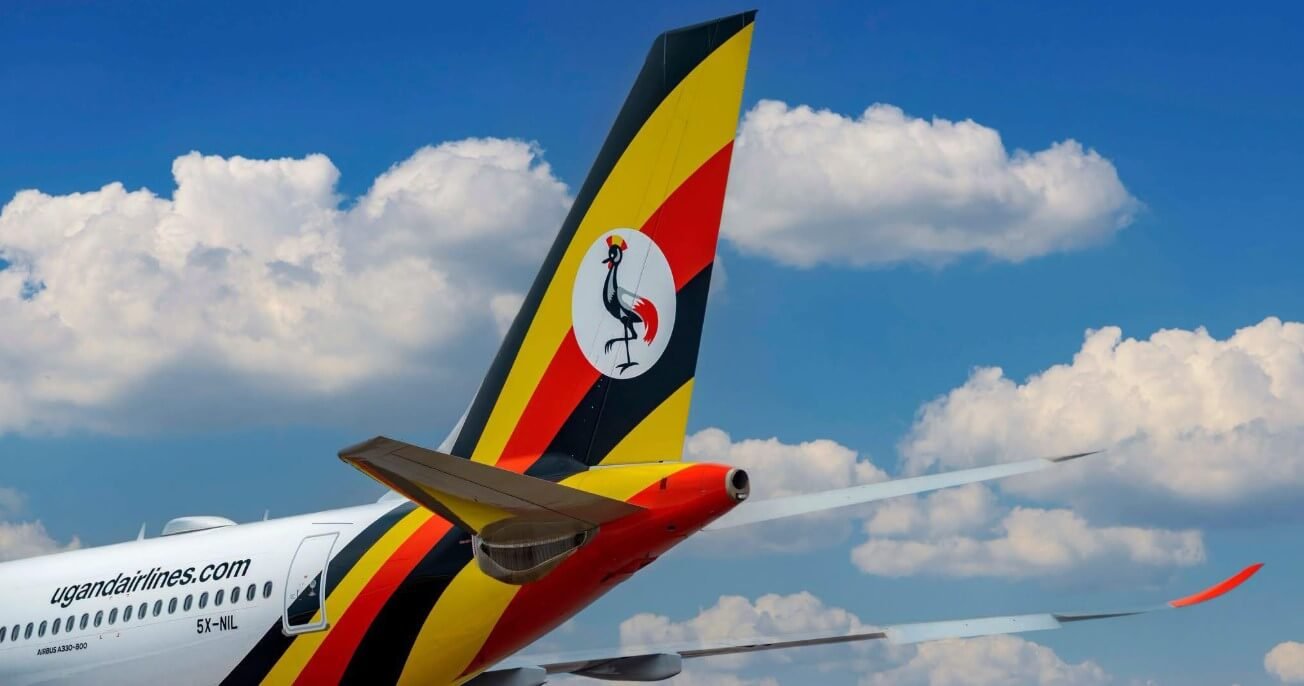
- Uganda Airlines on select regional and international routes
- Brussels Airlines on European connections
For many travelers, the best route depends less on price and more on connection quality and total transit fatigue.
A cheap itinerary with three tight overnight layovers can destroy the first two days of your safari. People underestimate this constantly.
Flight Times From Major Markets
Uganda is reachable from almost anywhere, but very few journeys are quick.
1. From the United Kingdom

Flights from London to Entebbe usually take between 13 and 16 hours, including layovers.
Common routes include:
- London to Doha to Entebbe
- London to Dubai to Entebbe
- London to Amsterdam to Entebbe
- London to Istanbul to Entebbe
Direct flights are rare and inconsistent.
Many UK travelers combine gorilla trekking with broader East African itineraries such as the 6-day Uganda safari or the longer 10-day primate and wildlife journey because of the long travel commitment involved.
2. From the United States

There are currently no direct commercial flights from the United States to Uganda.
Most travelers route through Europe, the Gulf, or Ethiopia. Typical total travel time ranges from 18 to 30 hours, depending on departure city and connection efficiency.
Popular routing combinations include:
- New York to Doha to Entebbe
- Washington D.C. to Addis Ababa to Entebbe
- Chicago to Amsterdam to Entebbe
- Los Angeles to Dubai to Entebbe
Jet lag becomes a real factor here. Scheduling a recovery night in Entebbe before continuing southwest is usually wise.
3. From Australia

Australia to Uganda is a long-haul undertaking in the truest sense.
Travel times frequently exceed 24 hours, often closer to 30. Most routes pass through Dubai, Doha, Singapore, or Istanbul before continuing into East Africa.
Because of the distance, Australian travelers often stay longer and combine gorilla trekking with wildlife safaris, chimpanzee tracking, or cultural extensions around Uganda.
Trips like the 8-day Uganda wildlife safari or the 5-day primates itinerary tend to make more sense than very short gorilla-only visits after such extensive travel.
Should You Fly Into Kigali Instead

For some travelers, yes.
This is one of the most important logistical decisions in gorilla trekking planning, yet many websites oversimplify it into a Uganda-versus-Rwanda marketing debate.
The truth is more practical.
If your trip focuses primarily on southern Bwindi, especially sectors like Rushaga or Nkuringo, flying into Kigali can dramatically reduce driving time. From Kigali, the drive to southern Bwindi may take roughly four to five hours, depending on border conditions and road quality.
From Entebbe, the drive to Bwindi usually takes eight to ten hours, sometimes longer.
That difference matters physically.
Travelers arriving from Europe or North America often underestimate how exhausting long East African road transfers can feel after international flights. Choosing Kigali can reduce transit fatigue substantially.
At the same time, Rwanda permits, and lodging is often more expensive overall, and crossing borders introduces another logistical layer. The best option depends on your itinerary structure, permit availability, budget, and tolerance for long drives.
This detailed comparison of Uganda versus Rwanda gorilla trekking examines those tradeoffs more carefully.
Travelers choosing the Kigali route usually benefit from reading the guide on cross-border gorilla trekking from Kigali before booking flights.
Domestic Flights Inside Uganda

Many travelers imagine Uganda as a fly-in safari destination similar to Botswana or Kenya’s luxury circuits.
That is only partially true.
Domestic flights exist, particularly between Entebbe and airstrips near Bwindi, Kisoro, or Kihihi. However, these are small aircraft operations with weather sensitivity, luggage restrictions, and schedule variability.
Flying saves time. It also reduces exposure to Uganda’s long road transfers.
Still, overland travel has advantages too. You see the country changing gradually. Tea plantations give way to mountain roads. Trading centers thin out into rainforest edges. The transition creates a context that many fly-in travelers miss entirely.
There is no universally correct choice here.
Travelers prioritizing comfort and time often combine a domestic flight one direction with a scenic overland return.
Visa and Entry Requirements

Most visitors need a visa to enter Uganda.
The Uganda e-visa system has improved substantially, though processing delays occasionally occur. Applying early remains wise.
Many travelers visiting Uganda, Rwanda, and Kenya together choose the East Africa Tourist Visa, which allows multi-country movement between participating states under one visa framework.
Passport validity matters. Yellow fever vaccination certificates are also commonly required upon entry.
Do not treat health requirements casually.
East African travel logistics reward preparation and punish improvisation faster than many first-time visitors expect.
Useful official information is available through the Uganda Immigration website.
Timing Your Arrival Properly

One of the most common planning mistakes involves arrival timing.
People land in Entebbe late at night and assume they can immediately continue toward Bwindi at dawn after almost no rest. Technically possible, yes. Enjoyable, rarely.
Uganda’s infrastructure requires realistic pacing.
A smoother itinerary usually includes:
- Arrival night in Entebbe
- Domestic flight or road transfer the next day
- Gorilla trek the following morning
That pacing becomes even more important during rainy seasons when roads slow considerably.
This guide on the best time for gorilla trekking explains how seasonal conditions affect transport logistics as well as trekking itself.
The In-Country Leg Matters A Lot

International flights receive most planning attention. The internal Uganda segment often shapes the actual experience more.
Road quality varies dramatically. Mobile signal disappears in some regions. Drive times fluctuate with weather and roadwork. Bwindi itself is spread across multiple trekking sectors with different access patterns.
Choosing accommodation in the wrong sector can accidentally create four-hour pre-dawn drives on trekking morning.
That happens more often than it should.
These planning resources help avoid common mistakes:
- Understanding Bwindi’s different sectors
- Where to stay near your gorilla permit
- How long trekking days actually feel
- How physically demanding the experience can be
Travelers often focus obsessively on flights while neglecting these details. Yet the quality of the ground logistics frequently determines whether the trip feels smooth or exhausting.
Safety Concerns and Travel Perception

Uganda’s reputation abroad is often shaped by outdated assumptions or generalized fears about Africa as a whole.
That framing deserves scrutiny.
Uganda receives thousands of international visitors annually for gorilla trekking, wildlife safaris, research travel, and business. Tourism regions are generally stable, especially established safari circuits in the southwest.
That does not mean travelers should abandon situational awareness. It means nuance matters.
A balanced overview appears in this guide on travel safety in Uganda, including a realistic discussion of transportation, urban movement, border crossings, and trekking regions.
Travelers considering eastern Congo routes should also review the separate article on Congo gorilla trekking safety considerations because the security dynamics differ significantly.
Preparing for Gorilla Trekking Once You Arrive

Getting to Uganda is only the first layer of preparation.
Travelers also need to think about permits, clothing, trekking difficulty, and overall expectations. These resources help bridge the gap between airport arrival and forest experience:
- Understanding gorilla permits
- Booking permits correctly
- Checking permit dates
- What to wear in the rainforest
- Whether gorilla trekking justifies the effort and cost
- Why do permits cost so much
Short itineraries such as the 1-day Bwindi trek or the 2-day Kigali-based option work for travelers with limited time.
Others prefer slower itineraries that include Lake Bunyonyi, chimpanzee tracking, or broader wildlife experiences, such as the 3-day Bwindi and Lake Bunyonyi safari or 4-day Uganda safari.

FAQs
- What is the main airport for Uganda?
Entebbe International Airport is Uganda’s primary international gateway and the main arrival point for gorilla trekking trips.
. - Are there direct flights to Uganda from the USA?
No. Travelers from the United States usually connect through Doha, Dubai, Amsterdam, Addis Ababa, Nairobi, or Istanbul.
. - Is Kigali better than Entebbe for gorilla trekking?
Sometimes. Kigali can be more convenient for the southern Bwindi sectors because the drive is shorter than from Entebbe.
. - How long does it take to drive from Entebbe to Bwindi?
Most overland journeys take between eight and ten hours, depending on the sector, road conditions, and weather.
. - Do I need a visa for Uganda?
Most international visitors require a visa. Many travelers apply online before arrival using Uganda’s e-visa system.
.
Uganda rewards travelers who plan carefully and move patiently.
The journey here is longer and less frictionless than many mainstream safari destinations. Yet that slight difficulty filters the experience in interesting ways.
By the time most people reach Bwindi or Mgahinga, they feel genuinely far from home. The rainforest feels earned rather than consumed.
That changes how people experience the trek itself.
If you are ready to begin planning, you can start through the custom safari planning page or secure permits directly through the gorilla permit booking page.