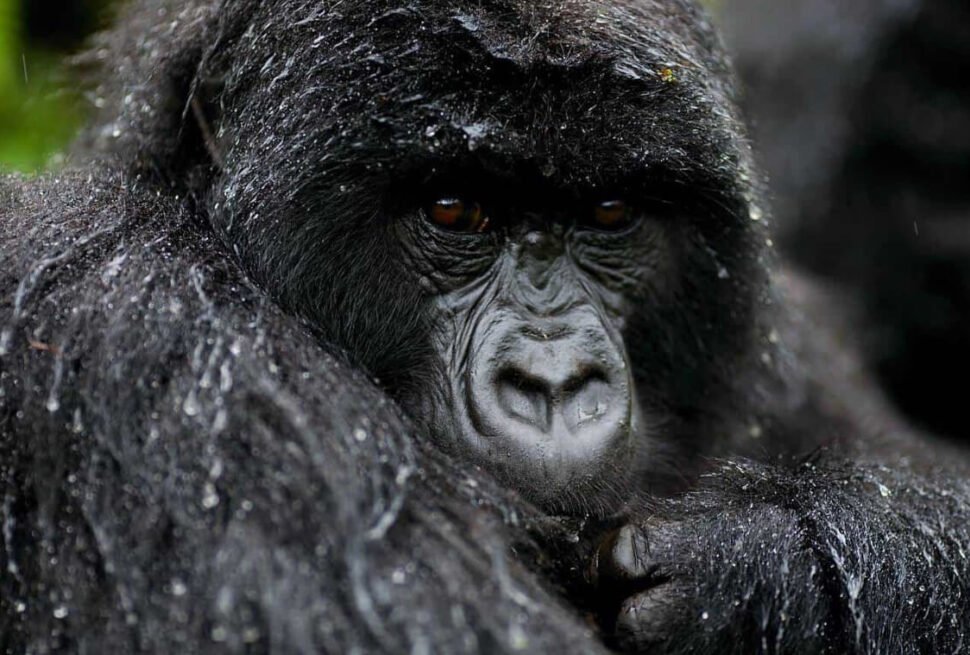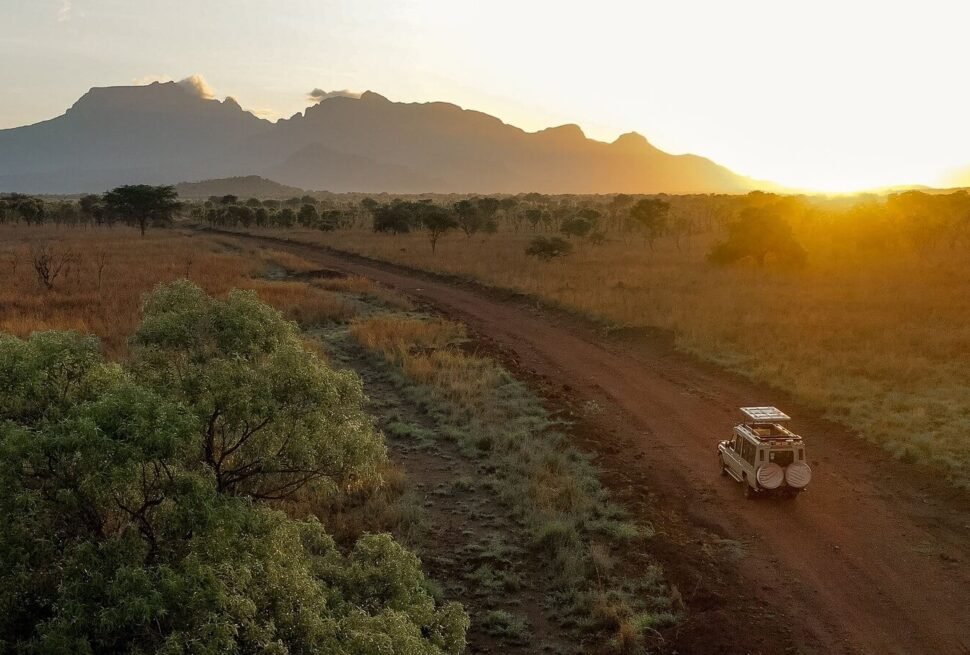

Most people book a gorilla trek in Bwindi. Fewer people realise they are actually booking a trek in one specific corner of a 331-square-kilometre forest, with a specific gorilla family, on a specific trail, in terrain that may be entirely different from what they imagined.
The difference between sectors is not minor. It is the difference between a two-hour walk on established trails and a five-hour descent into an escarpment. Between a sector with eight gorilla families to choose from and one with two.
Between arriving at the gate 45 minutes from your lodge and arriving after a 90-minute drive on a road that requires a capable 4WD even in the dry season.
Bwindi Impenetrable Forest is divided into four gorilla trekking sectors: Buhoma, Ruhija, Nkuringo, and Rushaga.
Each has its own character, its own gorilla families, its own access roads, and its own niche in the spectrum of traveller types who will find it most rewarding.
Understanding the differences before you book is one of the most useful things you can do with your planning time.
Key Takeaways
- Bwindi’s four sectors (Buhoma, Ruhija, Nkuringo, and Rushaga) are geographically separated, with different gorilla families, terrain profiles, access roads, and logistical considerations
. - Buhoma is the most accessible and best-established sector, making it the natural first choice for first-time trekkers and those with moderate fitness
. - Rushaga holds the most habituated gorilla families of any sector in the world and is the only place where the Gorilla Habituation Experience is available
. - Nkuringo offers the most dramatic scenery in the park, with Virunga volcano views and escarpment terrain, but the most physically and logistically demanding
. - Ruhija is the highest, most remote, and least visited sector, with the most consistent permit availability during peak season and the most rewarding experience for trekkers who prioritise solitude
.
The Sector You Choose Matters

Most gorilla trekking content treats Bwindi Impenetrable Forest as a single destination. You book a permit, you go to the park, you trek. The sector question tends to appear only as a footnote, if at all.
That framing understates how much practical difference the sector makes to your actual experience. The approach road varies from well-surfaced murram to steep, unpaved mountain track, depending on where you are going.
The gorilla families vary in size, composition, and terrain preference.
The accommodation options, lodge proximity to the gate, and the character of the surrounding landscape all differ meaningfully between Buhoma in the northwest and Rushaga in the south.
Your sector assignment is also the thing that determines your gorilla family, which in turn determines your trail on trek day.
A trekker assigned to the Mubare family at Buhoma will have a different physical experience from one assigned to the Mishaya group at Rushaga or the Oruzogo family at Ruhija.
This is not something any operator can fully control, because UWA allocates families based on permit availability, but sector preference is something you can and should specify when booking.
The gorilla permit availability guide covers how availability varies across sectors and seasons. This post focuses on what each sector is actually like on the ground.
Sector 1: Buhoma

a) The Character of the Place
Buhoma sits on Bwindi’s northwestern edge and has been the park’s gateway to gorilla tourism since the programme began in the early 1990s.
It is the oldest, most established, and most internationally recognised of the four sectors, and for most first-time trekkers coming from Kampala or building Bwindi into a longer Uganda circuit, it is the natural starting point.
The forest here is dense and full, with established trail infrastructure that does not exist at the same level elsewhere in the park.
The sector gate sits in Buhoma village, surrounded by community guesthouses, mid-range lodges, and the kind of low-key tourist infrastructure that builds up over three decades of consistent visitor traffic.
There are craft markets, community walks, and a network of forest trails available in addition to the gorilla trek itself.
The approach from Kampala via Fort Portal and Kihihi is the most improved road route into any Bwindi sector, and while the final kilometres to the gate are unpaved, they are manageable in most 4WD vehicles without specialist clearance.
For travellers on the overland route from Kampala, Buhoma is the logical endpoint. More on the routing is covered in the how to get to Bwindi guide.
b) The Gorilla Families at Buhoma
Buhoma’s habituated families include some of the most historically significant gorilla groups in the trekking programme.
- The Mubare group is Uganda’s oldest habituated gorilla family, first opened to trekkers in 1993.
Their long history of human contact makes them among the most settled of any group in the park, and the encounter tends to have the composed quality of a family that has genuinely incorporated the presence of quiet observers into its daily rhythm.
. - The Habinyanja group and Rushegura group are the other main trekking families at Buhoma, each with their own silverback leadership and group dynamics.
The Rushegura group, in particular, has a reputation for ranging closer to the forest edge and producing shorter average treks than some other families.
The specific family you are assigned to depends on availability at the time of booking. Stating a preference is worth doing, but the final allocation sits with UWA.
c) Trek Difficulty at Buhoma
Buhoma is the most accessible sector in Bwindi, and that description holds across most conditions.
The trails are better marked than elsewhere in the park, the gradient on the main approach routes is moderate rather than steep, and the terrain is forgiving enough to be manageable for a reasonable range of fitness levels.
That does not make it flat. Bwindi is not flat anywhere.
But compared to Nkuringo’s escarpment descent or Ruhija’s high-altitude switchbacks, Buhoma offers a trekking experience that matches most people’s expectations of what a forest hike involves without pushing significantly beyond them.
Average trek times at Buhoma run from two to four hours gate-to-gate, including the one-hour encounter.
On a favourable day with gorillas located close to the gate, groups have been back before noon. The post on how long gorilla trekking takes covers the full duration picture across all sectors.
d) Accommodation at Buhoma
Buhoma has the widest range of accommodation of any Bwindi sector. Budget guesthouses in the village sit within walking distance of the gate.
Mid-range lodges like Broadbill Forest Camp and Trekkers Tavern are well-positioned and consistently well-regarded.
At the luxury end, Sanctuary Gorilla Forest Camp sits directly on the forest edge with views into the canopy and service levels that match comparable top-end properties across Africa.
The variety of options at Buhoma makes it the most financially flexible sector: you can build a very different budget trip or a well-considered luxury stay within the same sector, which is not equally true at Nkuringo or Ruhija.
e) Who Buhoma Suits Best
Buhoma is the right sector for:
- First-time gorilla trekkers who want reliable logistics and established infrastructure
- Travellers with moderate fitness who want a demanding but not extreme physical day
- Those arriving via Kampala or Fort Portal on the standard overland route
- Anyone building Bwindi into a broader Uganda circuit that includes Kibale or Queen Elizabeth
- Travellers for whom accommodation choice and quality matter as much as the trek itself.
The 3-day Bwindi and Lake Bunyonyi safari typically operates through Buhoma, and the 4-day Uganda Safari routes Kibale first before ending at Bwindi via the northern approach.
Sector 2: Ruhija

a) The Character of the Place
Ruhija occupies Bwindi’s eastern rim, sitting at the highest elevation of any sector at around 2,300 metres above sea level.
It is the least visited sector in the park, not because it is inferior, but because it is harder to reach, higher than travellers expect, and less prominent in the standard gorilla trekking narrative.
Travellers who know it exists and choose it specifically tend to have the most distinctive Bwindi experience of any group.
The landscape at Ruhija feels different from the rest of the park. The altitude produces lower temperatures, more mist, and a quality of light in the mornings that the lower sectors do not have in the same way.
The forest at this elevation is slightly different in composition, with more montane species in the canopy and a denser ground layer.
On a clear morning, the views across the Kigezi Highlands from the approach road are among the best in southwestern Uganda.
The access road from Kabale climbs through a series of switchbacks and deteriorates significantly in wet conditions. In the long rains, April and May specifically, Ruhija is the most logistically challenging sector to reach.
In the dry season, the road is rough but navigable in a good 4WD with a driver who knows it.
b) The Gorilla Families at Ruhija
Ruhija’s habituated families include:
- The Bitukura group, one of the larger habituated groups in the park with a history of interesting multi-silverback dynamics
. - The Oruzogo group tends to range across more varied terrain than the Buhoma families and produces treks with a wider range of forest environments.
. - The Kyaguriro group at Ruhija is unique in the Uganda system: it is a research group, monitored by the Institute of Tropical Forest Conservation, which means it is not open to standard tourist trekking but is studied intensively. Its presence at Ruhija gives the sector a research atmosphere that is subtle but perceptible to attentive visitors.
c) Trek Difficulty at Ruhija
Ruhija is the most physically demanding sector in Bwindi for two combined reasons: the altitude and the terrain.
The altitude means the air is thinner than at Buhoma or Rushaga, and trekkers who arrive from sea level without an acclimatisation day sometimes notice the difference in the first hour of walking.
The terrain involves the steepest and most technical sections of any standard trekking route in the park, with exposed ridgeline sections and dense undergrowth that requires hands-on navigation in some parts.
Average trek times at Ruhija run from four to eight hours gate-to-gate, the widest range in the park, because the Ruhija families range across the most variable terrain.
A short day here is still longer than a short day at Buhoma. A long day here is the longest available in the Uganda system, short of an extended GHEX day.
Physical preparation matters more at Ruhija than at any other sector. The guide on how hard gorilla trekking actually is is worth reading carefully if Ruhija is your sector.
d) Accommodation at Ruhija
Accommodation near Ruhija is limited compared to Buhoma. There are a small number of lodges and guesthouses in the Ruhija area, including Ruhija Gorilla Camp, which is the main mid-range option near the gate.
The limited accommodation is partly what keeps Ruhija’s visitor numbers lower than Buhoma and Rushaga, and it is worth booking early to secure your preferred option once your permit is confirmed.
The scarcity of accommodation is a feature for some travellers: it keeps the sector quiet in a way that Buhoma, with its range of lodges and higher visitor volume, cannot replicate.
e) Who Ruhija Suits Best
Ruhija is the right sector for:
- Experienced hikers who want the most challenging and least crowded trekking experience in Bwindi
- Travellers who have already trekked in Buhoma or Rushaga and want a structurally different experience
- Anyone drawn to high-altitude montane forest environments and the distinctive atmosphere that altitude and mist produce
- Those whose dates fall during peak season and who find Buhoma fully booked
Ruhija’s lower visitor numbers mean it carries better availability than Buhoma across most of the calendar.
Sector 3: Nkuringo

a) The Character of the Place
Nkuringo is the most visually dramatic sector in Bwindi, and among the most visually dramatic gorilla trekking environments anywhere in the world.
The sector sits on the park’s southwestern escarpment, and the combination of altitude, open ridge terrain, and direct line of sight toward the Virunga volcanoes produces a landscape that does not resemble the enclosed forest interior that most people picture when they think of Bwindi.
The Virunga views from the Nkuringo ridge are genuinely extraordinary.
On a clear morning before the trek, the three Ugandan Virunga peaks (Muhavura, Gahinga, and Sabinyo) and the DRC peaks beyond them sit on the horizon in a way that makes the volcanic geography of this entire region comprehensible from a single vantage point.
The same view is available from Mgahinga, 30 kilometres to the south, but at Nkuringo it sits against the backdrop of Bwindi’s own forest rather than the Virunga’s more open terrain.
The sector takes its name from the ridge on which the community and gate sit.
The trek descends from this ridge into the forest below, which means the approach walk goes downhill first and climbs back at the end, when trekkers are at their most tired.
This structure is the defining physical characteristic of the Nkuringo experience, and it is the main reason the sector is consistently recommended with the strongest fitness caveat of any Bwindi sector.
The access road to Nkuringo is the most demanding of the four, involving a steep descent from the main Kisoro road on an unpaved track that becomes genuinely hazardous after sustained rain. This is not a road for underequipped vehicles or overconfident drivers.
A capable 4WD with good ground clearance and an experienced driver is the baseline, not the recommendation.
b) The Gorilla Families at Nkuringo
The Nkuringo group is the main habituated family at this sector, led by a well-known silverback with a documented history going back to the early habituation period in this part of the park.
The group tends to range across the escarpment terrain and into the forest below, producing treks that take in both the open ridge environment and the closed canopy interior.
The family’s range means Nkuringo treks are visually varied in a way that single-terrain sectors are not.
You may start on the open ridge in morning light, descend into the closed canopy, and find the gorillas in a middle-elevation forest zone that combines both environments.
c) Trek Difficulty at Nkuringo
Nkuringo is the most physically demanding sector in terms of the specific challenge the terrain presents, though Ruhija’s altitude makes it harder in cumulative terms for some trekkers.
The defining challenge at Nkuringo is the return ascent from the forest floor back to the ridge gate.
After several hours of forest trekking and an hour with the gorilla family, the final climb back to the sector gate is the steepest and most sustained uphill section in any standard Bwindi trek.
Hiring a porter at Nkuringo is more than a comfort measure.
It is genuinely advisable for anyone without a strong hiking background, because the porter’s steadying assistance on the return ascent is often the practical difference between a difficult but manageable day and a physically distressing one.
The what to wear for gorilla trekking guide covers footwear requirements in detail; for Nkuringo specifically, the footwear advice is the most critical of any sector.
Average trek times run from four to seven hours gate-to-gate. Short days are less common at Nkuringo than at Buhoma or Rushaga because the descent-and-ascent structure adds floor time regardless of where the gorillas are.
d) Accommodation at Nkuringo
Accommodation near Nkuringo is limited in volume but specific in quality.
Clouds Mountain Gorilla Lodge, one of the most acclaimed eco-lodges in East Africa, sits on the Nkuringo ridge with uninterrupted Virunga views and a design philosophy that integrates the landscape rather than imposing on it.
For travellers for whom the lodge experience is as important as the trek, Nkuringo’s flagship property is genuinely world-class.
Mid-range and budget options near Nkuringo are fewer than at Buhoma, which means the sector skews toward the upper end of the accommodation market in practice.
For travellers whose budget does not extend to Clouds Mountain, Rushaga is a more financially flexible alternative in the southern sector geography.
e) Who Nkuringo Suits Best
Nkuringo is the right sector for:
- Physically fit and experienced hikers who want the most scenically dramatic trekking environment in Bwindi
- Travellers for whom the lodge experience is a significant part of the trip and who are considering Clouds Mountain specifically
- Photographers who want the combination of a volcanic panorama and a forest encounter in a single location
- Those who have already trekked at Buhoma or Rushaga and want a structurally different and more challenging second experience.
It is NOT the right sector for:
- First-time trekkers without a clear hiking background
- Anyone with significant mobility concerns
- Travellers visiting during the long rains without confirmed information about the access road condition from their operator.
Sector 4: Rushaga

a) The Character of the Place
Rushaga is the most practically versatile sector in Bwindi, and for a significant number of travellers it is the best choice regardless of where they are arriving from.
It sits in the park’s south, accessed via Kisoro on the road that also serves Mgahinga, and it holds more habituated gorilla families than any other single sector in the world.
That breadth of family options is Rushaga’s defining characteristic and the source of most of its practical advantages.
The terrain at Rushaga is varied rather than extreme. Some family locations involve significant gradients; others are accessible on relatively moderate trails.
The variability across families means that the sector as a whole accommodates a wider fitness range than Nkuringo or Ruhija, because the family your permit is assigned to determines the terrain you will actually cover.
The sector is also the most practical access point for travellers arriving via Kigali, because the Rwanda entry route via the Gatuna/Katuna border crossing delivers you to the Kisoro-area lodge network most efficiently.
The gorilla trekking from Kigali guide covers this route in detail, and the 2-day Bwindi trek from Kigali is the most natural itinerary structure for this entry approach.
b) The Gorilla Families at Rushaga
Rushaga’s habituated families are the most numerous of any sector.
Current groups include the:
- Mishaya group, led by a dominant silverback with a reputation for confident, visible behaviour during encounters
- Bweza group, which ranges across mid-altitude forest and produces consistently mid-length treks
- Kahungye group, one of the larger family units in the sector
- Busingye group, and the Rwigi group, among others.
The diversity of families at Rushaga creates a booking environment where availability is better than at any other sector, because the daily permit pool is the largest in the park.
It also means that travellers who specify Rushaga when booking are more likely to have their permit confirmed at their preferred dates, particularly in the 6 to 12 week booking window that most wet-season travellers operate within.
It is also worth noting that the specific family assigned to your permit affects the character of your trek more than the sector assignment does in many cases.
Discussing family preferences with your operator at the time of booking, rather than simply accepting the default allocation, is worthwhile at Rushaga specifically because there are enough families to have a genuine choice.
c) The Gorilla Habituation Experience
Rushaga is the only sector in Uganda, and the only location in the world, where the Gorilla Habituation Experience is available.
The GHEX is a fundamentally different encounter from standard gorilla trekking: it grants access to a partially habituated gorilla family for up to four hours rather than one, in a group of four rather than eight, at a permit cost of $1,500.
The partially habituated group at Rushaga is in the active process of becoming accustomed to human presence, which means the behaviour during the encounter is less settled and more varied than a fully habituated family encounter.
You observe the gorillas over a long enough period to see a full range of activity: sustained foraging, play behaviour among juveniles, dominance interactions between adults, and the kind of unguarded social behaviour that a one-hour window cannot capture.
UWA trackers and researchers work with the group simultaneously during the GHEX, which means you are present at the intersection of science and the conservation effort, not simply at the tourist end of the encounter.
For serious wildlife observers, researchers, and photographers who want the most immersive gorilla experience available anywhere, the 3-day Gorilla Habituation Experience safari is the structure built around it.
The gorilla habituation vs standard trekking post covers the differences in detail for anyone weighing the two options.
d) Trek Difficulty at Rushaga
Rushaga’s trek difficulty ranges from moderate to challenging, depending on which family you are assigned to. Some groups range across flatter, more accessible terrain and produce shorter treks.
Others move to higher ground and involve a gradient and dense undergrowth comparable to Nkuringo. The average across families sits between Buhoma’s accessibility and Nkuringo’s demand.
The sector gate sits at a lower altitude than Ruhija, which means the altitude variable does not compound the physical effort in the way it does in the east.
For travellers who want the option of a challenging trek without committing to the specific difficulty structure of Nkuringo or the altitude load of Ruhija, Rushaga’s family variability is an advantage.
e) Accommodation at Rushaga
Accommodation near Rushaga spans a practical range. Budget and mid-range guesthouses near Kisoro serve the sector adequately, and there are several purpose-built trekking lodges in the Rushaga area that position themselves within easy reach of the gate.
Luxury options are fewer than at Buhoma but exist; Gorilla Heights Lodge near Rushaga is a well-regarded mid-to-upper-range property with good sector proximity.
The Kisoro town base also gives Rushaga trekkers convenient access to Mgahinga Gorilla National Park, which sits approximately 30 kilometres away.
For travellers who want to combine a Rushaga gorilla trek with Mgahinga’s golden monkey experience or the Mgahinga gorilla trek on a second day, the logistics from Kisoro are the most straightforward of any sector pairing.
f) Who Rushaga Suits Best
Rushaga is the right sector for:
- Travellers arriving via the Kigali entry route
- Those with a booking window inside three months who need maximum permit availability
- Anyone interested in the Gorilla Habituation Experience
- Travellers building a combined Bwindi and Mgahinga itinerary
- Those who want the option of either a moderate or a challenging trek without committing to the specific extremes of Nkuringo or Ruhija.
The 1-day Bwindi gorilla trek most commonly operates through Rushaga or Buhoma, depending on permit availability and arrival route.

The Full Comparison
| Factor | Buhoma | Ruhija | Nkuringo | Rushaga |
|---|---|---|---|---|
| Location in park | Northwest | East | Southwest (escarpment) | South |
| Habituated families | 3 | 2 to 3 | 1 to 2 | 6 to 8 |
| Gorilla Habituation Experience | No | No | No | Yes ($1,500) |
| Trek difficulty | Moderate | Challenging to strenuous | Challenging (steep return) | Moderate to challenging |
| Altitude | ~1,500m | ~2,300m | ~1,800m | ~1,700m |
| Average trek duration | 2 to 4 hours | 4 to 8 hours | 4 to 7 hours | 3 to 5 hours |
| Approach road quality | Best in park | Rough, steep from Kabale | Most demanding | Good via Kisoro |
| Permit availability | Tight; book 4 to 6 months peak | Better than Buhoma | Moderate | Best in park |
| Accommodation range | Widest range, all budgets | Limited, fewer options | Limited; skews luxury | Moderate range |
| Best access route | Kampala via Fort Portal/Kihihi | Kabale | Kisoro | Kisoro or Kigali |
| Virunga views | No | No | Yes | No |
| Scenery character | Dense enclosed forest | High montane, misty | Escarpment and forest | Forest, varied terrain |
| Suited to first-timers | Yes | No | No | Yes |
Sector Recommendations by Traveller Type

1. The first-time trekker with moderate fitness
Buhoma, without strong qualifications. The trail infrastructure, the established gorilla families, the accommodation variety, and the approach road all make Buhoma the lowest-friction entry point into gorilla trekking.
If something goes differently than expected, Buhoma has the most support systems around it.
2. The experienced hiker who wants to be challenged
Ruhija, specifically for the altitude and terrain combination, or Nkuringo if the escarpment views and dramatic landscape are the draw. Both will produce a physically demanding day that the Buhoma experience does not.
3. The traveller arriving from Kigali on a short trip
Rushaga. The logistics from the Rwanda border route deliver you to Kisoro, and Rushaga is the natural sector from that direction. The 2-day Bwindi trek from Kigali and the 1-day Bwindi trek both operate most naturally through Rushaga or southern Bwindi from this entry point.
4. The traveller who wants the deepest gorilla encounter available
Rushaga, specifically for the Gorilla Habituation Experience. No other sector and no other country offers four hours with a partially habituated gorilla family. If the depth of the encounter is the priority over logistical simplicity, this is the answer.
5. The photographer focused on light and landscape
Nkuringo for the Virunga panorama and the escarpment-to-forest visual range, or Ruhija for the mist and montane light quality in the early morning.
Both require more planning and physical effort, and both produce images that Buhoma and Rushaga typically do not.
6. The traveller who left it late and has six weeks to the booking date
Ruhija or Rushaga. Buhoma will likely be fully booked. Ruhija’s low visitor numbers and Rushaga’s large family pool are the two most reliable sources of late availability in the park.
The last-minute gorilla permits page covers what to do when your window is tight.
7. The traveller combining Bwindi with Mgahinga
Base yourself near Rushaga or Kisoro, which puts you within practical distance of both parks.
A Rushaga gorilla trek followed by a transfer to Mgahinga for golden monkey trekking the next day, with an optional Mgahinga gorilla permit on day three, is a coherent two-to-three-day structure that the Kisoro geography makes easy.
How to Request a Specific Sector

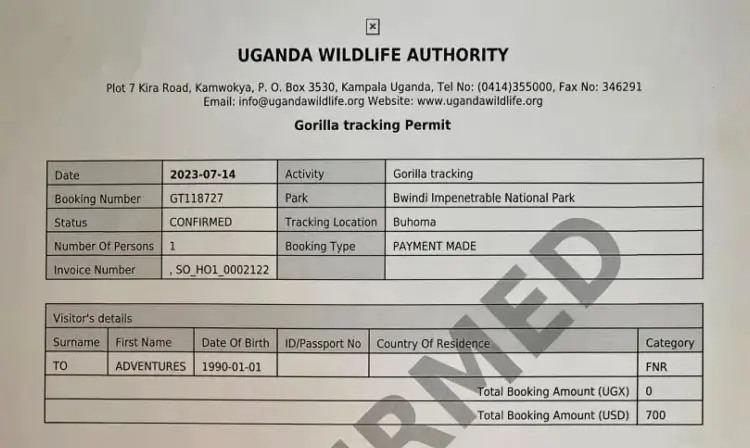
UWA allocates gorilla trekking permits by family group within sectors. When you book through a licensed operator, you can state a sector preference, and the operator will request assignment within that sector, subject to availability.
What you cannot guarantee in advance is the specific gorilla family within a sector, because UWA makes that allocation based on group availability on your date.
Stating a family preference is worth doing as a secondary request, but the sector is the more controllable variable in the booking conversation.
The earlier you book, the more likely your sector preference is accommodated. At Rushaga, where availability is deepest, a two-month window is often sufficient.
At Buhoma during peak season, six months is not excessive. The gorilla permit availability guide maps the realistic booking windows by sector across the calendar year.
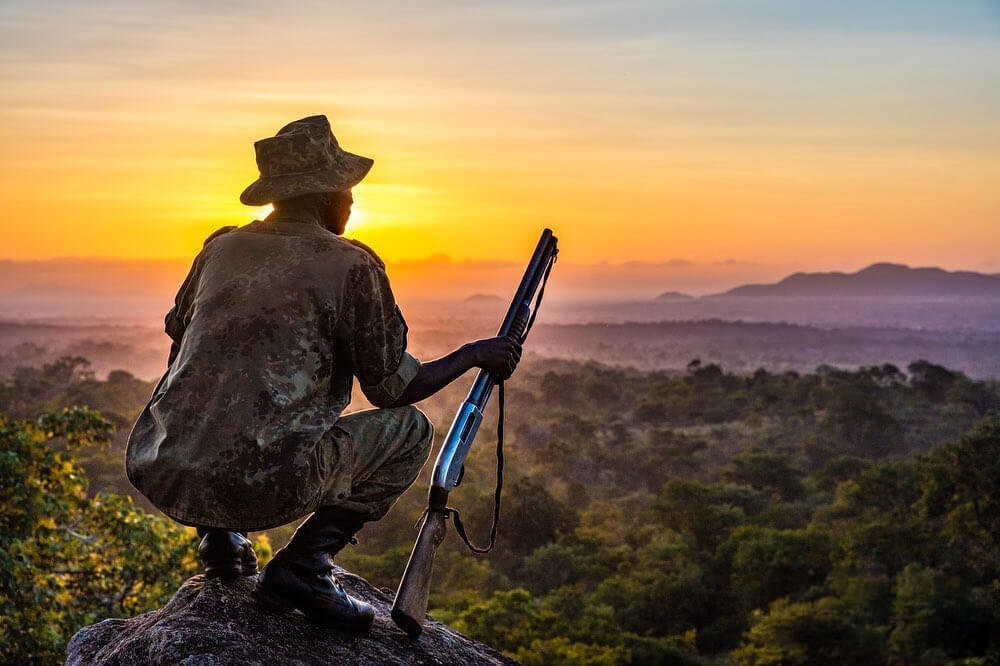
According to the Uganda Wildlife Authority, gorilla trekking revenue supports over 700 ranger and park staff positions across Uganda’s protected areas, a number that the multi-sector structure of Bwindi directly sustains by distributing visitor traffic across a wider ranger footprint.
Booking a less-visited sector like Ruhija is not a compromise. It is a contribution to a more evenly distributed conservation economy within the park.
Frequently Asked Questions

1. Which Bwindi sector has the best gorilla sightings?
All four sectors access fully habituated gorilla families, which means successful sightings are near-certain across the park. The meaningful variable is not sighting quality but encounter character.
Rushaga’s families are the most numerous, giving the widest range of group dynamics to observe. Ruhija’s families range across the most varied terrain.
Nkuringo’s group tends to produce encounters in multiple forest environments on the same day. “Best” depends on what you are looking for from the hour.
2. Can I change my sector after booking?
Sector changes after permit confirmation are subject to UWA’s amendment process and depend on availability at the new sector and date.
Your operator manages this on your behalf, but changes are not guaranteed and take time.
Specifying your sector preference clearly at the time of initial booking is significantly more reliable than requesting a change afterwards.
3. Is Rushaga or Buhoma better for a first gorilla trek?
Both are appropriate for first-time trekkers. The practical distinction is access route and availability.
- If you are arriving via Kampala or Fort Portal, Buhoma is the more natural sector.
- If you are arriving via Kigali or booking within three months of travel, Rushaga is the more practical choice.
The gorilla encounter experience at both sectors is fully rewarding for a first visit; the difference is in the surrounding logistics rather than the forest itself.
4. Does the trek difficulty vary within a sector depending on which gorilla family I am assigned to?
Yes, meaningfully so at Rushaga and Ruhija, and to a lesser extent at Buhoma. At Rushaga, families range from accessible mid-altitude terrain to more demanding higher ground, depending on the group.
If fitness is a specific concern, ask your operator to request one of the Rushaga families with a reputation for more accessible terrain.
At Nkuringo, the sector’s escarpment structure dominates regardless of family location, so the terrain variable is less controllable there.
5. Are all four sectors accessible year-round?
Yes, but with significant seasonal caveats for Nkuringo and Ruhija.
Both sectors involve approach roads and trail sections that become substantially more difficult during the long rains (April to May) and can require significantly more capable vehicles and slower driving. Buhoma and Rushaga handle wet-season conditions more reliably.
If your trip falls in April or May and Nkuringo or Ruhija is your preference, discuss the specific road and trail conditions with your operator before confirming the sector.
The best time for gorilla trekking guide covers seasonal conditions across all sectors in detail.

Understanding Bwindi’s sectors is the piece of planning knowledge that separates a well-matched gorilla trek from a default one.
If you want help choosing the right sector for your fitness level, arrival route, group composition, and travel dates, plan your safari here, and we will match you to the right part of the forest before anything else is arranged.
If your dates are set and you are ready to secure your permit, start the booking process here.