
Uganda’s smallest national park runs to just 34 square kilometres. On any given trekking day, no more than eight people walk into the forest to see gorillas.
That ratio, one family, eight visitors, an hour of contact, is the quietest, most concentrated gorilla encounter available anywhere on the continent. This is Mgahinga Gorilla National Park, and its smallness is precisely the point.
While Bwindi draws most of the attention with its 20-plus habituated gorilla families and dense ecotourism infrastructure, Mgahinga offers something structurally different: an intimate encounter framed by volcanic ridgelines, bamboo forest, and the particular quality of silence that comes from knowing very few other people are here.
This guide covers everything you need to plan Mgahinga gorilla trekking properly:
- The Nyakagezi family
- Permits
- Golden monkey tracking
- Volcano hiking
- The Batwa Trail
- Seasonal considerations
- Getting here from Kigali or Kampala
- How to build a broader itinerary around it.

Key Takeaways
- Mgahinga hosts a single habituated gorilla family — Nyakagezi — which means a maximum of eight visitors per day. The intimacy is structural, not incidental.
. - The Nyakagezi family carries one of the most extraordinary dynamics in mountain gorilla research: four to five silverbacks coexisting peacefully within the same group, including a patriarch who was overthrown but never left.
. - A Uganda gorilla permit costs $800 per person, half the price of Rwanda’s $1,500. For travelers flying into Kigali, the drive to Mgahinga takes just three to four hours — shorter than the Rwanda park route for some groups.
. - Mgahinga is the only place in Uganda where you can track golden monkeys, an endangered Albertine Rift endemic found nowhere else on Earth.
. - Three hikeable volcanoes sit within the park, including Mount Sabinyo — the only place on the continent where you can stand in Uganda, Rwanda, and the DRC simultaneously.
Why Mgahinga Demands Its Own Consideration

Every major gorilla trekking experience guide in existence treats Mgahinga as a footnote to Bwindi. That framing deserves pushback.
The two parks are not interchangeable options on the same spectrum. They are genuinely different experiences shaped by different geographies.
- Bwindi is a montane rainforest. Dense, canopied, layered, horizontal.
- Mgahinga is a volcanic landscape. Vertical, open in places, defined by altitude and the presence of three mountains that dominate the skyline.
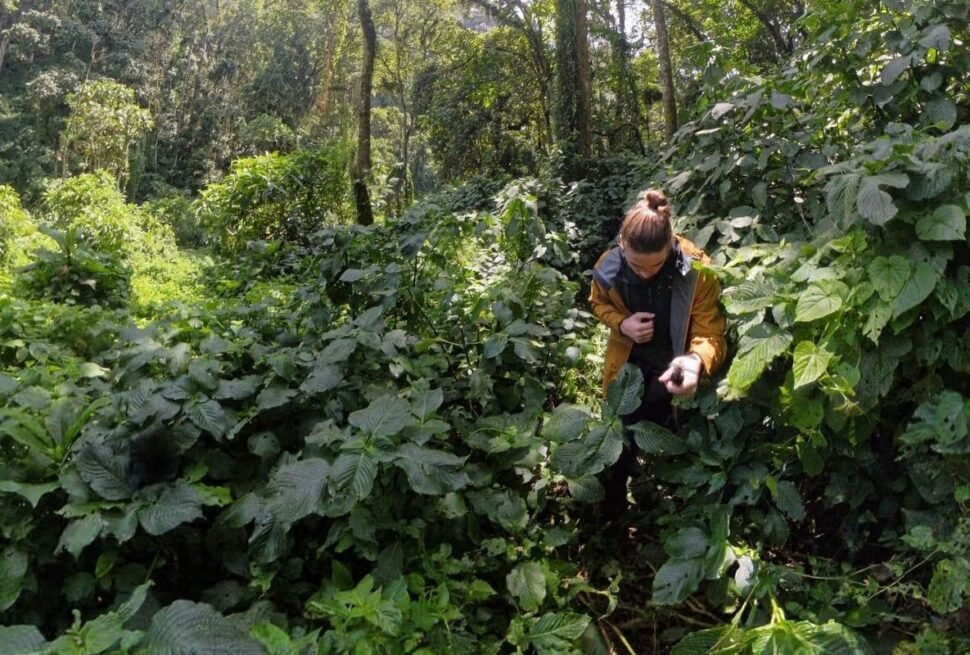
Trekking in Mgahinga, you move through bamboo zones and afro-montane vegetation on terrain that periodically opens into clear views across the Virunga Massif toward Rwanda and Congo.
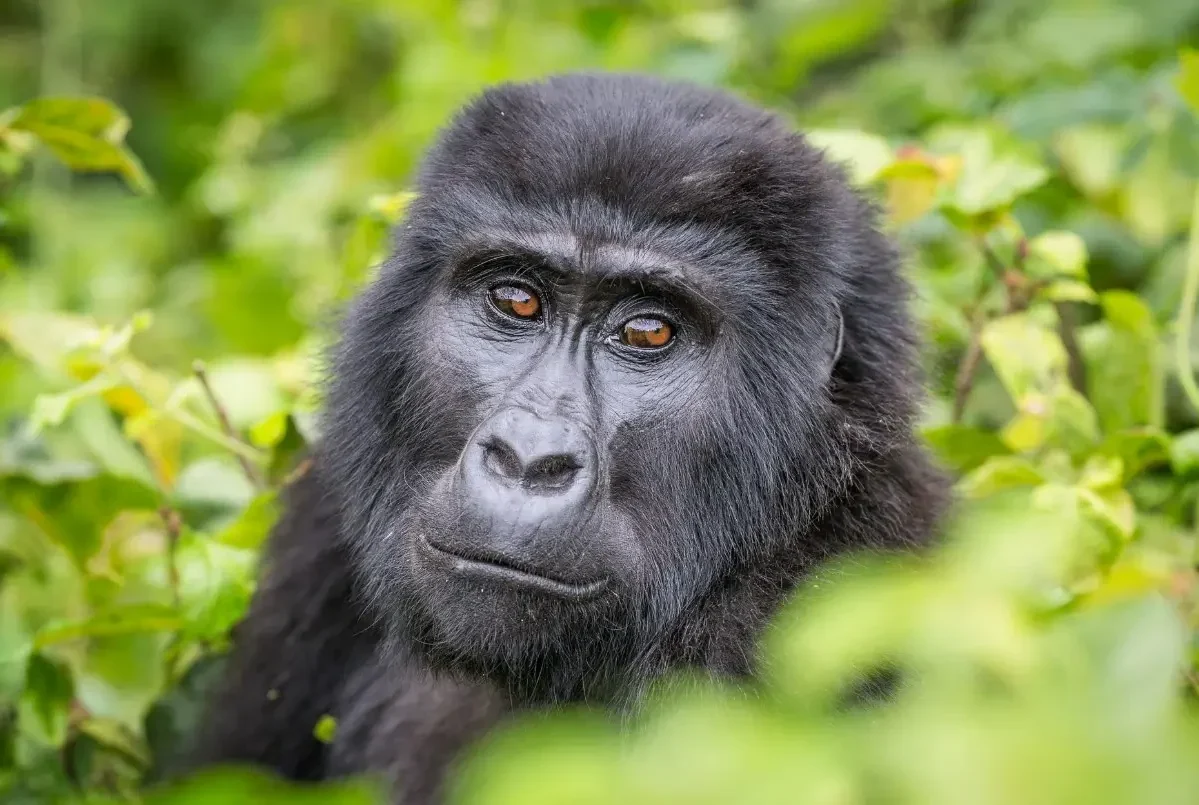
The gorillas you find at the end of that trek are calm, well-habituated, and living in an area with enough forage that they tend not to range far.
It’s a focused encounter with none of the logistical complexity that multiple sectors and multiple gorilla families introduce when deciding between Bwindi vs Mgahinga.
There’s also a conservation narrative specific to Mgahinga that most operators skip.
The Batwa people of Uganda — forest-dwelling hunter-gatherers who inhabited this land for millennia — were evicted when the park was gazetted in 1991, receiving neither land nor compensation in return.
Today, they survive largely outside the formal economy, and the cultural experience now offered to tourists represents one of the few revenue streams reaching them directly.
The Batwa Trail isn’t an add-on attraction; it’s a complicated moral encounter with what park conservation actually costs the people it displaces.
Traveling through Mgahinga without acknowledging that history, or engaging with it where you can, means engaging with the park only on its prettiest terms.
The Nyakagezi Gorilla Family

There are no sectors to choose between at Mgahinga, no family comparisons to make. There is one habituated group — Nyakagezi — and every gorilla trekking permit issued for this park grants access to it.
Habituation of the Nyakagezi family began in 1991, the same year the park was gazetted, and the family opened to tourism in 1994.
For years afterward, the group was notoriously mobile, periodically wandering across the unfenced border into Volcanoes National Park in Rwanda and Virunga National Park in the DRC — a habit that made permit-booking a somewhat anxious business.
By 2012, the family had settled more permanently within Mgahinga, and the success rate for seeing them now sits at around 95%.
What makes Nyakagezi genuinely unusual among the world’s habituated gorilla families is its silverback structure. Most gorilla groups operate under a single dominant silverback backed by subordinates who eventually either challenge or leave.
Nyakagezi currently has four to five silverbacks coexisting peacefully:
- Mark, the dominant leader who inherited his position from his father
- Mafia and Matthew, who support him
- Bugingo, the former patriarch, is now thought to be well over 50 years old.
Bugingo was overthrown by his own son, but never left.
He continues to live within the family, occupying a status that researchers describe without quite finding the right human analogy — part elder statesman, part tolerated grandfather, universally referred to by park rangers using the Swahili word mzee, meaning wise old man.
The coexistence of multiple silverbacks in a single stable group is rare enough that it has drawn sustained interest from gorilla researchers. In most displacement cases, overthrown silverbacks are banished or die in isolation — as happened with Ruhondeza of Bwindi’s Mubare family.
Bugingo’s continued presence is an anomaly, and watching four silverbacks maintain social order in the same group provides a behavioral layer that few gorilla encounters anywhere can match.
The broader family includes adult females Nshuti and Nyiramwiza, several juveniles, and infants — a total group size fluctuating around ten to eleven members, subject to births and the normal shifts in family composition that gorilla researchers track continuously.
One member worth knowing by name is Fred, a juvenile named after the Mountain Gorilla Veterinary Project doctor who saved him from a wire snare early in his life.
His presence in the group is, in its own quiet way, a record of the conservation effort that keeps these mountain gorilla facts alive.
What Mgahinga Gorilla Trekking Actually Looks Like

The briefing starts at 7:30 am at Ntebeko, the park headquarters situated just inside the park gate. It covers the rules, the seven-metre distancing requirement, protocols for charges, and a brief introduction to the Nyakagezi family’s current composition.
Then the group — eight people maximum — heads into the forest with Uganda Wildlife Authority guides and armed rangers.
Nyakagezi’s home range tends toward the lower slopes of the volcanoes, which is one of the reasons the trek is generally considered slightly less grueling than the steeper sectors of Bwindi.
The terrain still involves volcanic rock, bamboo gradient, and uneven ground, but the family’s preference for lower altitude forage zones means the hike to locate them averages around two to four hours rather than the five-plus that how long gorilla trekking sometimes demands in difficult Bwindi sectors.
The open character of parts of the bamboo zone also provides cleaner sightlines than Bwindi’s dense undergrowth, which matters if you’re carrying a camera.
When you find the family, you have one hour. The rules are identical to Bwindi:
- Maintain seven metres
- No flash photography
- No eating or smoking in the gorillas’ presence
- Stay calm by following gorilla charge safety protocols if they display aggression.
What differs is the size of the encounter.
Eight people with one family, in a park that receives a fraction of Bwindi’s visitor numbers, produce a quality of presence that is difficult to replicate in a higher-volume setting.
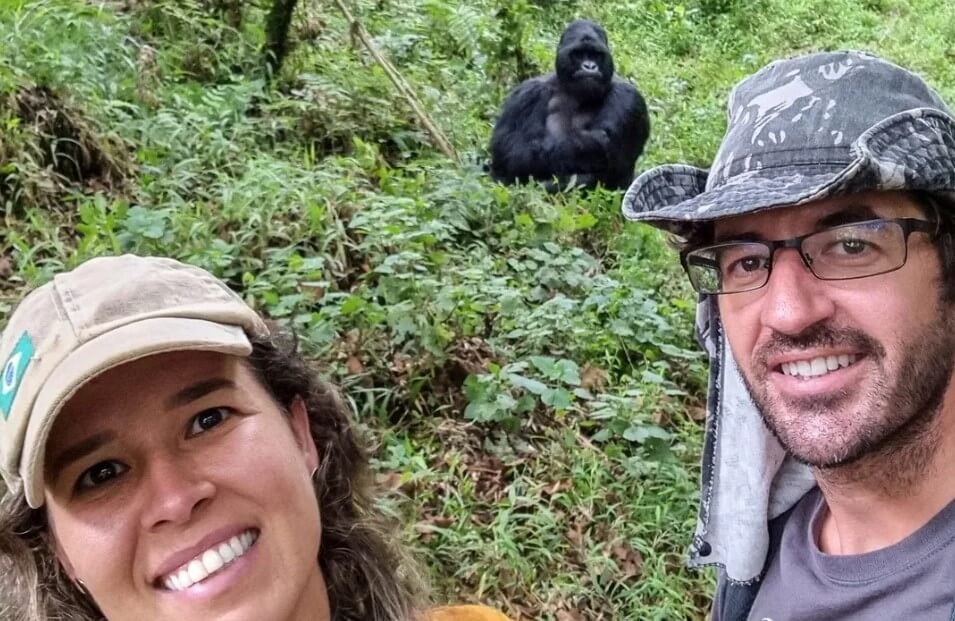
Watching a juvenile stumble into Bugingo and be gently redirected, or observing Mark scan the perimeter with a silverback’s characteristic stillness, happens without another group twenty metres away doing the same thing.
The success rate for encounters sits above 95%, but it isn’t guaranteed. Nyakagezi’s trans-boundary history means the family has occasionally drifted close to the Rwanda border.
If this happens on your trekking day, rangers will advise on the situation, and your operator should be equipped to handle scheduling alternatives.
Permits and Costs

Gorilla trekking permits for Mgahinga are issued by the Uganda Wildlife Authority at the same price as Bwindi:
| Visitor Category | Standard Trek (1 hour) |
|---|---|
| International visitors | $800 |
| Foreign residents of Uganda | $700 |
| Other African nationals | $500 |
| East African citizens | UGX 300,000 |
Park entry ($40 for international visitors) is typically included within the Uganda gorilla trekking permits fee, but worth confirming with your operator when booking.
Since Nyakagezi is the only habituated family, only eight permits are available per trekking day.
Demand can outpace supply during peak season — particularly June to September and December to February — even though Mgahinga receives far fewer visitors than Bwindi overall. The smaller permit pool is the reason.
You can check current availability on our gorilla permit availability tracker and book at least two to three months ahead for peak months; off-season last-minute gorilla permits are generally better, sometimes bookable on shorter notice.
The Uganda vs Rwanda gorilla trekking comparison is particularly significant for Mgahinga because of the geographic overlap.
Volcanoes National Park in Rwanda shares the same Virunga Massif, the same mountain gorilla population, and a similarly premium lodge landscape.
Its permits cost $1,500. Uganda’s cost $800.
For travelers who can reach Mgahinga from Kigali in three to four hours, there is a logical case for crossing the border rather than trekking on the Rwandan side — same ecosystem, comparable quality of encounter, substantially lower permit price.
Golden Monkey Tracking

Mgahinga is the only place in Uganda where you can experience golden monkey trekking. That statement contains more weight than it initially appears to.
a) The golden monkey (Cercopithecus kandti)
This is an Albertine Rift endemic found only in the highland forests of Uganda, Rwanda, the DRC, and a marginal population in Burundi. It is listed as endangered by the IUCN Red List due to habitat fragmentation.
Its most distinctive feature is a bright orange-gold patch across its back and cheeks, contrasting sharply with black limbs and a dark crown — not a subtle animal when the light catches it.
Mgahinga holds a population estimated at several thousand individuals, with two habituated groups available to visitors.
b) Standard golden monkey trek
At $60 per person for international visitors, this begins at 8 am, follows a similar briefing-and-guide structure to gorilla trekking, and culminates in one hour with the habituated group.
The monkeys move faster and more chaotically than gorillas — they jump, chase, and double back through bamboo at a pace that keeps the hour genuinely active.
A fast shutter speed and some patience with framing are useful; a telephoto lens is less so, since habituated individuals approach closely.
c) Golden monkey habituation
At $100 per person, this offers four hours alongside researchers working with a group still in the habituation process.
The science-adjacent quality of this experience appeals to travelers who want more than observation — the researchers are tracking behavioral changes across sessions, and the group itself hasn’t fully calibrated its response to humans, producing a rawness that the standard trek lacks.
For a single day in Mgahinga with enough energy, combining a morning gorilla trek with an afternoon golden monkey habituation experience is entirely possible and covers two of the rarest primate encounters available in East Africa.
Volcano Hiking in Mgahinga

The park protects the Ugandan portion of the three Virunga volcanoes, all of them extinct and all open to hiking. Each summit hike is a full-day commitment. Each one is different.
1. Mount Gahinga (3,474m)
The most accessible of the three and the logical starting point for anyone new to high-altitude hiking. The trail passes through bamboo and hagenia forest before opening into an Afro-alpine zone of giant lobelias and heather.
At the summit sits a crater swamp, surrounded by vegetation that functions as a small wetland ecosystem at altitude — an unexpected payoff after several hours of climbing.
2. Mount Sabinyo (3,669m)
The most technically demanding route, and the one with the most distinctive reward. Sabinyo’s summit is a narrow ridge with three peaks, and reaching the highest requires passing through Uganda, Rwanda, and the DRC in sequence.
There is a spot on that ridge where you can place one foot in each of three countries simultaneously — a geographic novelty that feels more significant in practice than it sounds on paper, given the political history of each of those borders.
The ascent involves some scrambling on the higher sections and isn’t suited to anyone uncomfortable with exposed ridgelines.
3. Mount Muhabura (4,127m)
The highest and most challenging, demanding a high level of fitness and an early start.
The trail is long, the altitude gain is significant, and conditions at the summit — where a crater lake sits in a bowl of alpine vegetation — can shift from clear to mist-covered quickly.
For experienced hikers, Muhabura is the most rewarding summit in the park; the panoramic views on clear days extend across the entire Virunga Massif and down into the East African Rift Valley.
Volcano hiking permits cost $80 per person per mountain. All hikes require a UWA guide and an armed ranger escort. The park entrance fee applies separately.
The Batwa Trail

Before the park existed, the Batwa lived inside it. They hunted, gathered, built shelters, held ceremonies, and accumulated over generations of knowledge about this specific forest — its plants, its animals, its seasonal rhythms.
The 1991 gazettal ended that. They were removed from their land with no resettlement land provided in return, and many ended up in extreme poverty in the communities around the park boundary.
The Batwa Trail

At $80 per person, running approximately five to six hours, this is led by Batwa elders and UWA guides.
It moves through sections of the forest the community knew intimately, with demonstrations of fire-making, traditional hunting techniques, medicinal plant use, and foraging knowledge that existed precisely because the forest provided everything.
The route passes through Garama Cave — a significant site that served as a royal council chamber and is still considered sacred. Storytelling, dance, and song are part of the experience, though the better operators frame this as cultural transmission rather than performance.
It’s worth being honest about the limitations of this experience. An $80 trail visit cannot repair the economic damage done by displacement, and not all operators handle the material with the seriousness it deserves.
The revenue-sharing mechanisms that direct a portion of permit fees toward Batwa communities exist, but the Batwa remain among Uganda’s most disadvantaged communities by most economic measures.
Engaging with the Batwa Trail thoughtfully — asking questions, listening carefully, understanding what you’re witnessing — is more valuable than treating it as a cultural supplement to the gorilla trek.
Best Time for Mgahinga Gorilla Trekking

The seasonal logic for Mgahinga mirrors Bwindi, with one important distinction: the volcanic terrain and higher average altitude make the rainy-season caution slightly sharper here when looking for the best time for gorilla trekking.
1. Dry seasons (June to September, December to February)
This season produces firmer trails, clearer sightlines from the ridgelines, and better conditions for volcano hiking, which becomes genuinely hazardous on wet volcanic rock.
Peak season demand is lower at Mgahinga than at Bwindi — the permit pool is smaller and the visitor base narrower — but July and August can still push availability thin. Book three to six months ahead for these months.
2. Rainy seasons (March to May, October to November)
This brings the forest to a particularly vivid green and makes the bamboo zone look exactly like a place where endangered primates should live. Trails get muddy, and volcanic sections become slippery.
Nyakagezi’s tendency to forage at lower altitudes means the gorilla trek itself is often manageable even in heavy rain, but the volcano hikes are best left to drier months. Lodge rates drop, permit availability increases, and the experience is quieter.
For travelers who want gorilla trekking without worrying about booking windows, the rainy season is genuinely worth considering.
One note on altitude: Mgahinga sits higher than most of Bwindi’s trekking sectors, with temperatures routinely cooler than you might expect for equatorial Africa. Even in dry months, evenings drop significantly.
Be sure to check what to wear for gorilla trekking and pack warm layers regardless of the season.
Getting to Mgahinga
1. From Kigali
This is the most important routing consideration for most travelers. Choosing a gorilla trek from Kigali safari via the Cyanika border crossing in Kisoro takes three to four hours by road.
That is shorter than many travelers’ transfer from Rwanda’s Kigali to Volcanoes National Park via Musanze, depending on traffic.
For visitors who want to trek mountain gorillas at Uganda’s permit price with minimal travel time, arriving through Kigali and routing directly to Mgahinga is the cleanest option available.
We run specific 2-day Bwindi gorilla trek from Kigali or Mgahinga itineraries structured around Kigali arrivals, including options that pair Mgahinga gorilla trekking with Lake Mutanda, Lake Bunyonyi, or a Bwindi extension before returning to Kigali.
2. From Kampala or Entebbe
The road journey from Kampala takes nine to ten hours via Masaka, Mbarara, Kabale, and Kisoro.
It is long, scenic in parts, and functional — but it commits a full day to transit each way. You can read our guide on how to get to Uganda for international flights.
Charter flights from Entebbe or Kajjansi to Kisoro Airstrip reduce that to under two hours and are worth the premium for visitors who want to minimize road time.
Several Mgahinga itineraries combine a fly-in arrival with a road departure toward Bwindi or Kigali for a more varied routing.
3. From Bwindi
Travelers combining both gorilla destinations can transfer between Mgahinga and Bwindi’s southern sectors (Nkuringo or Rushaga) in one and a half to two and a half hours, which is easy once you know how to get to Bwindi.
This makes a dual gorilla-trekking itinerary — two different families, two different landscapes — logistically manageable within a five to six-day trip.
Beyond the Trek

The park’s compact size means all of its major activities are accessible from a single base.
A well-structured 3-day Mgahinga gorilla trekking stay covers:
- Gorilla trekking
- Golden monkey tracking
- The Batwa Trail
- Half-day volcano hike, without rushing any of them.
For travelers on shorter schedules, a 1-day gorilla trekking Mgahinga excursion can hold the gorilla trek in the morning and golden monkey habituation in the afternoon, taxing but achievable for people in good physical shape.
Mount Gahinga Lodge, positioned directly at the park gate, is the most convenient base and the most atmospheric. Budget and mid-range options are available in and around Kisoro town, a twenty-minute drive from the park entrance.
The surrounding region adds further possibilities. Lake Mutanda sits within an hour of Mgahinga, its islands and shoreline accessible by canoe.
Exploring Lake Bunyonyi connections is also popular; East Africa’s most scenic highland lake, terraced on all sides and dotted with islands, is two hours north and well worth a stopover. Both make natural additions to a southern Uganda itinerary anchored at Mgahinga.
Our Mgahinga Gorilla Trekking Itineraries
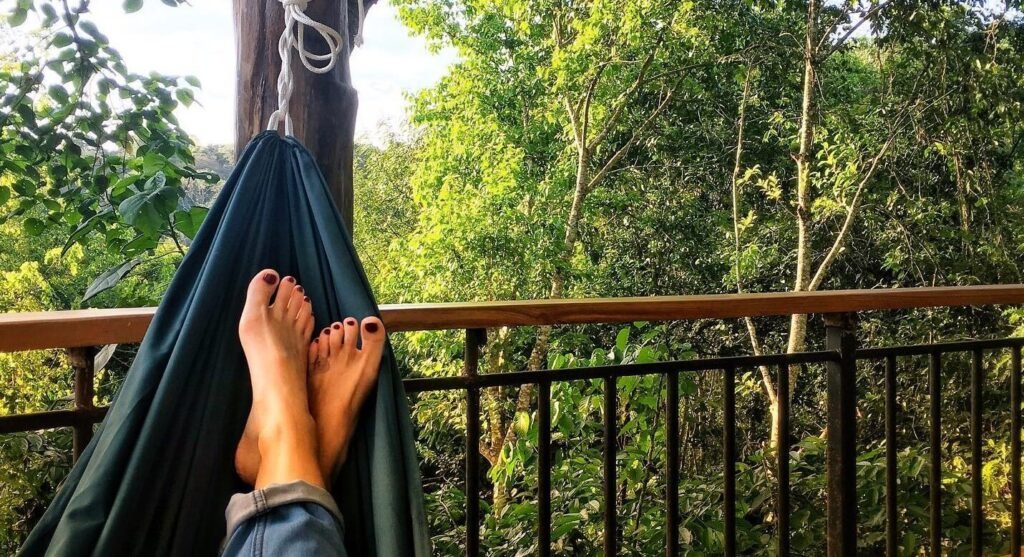
Each of our custom gorilla safaris below can be adjusted — different activity combinations, different accommodation choices, different routing depending on your arrival point.
- 1-Day Gorilla Trekking Safari in Mgahinga from Kigali: Recommended for travelers arriving via Kigali wanting a focused gorilla experience in Uganda.
. - 3-Day Mgahinga Gorilla Safari – Gorillas, Batwa & Volcanoes: Recommended for active travelers wanting gorilla trekking, volcano hiking, and meeting the Batwa tribe in one trip.
.
Practical Preparation

1. Fitness
People often wonder how hard gorilla trekking is. The gorilla trek itself is moderate — easier terrain than Bwindi’s steep sectors, shorter average duration. Reasonably fit travelers of most ages handle it without difficulty.
Volcano hiking is a different matter: Muhabura especially requires genuine physical preparation, a full day’s commitment, and honest self-assessment before booking.
2. Altitude
Mgahinga’s lower elevation is around 2,200 metres, rising to over 4,100 at Muhabura’s summit. Even if you’ve never experienced altitude sickness, the cooler, thinner air at the park’s upper zones warrants attention.
Arrive hydrated, ascend at a comfortable pace, and inform your guide immediately if you feel dizzy or unusually fatigued during a volcano hike.
3. What to pack
Waterproof ankle-supporting hiking boots are non-negotiable, particularly for volcano hikes and rainy-season treks. Long trousers and long-sleeved shirts protect against nettles and cold. Bring a rain jacket regardless of the season, insect repellent, and a warm layer for mornings and evenings.
On trekking day, skip scented products entirely — perfume, cologne, and scented sunscreen can disturb gorillas and attract insects at altitude.
4. Photography
Mgahinga’s more open bamboo terrain gives photographers better sightlines than the dense Bwindi canopy in places. Flash photography is prohibited during all gorilla encounters.
For golden monkey tracking, a fast shutter speed matters more than a long focal length — the monkeys come close but move quickly.
5. Health
When considering whether gorilla trekking is safe, remember that standard gorilla trekking health rules apply to protect the primates: if you are ill on trek day, you cannot go.
Most operators will rebook or reschedule affected permits with advance notice. Confirm your operator’s rescheduling policy before travel.
Frequently Asked Questions

1. Is Mgahinga gorilla trekking harder than Bwindi?
For the standard gorilla trek, Mgahinga is generally considered easier. Nyakagezi tends to forage at lower altitudes with a narrow home range, which typically produces shorter hikes than Bwindi’s steeper sectors.
The terrain is volcanic and uneven rather than dense-canopy steep, but distances are manageable for most reasonably fit travelers. Volcano hiking is a separate matter — that varies significantly by mountain and should not be underestimated.
2. Can I combine Mgahinga gorilla trekking with Rwanda?
Yes, and the routing is sensible. Traveling from Kigali to Mgahinga via the Cyanika border takes three to four hours.
A common itinerary pairs a Rwanda arrival, a drive to Mgahinga for gorilla trekking and other activities, then a return to Kigali — achieving Uganda gorilla trekking at Uganda permit prices ($800 versus Rwanda’s $1,500) with minimal additional travel time.
We have built several itineraries specifically around this routing.
3. What are the chances of actually seeing the gorillas?
The success rate for Nyakagezi sightings is around 95%. Advance trackers locate the family each morning from their last known sleeping nests and radio the guide team with coordinates before the main trekking group departs.
The primary risk factor is the family’s historical cross-border mobility near the Rwanda boundary, which is less of an issue since the group settled more firmly within Mgahinga after 2012.
4. Is golden monkey tracking worth adding to a Mgahinga trip?
For almost every traveler, yes. The golden monkey permit ($60 for standard trekking) represents exceptional value for an encounter with an endangered Albertine Rift endemic found nowhere outside this specific highland forest system.
If you’ve already traveled to Mgahinga for gorilla trekking, adding a morning or afternoon with the golden monkeys costs relatively little and adds a genuinely different primate experience.
The habituation experience ($100) is worth considering for travelers with a longer schedule or a specific interest in primate research.
5. How many people share the gorilla trek at Mgahinga?
A maximum of eight. Since there is only one habituated gorilla family in the entire park, eight is also the daily cap for all
Mgahinga gorilla trekking combined — not per group, but total. It is among the smallest-scale gorilla encounters available anywhere on Earth.
Plan Your Mgahinga Trek
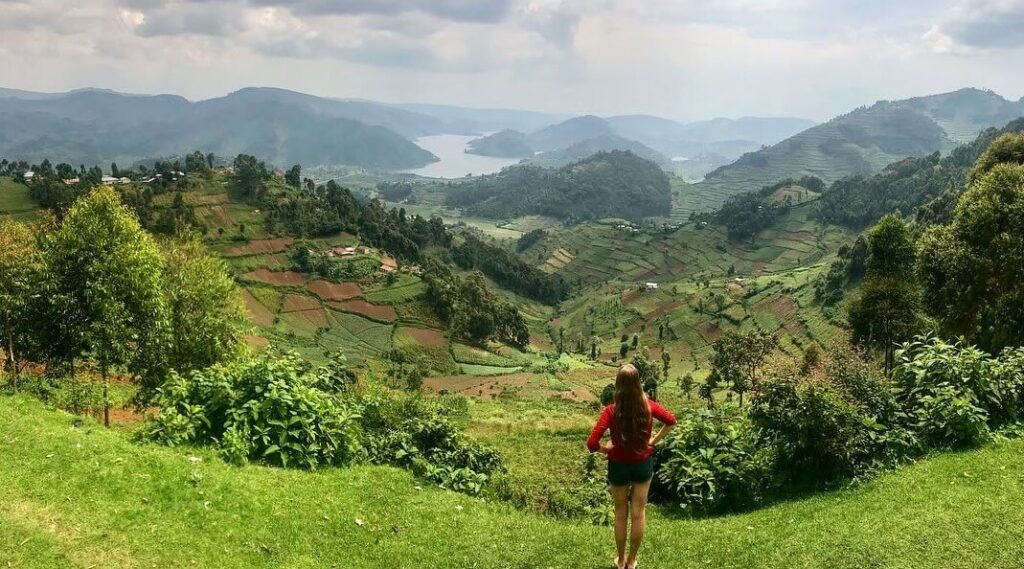
Permits are limited to eight per day, and Mgahinga’s permit pool has no buffer families to absorb overflow demand the way Bwindi does. If you have dates in mind — especially for peak season — the right move is to start the conversation now.
Fill in our inquiry form, and we’ll check permit availability for your window, recommend the most logical routing given your arrival point, and build out a full quotation with accommodation and any activities you want to add.
You can also WhatsApp us directly. We’re Uganda-based, in Mgahinga’s time zone, and we answer quickly.
Request a Quote →