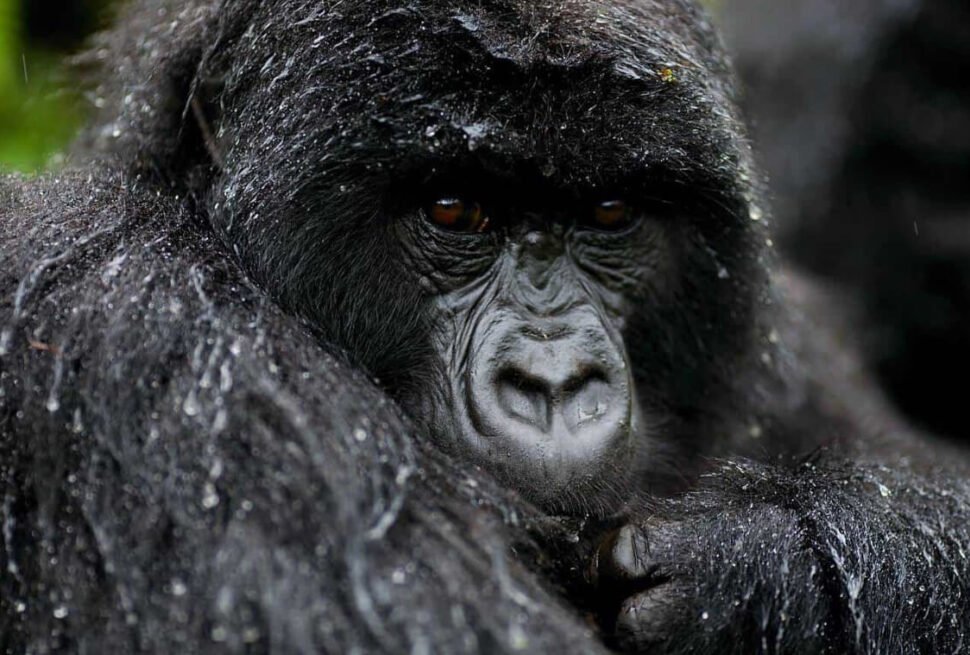

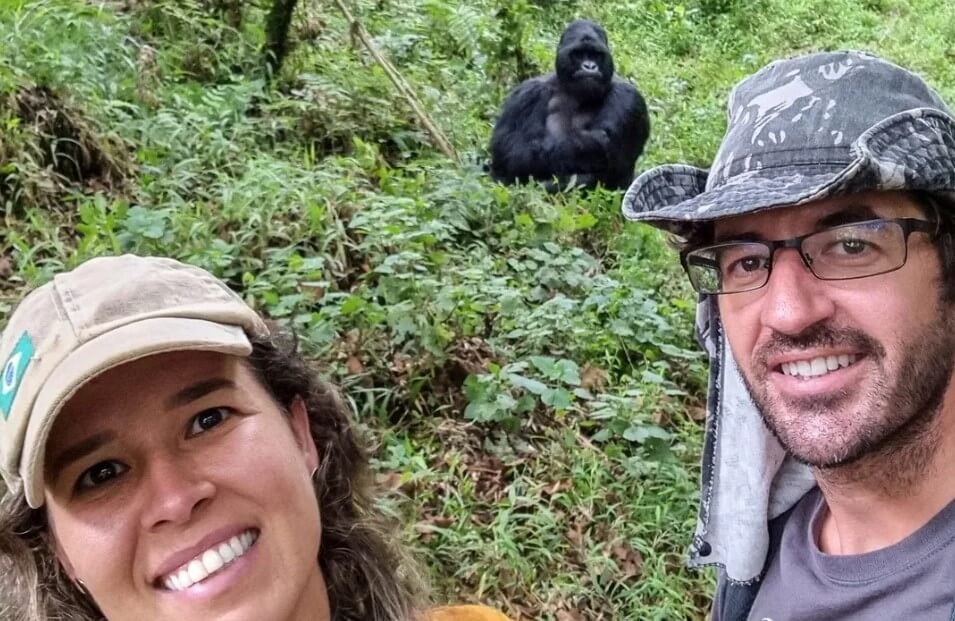
Kigali is one of the best-connected cities in Africa, and it sits less than three hours from some of the world’s most accessible mountain gorillas.
Not Rwanda’s gorillas, which cost $1,500 per permit. Uganda’s, which cost $800, and are reached via a straightforward border crossing that most travellers barely register by the time they arrive.
This route is one of Africa’s great open secrets. Fly into Rwanda, spend a night in Kigali, then cross into Uganda the following morning in time for a full gorilla trek. You can do it in a single day if your schedule demands it, or extend it into a two-day trip that includes an overnight near the forest.
Either way, the experience you’re heading toward belongs to Uganda — to Bwindi Impenetrable National Park, one of the most biologically dense forests on earth.
Here is exactly how the route works, what the border crossing involves, what to expect on arrival, and how to put the whole thing together.
Key Takeaways
- Kigali to Bwindi Impenetrable Forest takes roughly 3 to 3.5 hours by road, including the Gatuna/Katuna border crossing
- Uganda’s gorilla permit costs $800 per person, compared to $1,500 in Rwanda — the same mountain gorilla species, at nearly half the price
- The Gatuna/Katuna border is well-established and straightforward for tourists with the right documents
- Both a 1-day and a 2-day gorilla trek from Kigali are viable options
- Booking through a licensed Ugandan tour operator handles your permit, transport, and cross-border logistics in one arrangement

Why Travellers Trek from Kigali into Uganda
Kigali International Airport has become one of Africa’s most useful transit hubs.
RwandAir connects it to over 20 African cities, and there are direct flights from Brussels, London, Amsterdam, Doha, and various points across Asia. For travellers arriving in East Africa, Kigali is often the cleanest, most efficient entry point in the region.
The proximity to Uganda’s gorilla parks is the other reason. Bwindi Impenetrable Forest lies in southwestern Uganda, and the nearest sector, Rushaga, is only a few hours from the Rwandan border.
For anyone who has already flown into Rwanda, crossing into Uganda for the trek makes far more geographic and financial sense than flying separately into Entebbe and driving seven to eight hours south.
The price gap reinforces the case. Rwanda’s Volcanoes National Park offers a genuine, extraordinary gorilla experience — but at $1,500 per permit, it prices many travellers out entirely.
Uganda’s permit at $800 is still a significant investment, but it represents better value, meaningfully, particularly when you factor in that both countries protect populations of the same mountain gorilla subspecies (Gorilla beringei beringei).

The Route from Kigali to Bwindi
1. Kigali to the Gatuna Border
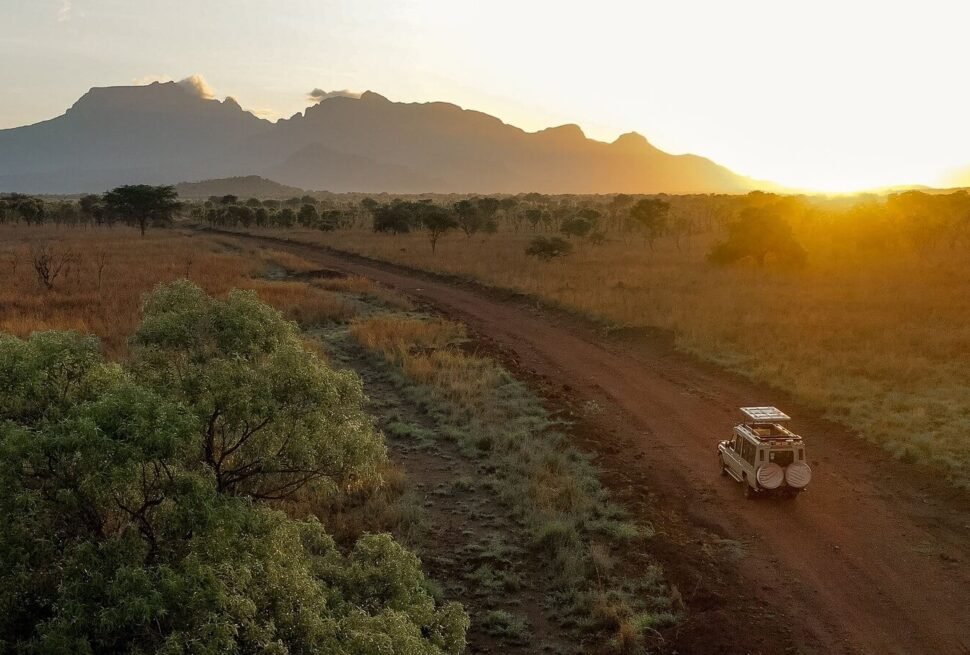
The drive from Kigali city centre to the Gatuna/Katuna border post covers approximately 85 kilometres along Rwanda’s RN1, a well-maintained two-lane highway that climbs through a rolling landscape of tea plantations and terraced hillsides.
On a clear morning, the drive is genuinely beautiful. With normal traffic, it takes between 80 and 100 minutes.
Your driver will be familiar with the route. The road is paved the entire way, and aside from a fuel stop or a quick roadside breakfast if your departure is early, there is nothing complicated about this leg.
2. The Gatuna/Katuna Border Crossing
Gatuna on the Rwandan side, Katuna on the Ugandan side. It is the same crossing, referred to by both names depending on which direction you read it.
For tourists, this border moves relatively quickly. The process involves exiting Rwanda (stamp out), walking or driving a short distance across, and entering Uganda (stamp in).
Your operator will have briefed you on the documentation required:
- A valid passport
- Your Uganda visa (purchased online in advance or on arrival as a single-entry or East Africa Tourist Visa)
- Your yellow fever vaccination certificate, which Uganda requires upon entry.
The crossing itself takes between 20 and 45 minutes under normal conditions. Weekday mornings are faster than weekend afternoons. Busy market days occasionally create short queues at the immigration desks, but nothing that significantly disrupts a planned day.
Expect the atmosphere at the border to feel ordinary and functional, not intimidating. It is a working border crossing used daily by traders, commuters, and travellers.
Your driver will park, guide you through, and you will be on Ugandan soil before the caffeine from your hotel breakfast has worn off.
3. Katuna to Bwindi Impenetrable Forest
Once through, the drive to Bwindi depends on which sector your gorilla trek is assigned to. The main options from the Kigali entry route are:
a) Rushaga and Nkuringo sectors
These sit closest to the border, roughly 45 to 60 minutes from Katuna along unpaved but drivable tracks. These sectors access multiple gorilla family groups and are where the majority of Kigali-entry trekkers are assigned.
Rushaga is also the only location for the Gorilla Habituation Experience, the extended four-hour encounter with a semi-habituated group.
b) Buhoma sector
This sits on Bwindi’s northern edge, farther from the border at approximately 90 to 120 minutes from Katuna. Most 1-day and 2-day itineraries from Kigali are based in the southern sectors, but Buhoma is included on longer itineraries that build in more time.
Total travel time from Kigali city to the park entrance, border crossing included, typically falls between three and three and a half hours with no complications.

What to Expect When You Arrive
You will reach your lodge or guesthouse in the afternoon or early evening, depending on your departure time from Kigali.
Southern Bwindi has a range of accommodation options, from simple community guesthouses within walking distance of the park gate to mid-range lodges with elevated views across the forest canopy.
The evening before the trek involves a briefing at your lodge: wake-up time (usually 5:30 to 6 am), what to bring, and any last-minute guidance from your operator or the UWA rangers.
First light in this part of the world arrives early and fast. The forest sounds different at dawn — unhurried, cool, and dense in a way that immediately makes it clear you are somewhere unusual.
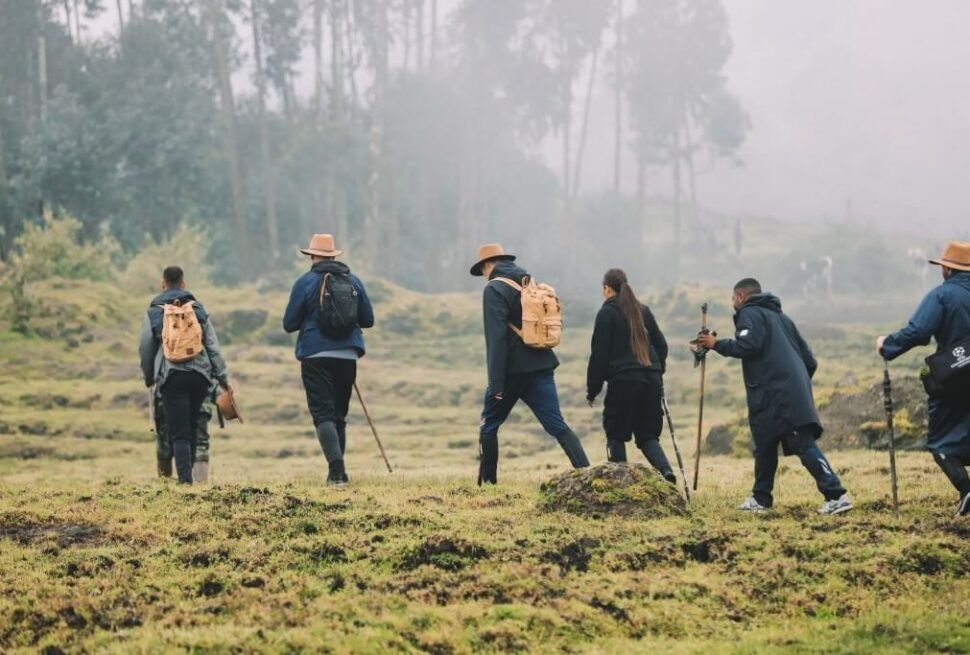
The trek itself departs from the sector gate after a second briefing by UWA rangers. Groups are a maximum of eight people per gorilla family.
What happens in the forest, and for how long, depends entirely on where the gorillas have moved overnight — which is part of what makes it real. More on what to expect from the experience is covered in our complete gorilla trekking guide for Bwindi.

Mgahinga as an Alternative from Kigali
Bwindi is not the only option from this entry point. Mgahinga Gorilla National Park lies even closer to the Rwandan border, in the Virunga volcanic range, and is accessible in roughly two hours from Kigali.
Mgahinga hosts one habituated gorilla family (the Nyakagezi group) and offers a genuinely different landscape — open volcanic slopes and bamboo forest rather than Bwindi’s dense equatorial jungle.
Permit availability at Mgahinga is more limited precisely because only one family is tracked there, which means booking lead times matter more. Our 1-day gorilla trekking safari in Mgahinga from Kigali covers this option in full.
For most travellers using the Kigali entry route, Bwindi is the primary recommendation given its scale, gorilla family diversity, and the range of accommodation it supports.
But Mgahinga deserves serious consideration for anyone drawn to the volcano setting or interested in combining the trek with the park’s golden monkey experience.
How to Arrange the Trip
1. Secure Your Permit First
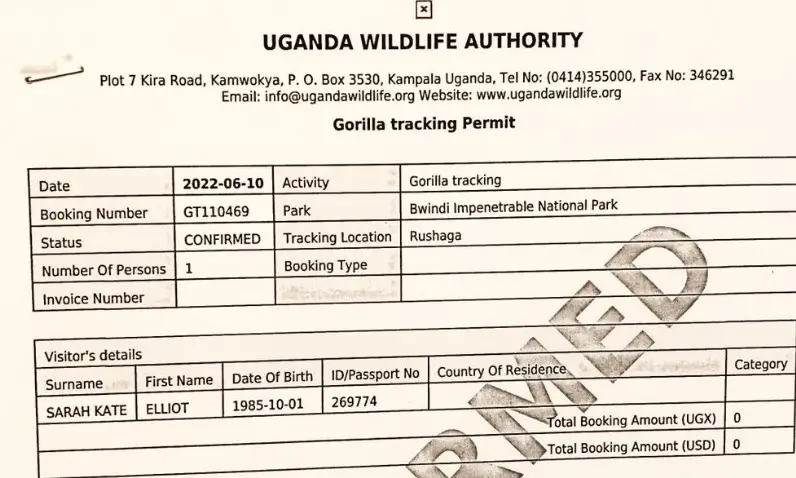
Uganda Wildlife Authority (UWA) issues a limited number of gorilla trekking permits per family group per day. Eight permits per group, per day. This is not a system where you can decide at the last minute.
Popular periods (June through September, December through February) see permits sell out three to six months in advance.
The simplest and most reliable way to secure a permit from outside Uganda is through a licensed Ugandan tour operator who holds an allocation or maintains an active relationship with UWA.
You do not need to navigate the UWA portal yourself. You should not assume that a Rwandan-based operator will handle the Uganda permit on your behalf unless they have explicitly confirmed it.
Book your gorilla permit here or plan your full safari, and we will handle the permit, the cross-border transport, and the accommodation in a single arrangement.
2. What the Operator Covers
A reputable Ugandan operator arranging a Kigali-entry trek should handle:
- Pickup from your Kigali hotel
- Transport to and across the border
- Transfer to the park
- Accommodation logistics
- Park fees
- Briefing coordination
- The return journey to Kigali after the trek
You should receive clear documentation of your permit allocation, sector assignment, and gorilla family group before departure.
If any operator cannot confirm the family group and sector in advance, it is worth asking about it directly.
3. What You Need to Bring to the Border
- Valid passport (minimum six months remaining validity)
- Uganda visa or East Africa Tourist Visa (apply at visas.immigration.go.ug in advance; single-entry is $50, East Africa Tourist Visa is $100 and covers Uganda, Kenya, and Rwanda)
- Yellow fever vaccination certificate (mandatory at the Ugandan border; the enforcement is real)
- Your gorilla permit confirmation (your operator will carry this, but keep a copy)

1-Day vs 2-Day: Which Works Better
a) The 1-Day Option
A 1-day Bwindi gorilla trek from Kigali is possible, and a meaningful number of travellers do it.
You depart Kigali by 5:30 to 6 am, cross the border mid-morning, trek in the afternoon if conditions allow, and return to Kigali by late evening. It is a long day, roughly 14 to 16 hours door to door, with the actual gorilla encounter in the middle.
The case for it: if you have a specific flight out of Kigali the following day and only a single free day, the 1-day option allows you to do the trek without sacrificing the rest of your itinerary. It works. People do it and return satisfied.
The honest caveat: you will spend more time in a vehicle than anywhere else that day. The gorilla encounter (one hour maximum with the family group) will feel even more concentrated against the length of the surrounding journey. If you can extend to two days, do it.
b) The 2-Day Option
A 2-day Bwindi gorilla trek from Kigali adds an overnight near the forest.
You arrive in the afternoon, settle in, attend the evening briefing, sleep in the forest’s quiet, and trek the following morning when you are rested and the light is right. The drive back to Kigali is then the afternoon affair rather than the end of a 16-hour marathon.
For most travellers, the 2-day option is the better experience, and the additional cost (one night’s accommodation and an extra day’s operator fee) is modest relative to the permit and travel investment already made.

A Few Things Worth Knowing
The gorilla trek requires a moderate to high level of physical fitness. The southern sectors of Bwindi involve steep terrain and dense undergrowth.
The trek to find the gorillas can take anywhere from 45 minutes to several hours, depending on where they have moved. If you have concerns about fitness or mobility, discuss them with your operator before booking — porters are available and worth hiring regardless of fitness level.
The weather in this part of Uganda changes rapidly. A morning that begins clear can produce rain by midday. Pack a waterproof layer regardless of the forecast. The gorillas do not stop for weather, and neither does the trek.
Finally: one hour with the gorillas goes faster than you expect. Experienced trekkers universally report this. The anticipation and the journey are long. The encounter is short and absolute. Go in knowing that, and the hour becomes something you hold onto for a long time.
Frequently Asked Questions
1. How long is the drive from Kigali to Bwindi?
Allow three to three and a half hours total, including the Gatuna/Katuna border crossing.
The breakdown is roughly 90 minutes from Kigali to the border, 20 to 45 minutes at the crossing, and 45 to 90 minutes from the border to the park, depending on the sector.
2. Do I need a Rwanda visa if I am transiting through Kigali?
Most nationalities receive visa-free access to Rwanda for up to 30 days. If you are connecting through Kigali International Airport without leaving the terminal, standard transit rules apply.
Confirm your specific passport’s Rwanda entry requirements at the Rwanda Directorate General of Immigration and Emigration before travel.
3. Can I book a Uganda gorilla permit directly without a tour operator?
You can apply through the Uganda Wildlife Authority portal, but availability through the portal is inconsistent, and the process is slower for international applicants.
A licensed Ugandan operator with an existing UWA relationship will almost always secure your permit faster and with greater certainty, particularly for popular travel periods.
4. What is the difference between trekking from Kigali and trekking from Kampala?
The Kampala approach involves an 8 to 9-hour overland drive through central Uganda, typically done over two days with an overnight stop in Kabale. It opens up Bwindi’s northern and western sectors (Buhoma, Ruhija) and combines well with longer Uganda itineraries.
The Kigali route is faster, more focused, and best suited to travellers whose trip is anchored in Rwanda or who want to minimise transit time.
5. Is it safe to cross the Uganda-Rwanda border at Gatuna?
Yes. The Gatuna/Katuna crossing is a well-used, well-staffed border post with no recent security concerns for tourists. Uganda and Rwanda maintain normal diplomatic and border relations, and travellers cross daily without incident.
Standard travel common sense applies: keep your documents accessible, follow your driver’s guidance, and do not photograph border infrastructure.
Ready to plan your trek? Get in touch, and we’ll put together the right itinerary for your schedule and budget.