
This is the question that drives more gorilla trekking research than any other. It is also the question that produces the most biased answers online, because almost every site that answers it is trying to sell you a trip to one country or the other.
This page is written by a Uganda-based operator. That position is stated upfront because intellectual honesty requires it.
What follows is a genuine attempt to compare both countries fairly, including Rwanda’s real strengths, because a traveller who chooses Uganda for the right reasons is a better client than one who chose it based on a one-sided argument they later felt misled by.
The short version: Uganda wins on value for most travellers. Rwanda wins on logistics for some.
Which one wins for you depends on your budget, your available time, and what you actually want from the experience. The rest of this page gives you enough information to decide.
Key Takeaways
- Uganda’s gorilla trekking permit costs $800; Rwanda’s costs $1,500. This represents the same mountain gorilla subspecies but a $700 difference per person.
. - Both countries protect populations of the same animal (Gorilla beringei beringei) and operate under a strict one-hour encounter rule.
. - Rwanda’s Kigali is significantly better connected internationally than Uganda’s Entebbe, which matters on very short trips.
. - Uganda’s Bwindi offers approximately 19 habituated gorilla families across four sectors; Rwanda’s Volcanoes National Park has 12.
. - The Gorilla Habituation Experience, a four-hour encounter with a partially habituated group, exists only in Uganda.
. - Rwanda’s infrastructure and luxury accommodation tier is more developed; Uganda offers a wider range across all budget levels.
. - For trips of three days or more, Uganda is the stronger overall value; for a single-day or overnight addition to a Rwanda trip, Rwanda is the simpler choice.

The Animal is the Same. The Price is Not.
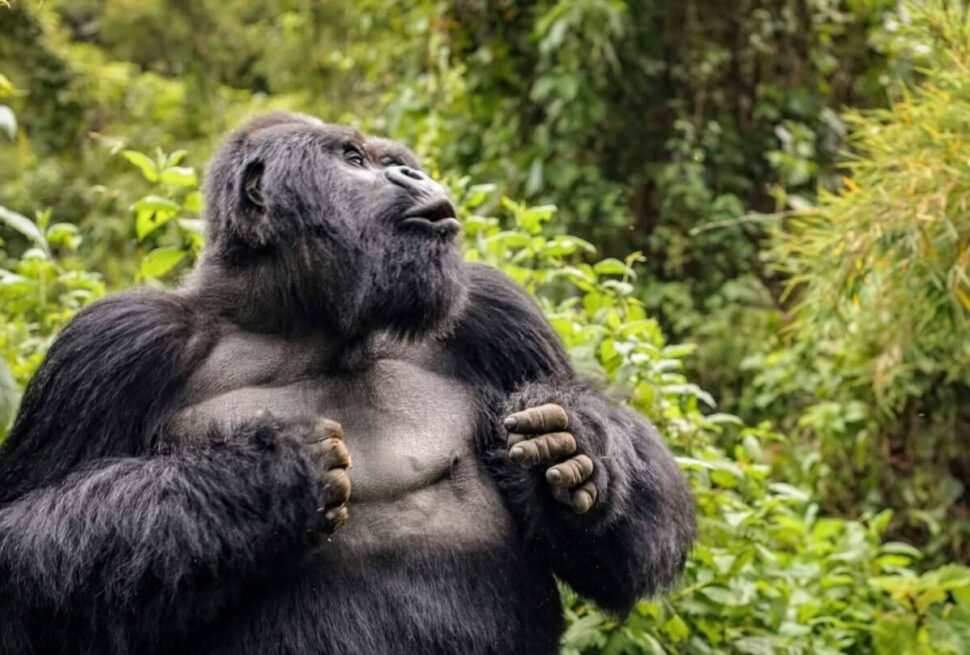
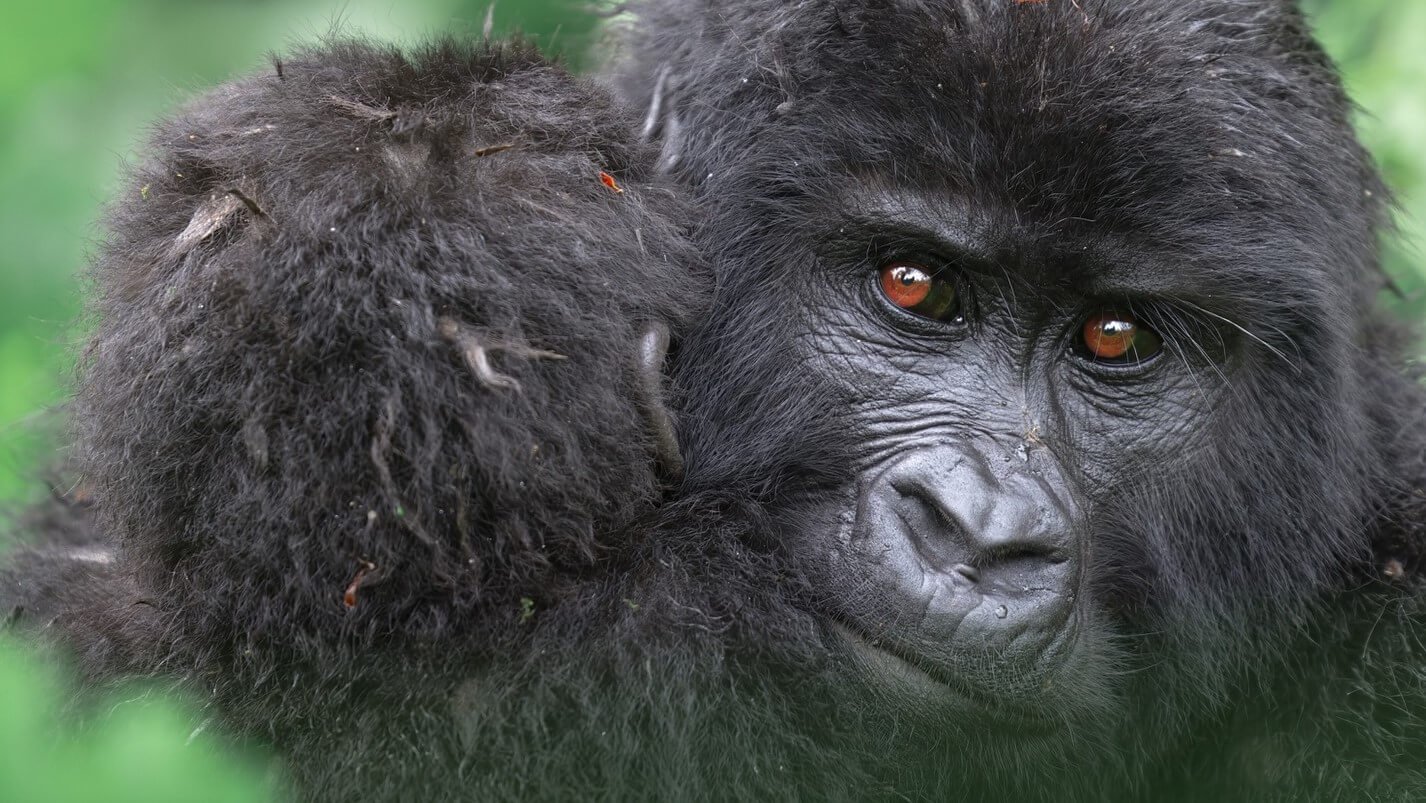
Start here, because it matters most. Both Uganda and Rwanda protect populations of mountain gorillas (Gorilla beringei beringei), the rarest of the gorilla subspecies, with a global wild population now exceeding 1,000 individuals.
The Virunga Massif, which is the chain of volcanoes straddling the borders of Uganda, Rwanda, and the Democratic Republic of Congo, contains the majority of these animals.
Bwindi Impenetrable Forest in Uganda holds a second, genetically distinct population.
When you trek with gorillas in Bwindi or in Rwanda’s Volcanoes National Park, you are encountering the same species.
The one-hour encounter rule is the same in both countries. The UWA protocols in Uganda and the Rwanda Development Board protocols in Rwanda are similarly structured.
The experience of sitting in the forest while a silverback watches you from eight metres away is not meaningfully different on one side of a political border versus the other.
What is meaningfully different is the price.
| Feature | Uganda | Rwanda |
| Standard gorilla trekking permit | $800 | $1,500 |
| Gorilla Habituation Experience | $1,500 (4 hours) | Not available |
| Maximum group size per family | 8 people | 8 people |
| Encounter duration | 1 hour | 1 hour |
| Number of habituated families | ~20 (Bwindi + Mgahinga) | 12 |
For a couple, the permit difference alone is $1,400. Over a group of four, it is $2,800. That is a significant sum of money by any standard, and it does not buy a meaningfully superior gorilla encounter in Rwanda.
Instead, it buys the same encounter at a higher price in a country with better roads and a stronger marketing machine.
Rwanda’s permit price reflects a deliberate positioning decision by the Rwanda Development Board: to anchor gorilla trekking in the premium tourism segment and attract high-spending travellers who will also spend generously on Kigali hotels, Rwandan airline tickets, and high-end lodges in the Musanze area.
It is a coherent commercial strategy, but it is not evidence that the experience is worth twice as much.

Flight Connections and Getting There
This is where Rwanda has a genuine, substantive advantage that deserves honest acknowledgement.
Kigali International Airport
This is one of Africa’s most efficiently connected hubs. RwandAir operates routes to over 20 African cities, with direct international connections from Brussels, London Heathrow, Amsterdam, Doha, Mumbai, and multiple Asian cities.
Connections from North America typically route through Europe or the Gulf, with short layovers in Kigali before onward travel.
Entebbe International Airport
This is less connected. Most international arrivals route via Nairobi, Doha, Dubai, Amsterdam, or London, with fewer direct options from secondary markets.
For travellers coming from Europe, the difference in routing complexity is modest. For travellers from North America, Australia, or Asia, Kigali is often a genuinely easier entry point with shorter total travel times.

For a trip anchored entirely in gorilla trekking, particularly a short one, this flight logistics advantage meaningfully favours Rwanda.
Flying into Kigali and trekking at Volcanoes National Park involves a two-to-two-and-a-half-hour drive from the airport, no border crossings, and relatively straightforward in-country logistics.
Flying into Entebbe and trekking at Bwindi involves either an 8 to 9-hour overland journey or a connecting light aircraft flight to Kihihi or Kisoro.
The critical counterpoint is the Kigali-to-Uganda route, which eliminates most of this logistical disadvantage for Bwindi’s southern sectors.
Flying into Kigali and crossing into Uganda adds only three to three and a half hours of travel time to reach Rushaga or Nkuringo. This is barely more than driving to Volcanoes National Park.
For travellers willing to cross a border, Uganda’s southern sectors are almost as accessible from Kigali as Rwanda’s own gorilla park. Our gorilla trekking from Kigali guide covers this route in full.
| Factor | Uganda (via Entebbe) | Uganda (via Kigali) | Rwanda |
| Main entry airport | Entebbe | Kigali | Kigali |
| Drive to park | 8–9 hours (Buhoma) | 3–3.5 hours (southern) | 2–2.5 hours |
| Int. connectivity | Moderate | Strong | Strong |
| Border crossing | No | Yes (Gatuna/Katuna) | No |
| Road quality | Good to rough | Good to rough | Good |

The Forest: Bwindi vs Volcanoes National Park
The two landscapes are genuinely different, and this distinction matters for some travellers more than the logistics.
Bwindi Impenetrable Forest
Bwindi is ancient. It is one of Africa’s oldest and most biodiverse forests, a UNESCO World Heritage Site that has remained largely undisturbed for over 25,000 years.
The forest is dense, dark in places, layered with undergrowth, and loud with birdsong at dawn. It covers over 300 square kilometres across four distinct sectors, each with its own character.
The trekking experience in Bwindi is emphatically in the forest. You follow trackers through vegetation that pushes back, along paths that are sometimes barely paths.
The difficulty varies dramatically by sector. Buhoma’s more established trails feel different from Nkuringo’s steep escarpment descents, but the common thread is immersion. You are inside something, not walking alongside it.
Bwindi also holds over 350 bird species, including 14 Albertine Rift endemics. For anyone with even a passing interest in wildlife beyond the gorillas, the biological richness of the forest floor and canopy is extraordinary.
Volcanoes National Park, Rwanda
Rwanda’s gorilla habitat is the Virunga volcanic range, a chain of dormant and active volcanoes straddling the borders of Uganda, Rwanda, and the DRC.
The landscape is dramatically different from Bwindi. It is more open in places and structured by the volcanic topography, with bamboo zones giving way to higher altitude vegetation as you climb.
The trekking experience can involve more open terrain and is sometimes considered slightly more accessible at the lower elevations, though this varies considerably by the gorilla family you are assigned to.
Some families in Volcanoes range higher and involve steeper, more demanding approaches than anything in Bwindi’s accessible sectors.
The Virunga setting offers a different kind of beauty, specifically the volcanic skyline, the sense of elevation, and the visible juxtaposition of the forest against cultivated farmland at the park boundary. It is striking rather than immersive in the way Bwindi is.
Neither landscape is superior. They are genuinely different environments with different aesthetic registers.
A traveller who wants to feel enclosed by an ancient forest will find Bwindi more satisfying. A traveller drawn to the drama of volcanic topography will respond more strongly to Virunga.

Trek Difficulty
Both countries require a moderate level of physical fitness for gorilla trekking. Neither is a flat walk, and both can involve several hours of hiking before the gorilla family is located, depending on where the animals have moved overnight.
In Uganda, difficulty varies significantly by sector. Buhoma and parts of Rushaga are the most accessible. Ruhija is the highest altitude sector and demands the most from trekkers in terms of aerobic capacity.
Nkuringo involves a steep descent and re-ascent that is physically demanding regardless of fitness level. Across all sectors, porters are available for $20 to $30 and are worth hiring.
In Rwanda, the Volcanoes terrain is similarly variable. The lower-ranging gorilla families are accessible to moderately fit travellers. Families that range higher on the volcanic slopes involve steeper terrain.
The organization of the trek is polished. Rwanda’s tourism infrastructure around Volcanoes is well-developed, and the pre-trek briefings and ranger guiding are consistently professional.
Fitness requirements in practice are comparable between the two countries. Neither demands athletic preparation, but neither rewards arriving unfit. Anyone with concerns about mobility or stamina should discuss them with their operator before booking in either country.

Conservation: How Permit Revenue Is Used
Both Uganda and Rwanda run conservation models that genuinely work. The mountain gorilla population’s recovery from approximately 620 individuals in 2008 to over 1,000 today is evidence of that. The mechanisms differ in emphasis.
Uganda Wildlife Authority distributes gorilla permit revenue across park management, anti-poaching operations, and a formal Revenue Sharing Programme that directs approximately 20% of park revenue to local communities adjacent to Bwindi and other national parks.
These funds support local schools, health infrastructure, and community development projects. The economic connection between gorilla conservation and community welfare is direct and documented.
Rwanda’s model concentrates a higher proportion of permit revenue at the premium end of the market.
The $1,500 price point is partly a conservation decision and partly a positioning one. Higher prices bring fewer trekkers, which reduces pressure on the gorilla families. The logic is coherent, and Rwanda’s gorilla families are healthy and well-monitored.
The Rwanda Development Board also runs community benefit programmes, though their structure and transparency differ from UWA’s published model.
The conservation outcome in both countries is positive. Neither permit is ethically compromised. The argument that trekking in Uganda is somehow less responsible than trekking in Rwanda, or vice versa, is not supported by the evidence.
Both countries have delivered population growth for mountain gorillas, and both depend on tourism revenue to fund the protection that makes that growth possible.

The Gorilla Habituation Experience: Uganda Only
This is Uganda’s most significant experiential advantage, and it deserves its own section.
The Gorilla Habituation Experience (GHEX) is available exclusively at Rushaga sector in Bwindi Impenetrable Forest.
It grants access to a partially habituated gorilla family, a group in the active process of becoming accustomed to human presence, for up to four hours rather than the standard one.
Groups are limited to four people. The permit costs $1,500, which is equivalent to Rwanda’s standard trekking permit.
What four hours with a semi-habituated group actually involves is qualitatively different from a standard trek. The animals are less predictable, more reactive, and more behaviourally varied over the extended period.
You observe feeding in detail, play behaviour among juveniles, dominance interactions, and the full texture of the group’s social structure, rather than a composed one-hour window of it.
UWA researchers and trackers work alongside you, which means you are watching the habituation process itself unfold.
For serious wildlife observers, conservation-minded travellers, and photographers, the GHEX represents the most intensive gorilla experience available anywhere in the world.
Rwanda does not offer an equivalent. The 3-day Gorilla Habituation Experience safari is the natural structure for this trip.

Accommodation
Rwanda has a more developed luxury accommodation infrastructure around Volcanoes National Park.
Properties like Bisate Lodge and One&Only Gorilla’s Nest represent the premium tier of African safari lodging, with design, service, and food quality that match comparable top-end properties globally.
Rwanda’s positioning as a luxury destination has attracted significant high-end investment.
Uganda’s accommodation range is broader but less uniform at the top. Bwindi has genuine luxury options.
Sanctuary Gorilla Forest Camp in Buhoma and Mahogany Springs are consistently well-regarded, but the overall tier does not match Rwanda’s most polished properties for fit and finish.
At mid-range and budget levels, Uganda offers considerably more choice, and several mid-range lodges around Bwindi offer experiences that are genuinely comfortable and well-positioned relative to their price.
| Level | Uganda (Bwindi) | Rwanda (Volcanoes) |
| Budget | $30 – $150 | $80 – $200 |
| Mid-range | $150 – $350 | $250 – $500 |
| Luxury | $400 – $800 | $600 – $1,500+ |
| Top-end | $800+ (limited) | $1,000 – $2,500+ |
Rwanda’s luxury tier is more competitive and more consistently excellent. Uganda’s mid-range tier is a better value and more extensive. Where you land in this comparison depends on your expectations and budget.

Combining Both Countries
It is worth noting that Uganda and Rwanda are not mutually exclusive choices for travellers with enough time. The two gorilla parks sit on opposite sides of the same mountain range.
A trip that begins in Kigali, treks Rwanda’s gorillas on day one, crosses into Uganda via Gatuna on day two, and treks Bwindi’s gorillas on day three is entirely achievable.
However, it requires two separate permits at two separate price points and the logistical overhead of a border crossing mid-trip.
More commonly, travellers use the Kigali entry route to access Uganda’s gorillas specifically, bypassing Rwanda’s trekking fees while still benefiting from Rwanda’s better flight connections and Kigali’s strong hotel infrastructure for the night before departure.
A 2-day Bwindi gorilla trek from Kigali or the 1-day Bwindi gorilla trek both work as extensions of a Rwanda trip. The route is clean, the border is straightforward, and the savings on the permit pay for the additional day comfortably.

Who Each Country Suits Best
Rather than a generic recommendation, this breakdown is by traveller type because the right answer genuinely varies.
Uganda is the stronger choice if:
- Budget is a meaningful consideration, and you want the best value for gorilla trekking available.
. - You are spending three or more days in East Africa and want to see more of one country rather than rushing between two.
. - The Gorilla Habituation Experience is on your list.
. - You are interested in a broader Uganda wildlife circuit, including Queen Elizabeth, Kibale, and Murchison Falls, built around the gorilla trek.
. - You are already routing through Kigali and prepared to cross the border.
. - You are a birder, naturalist, or anyone drawn to dense, ancient tropical forest.
Rwanda is the stronger choice if:
- You have a single day or overnight available and cannot justify the Kigali-to-Uganda travel time, even via the border crossing.
. - Accommodation quality at the top tier is a primary concern, and you want Rwanda’s most polished luxury properties.
. - You are combining gorilla trekking with a Rwanda-focused itinerary, such as the genocide memorial, cultural tourism, or Kigali city and the in-country cohesion matters.
. - Logistical simplicity is more important than cost savings. You want the cleanest possible end-to-end experience with minimal complexity.

The Direct Comparison
| Factor | Uganda | Rwanda | Advantage |
| Permit price | $800 | $1,500 | Uganda |
| Habituated families | ~20 | 12 | Uganda |
| GHEX | Yes ($1,500) | No | Uganda |
| Flight connections | Moderate | Strong | Rwanda |
| Drive from airport | 8–9 hrs | 2–2.5 hrs | Rwanda |
| Drive from Kigali | 3–3.5 hrs | 2–2.5 hrs | Roughly equal |
| Forest character | Rainforest | Volcanic | Preference |
| Trek difficulty | Variable | Variable | Roughly equal |
| Accommodation | Wide range | Narrower | Budget-dependent |
| Luxury quality | Good | Excellent | Rwanda |
| Conservation | Revenue sharing | Premium | Both credible |
| Wildlife circuit | Extensive | Limited | Uganda |
| Overall value | Higher | Lower | Uganda |
Frequently Asked Questions
1. Are the gorillas in Uganda and Rwanda actually the same?
Yes. Both countries protect populations of mountain gorillas (Gorilla beringei beringei).
Uganda’s Bwindi population is genetically distinct from the Virunga population shared between Rwanda, Uganda’s Mgahinga park, and the DRC, but they are the same subspecies.
The encounter experience is not meaningfully different on the basis of population.
2. Is Rwanda safer than Uganda for travellers?
Both countries are safe for tourists by any reasonable standard. Rwanda is often cited as one of Africa’s most orderly and well-governed countries, with Kigali consistently rated among the continent’s safest capitals.
Uganda has its own strong safety record for the gorilla-trekking regions specifically. Bwindi and Mgahinga are remote, well-managed parks with no recent security concerns relevant to tourists.
The safety difference between the two countries is not a meaningful factor in this decision.
3. Can I use my Rwanda gorilla trekking experience as grounds to skip Uganda, or vice versa?
Technically, yes; practically, no. The two experiences are similar in structure but different in the forest environment and, in Uganda, potentially different in depth if you opt for the GHEX.
Travellers who have done both frequently report that they are complementary rather than substitutable. Each leaves a different impression.
4. Do I need a visa for both countries if I cross the border?
The East Africa Tourist Visa ($100) covers Uganda, Kenya, and Rwanda and allows movement between them.
If you hold this visa, crossing from Rwanda into Uganda and back involves only the standard immigration stamp process at Gatuna/Katuna. If you hold single-country visas, you will need a Uganda visa in addition to your Rwanda visa.
Confirm your specific passport’s requirements with your operator before booking a cross-border itinerary.
5. Why do some operators recommend Rwanda even though Uganda is cheaper?
Some operators are Rwanda-based and hold permit allocations or partnerships in Rwanda rather than Uganda.
Others operate in both countries and recommend based on the client’s profile. Occasionally, the recommendation reflects commission structures rather than the client’s best interest.
The practical test is simple: ask the operator whether they hold Uganda gorilla trekking permits, and if so, why they still recommend Rwanda for your specific trip.
A good operator should be able to give you a substantive answer rather than a deflection.
If Uganda is the right choice for your trip, and for most travellers it is, we can confirm permit availability and build an itinerary around your entry point and dates. Start planning here, or book your gorilla permit directly if your dates are fixed and you are ready to move.