
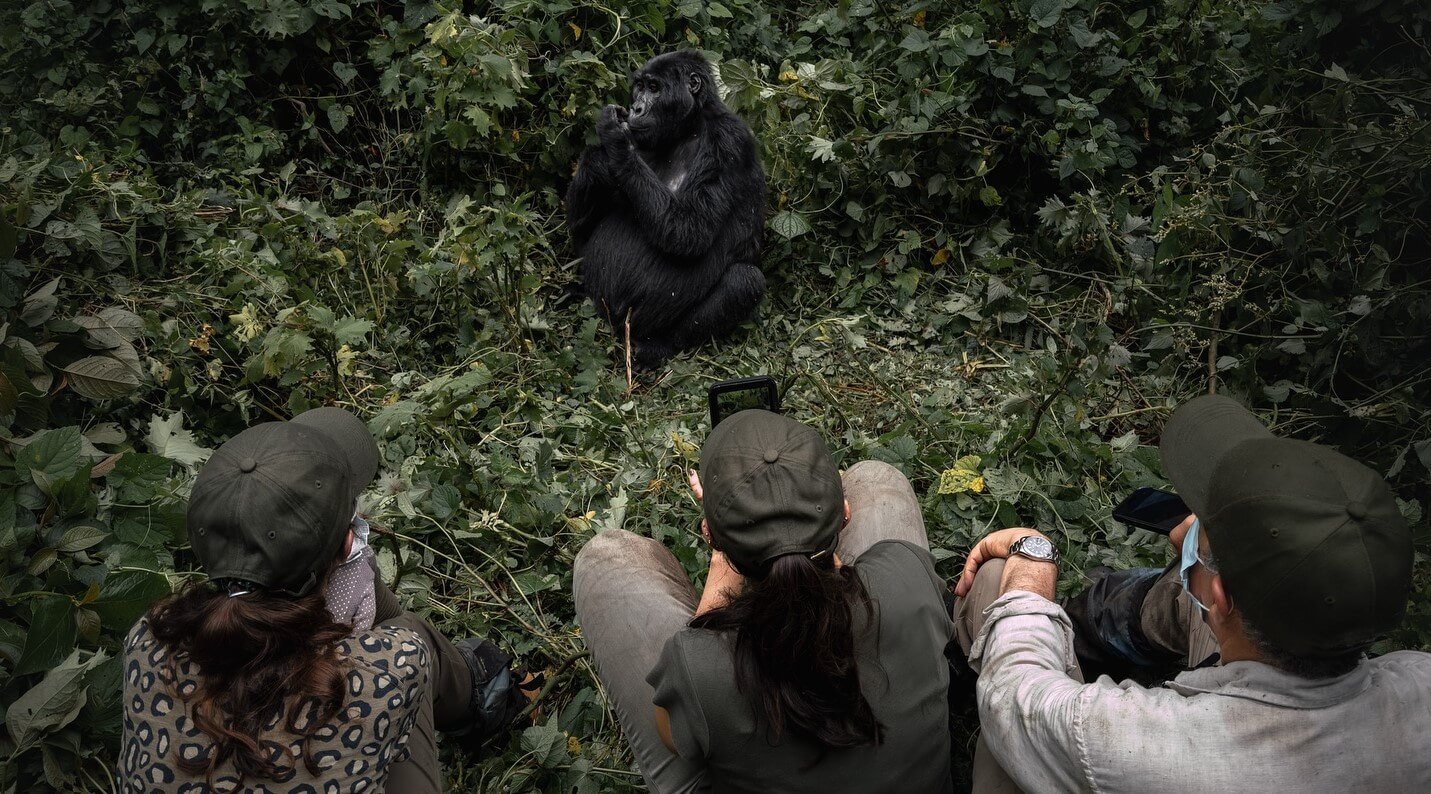
Eight permits. That is the daily limit per habituated gorilla family group in Uganda. Not per park, not per sector — per family.
When you consider that Bwindi alone hosts approximately 19 habituated gorilla families spread across four sectors, the total daily permit pool sounds generous.
Until you account for the global demand concentrated into two dry-season windows each year, the structural preference for weekends, the block bookings held by large operators, and the fact that Mgahinga’s single family offers just eight permits for the entire park per day. Suddenly, the picture looks different.
Gorilla permit availability in Uganda is not a simple question with a universal answer.
It shifts by season, by sector, by day of the week, and by how far in advance you are looking. This guide maps all of it so you can plan with a clear head rather than vague optimism.
Key Takeaways
- Uganda offers roughly 160 standard gorilla trekking permits per day across Bwindi’s four sectors, plus 8 at Mgahinga and a small number of Gorilla Habituation Experience slots at Rushaga
. - Peak season permits (June to September, December to February) sell out 3 to 6 months in advance at the most popular sectors
. - Rushaga sector consistently offers the most availability due to its higher number of habituated families; Buhoma sells out fastest
. - Midweek dates (Tuesday through Thursday) carry significantly more availability than weekends at every sector and in every season
. - Booking 4 to 6 months out is the safe standard for peak season; 6 to 10 weeks is typically sufficient for low season travel
.
How the Permit System Works
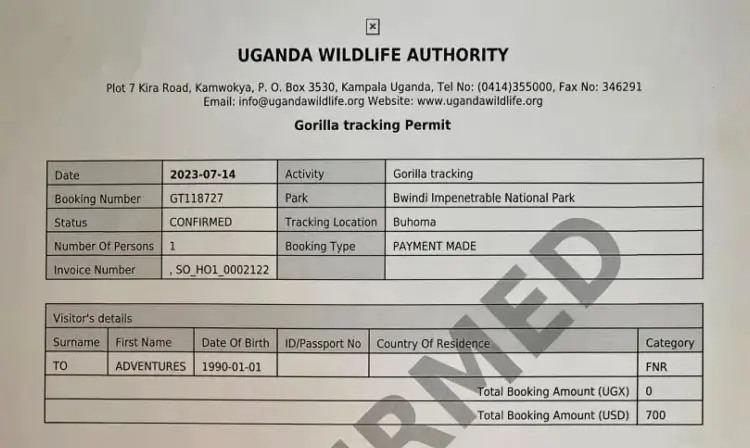
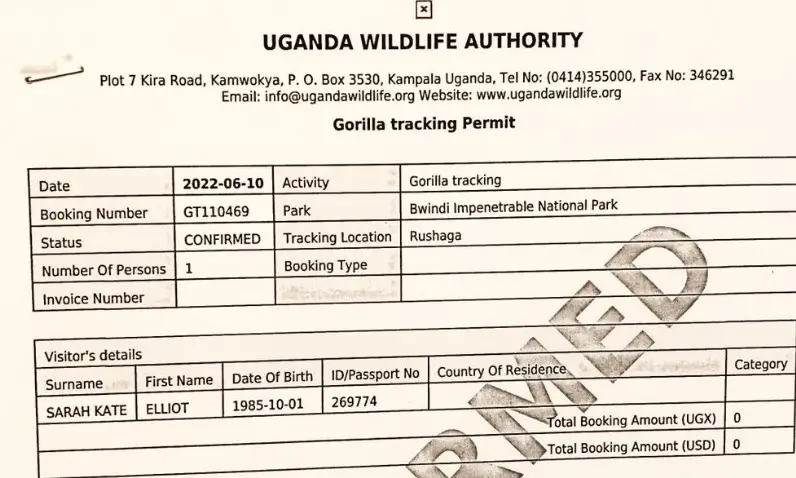
Before getting into availability patterns, it helps to understand the structure behind them. Uganda Wildlife Authority controls all gorilla trekking permits in the country.
Permits are issued against specific gorilla family groups on specific dates, and each family group is capped at 8 trekkers per day. The cap is not negotiable, and it does not bend for large groups, last-minute arrivals, or any other circumstance.
UWA allocates a portion of each family’s daily permits directly to licensed tour operators, who hold those allocations as part of their operator agreements.
The remainder is available through the UWA online portal. This dual-channel system matters for availability because the operator-held permits and the portal-visible permits are not always the same pool.
A date that appears fully booked on the portal may still have availability through an operator with a direct UWA relationship, and vice versa.
For a full breakdown of how permits work, what they cost, and what the rules require, the Uganda gorilla trekking permits page covers all of that in detail. This guide focuses specifically on the availability question.

Availability by Season
a) Peak Season (June to September and December to February)
These are the two dry-season windows, and they dominate the global gorilla trekking calendar. June through September aligns with European and North American summer holidays.
December through February catches the northern hemisphere winter break and the East African dry spell simultaneously. Both windows bring concentrated international demand to a system with fixed daily capacity.
At Buhoma, the most popular sector, permits during the June to September window routinely sell out 4 to 6 months before the travel date.
Specific weeks within that window, particularly late July and August when European school holidays peak, can be fully booked even earlier.
At Rushaga and Nkuringo, the sell-out timeline is slightly longer, given the higher number of available families at Rushaga, but expecting availability inside 8 weeks during peak season is optimistic.
December is the more forgiving of the two peak windows because the booking lead time from the northern hemisphere summer is shorter, and some travellers book around Christmas with less than ideal advance notice.
Even so, mid-December through early January fills quickly, and the closer you get to the Christmas and New Year period, the tighter availability becomes.
The practical guidance for peak season is unambiguous: if your dates are fixed and they fall between June and September or in December and January, securing your permit should be the first action you take after deciding to go.
Not the second. Not after you have sorted your flights. The permit first, then build the rest of the trip around it.
b) Low Season (March to May and October to November)
The wet season in Uganda’s gorilla trekking regions runs in two phases: the long rains from March through May and the short rains in October and November.
Availability during these months is considerably better, and in some cases substantially so.
March and May are the most available months in the calendar. The combination of wet weather, school terms being in session in the major source markets, and the general perception that rainy season trekking is inferior all suppresses demand.
That perception is worth examining. Trekking in the wet season means lush forest, dramatic light, fewer people on the trail, and a lower-stress permit search.
The gorillas do not particularly care about the rain, and neither does the forest. What the wet season requires is proper rain gear, appropriate footwear, and a realistic acceptance that some sections of the trail will be muddy.
October and November sit between the two peak windows and offer similar availability advantages to the long rains period, with the added benefit of generally more moderate rainfall than March to May.
For travellers with flexibility in their dates, the low season offers the same gorilla families, the same sectors, and the same one-hour encounter at $800, with less competition for permits and a visibly different atmosphere on the trail.

Availability by Sector
Not all sectors of Bwindi Impenetrable Forest operate under the same availability pressure. The differences are significant enough to influence your planning if you have sector flexibility.
1. Buhoma Sector
Buhoma is Bwindi’s oldest and most established trekking sector, sitting on the northwestern edge of the park with the widest range of accommodation nearby and the most straightforward approach road.
It is also the most visited, which makes it the tightest sector for availability. Buhoma’s gorilla families include the Mubare group, the oldest habituated family in Bwindi, and the Habinyanja and Rushegura groups.
These are well-known names in the gorilla trekking community, and demand for them reflects that.
If Buhoma is your sector preference, book the furthest out of any. During peak season, 5 to 6 months in advance is not excessive.
2. Rushaga Sector
Rushaga sits in Bwindi’s south and holds more habituated gorilla families than any other sector, making it the most permit-rich part of the park.
It is also the only sector where the Gorilla Habituation Experience is available, which adds a separate stream of permit demand (GHEX permits are capped at 4 people per day).
The higher number of standard trekking families means availability at Rushaga is generally better than Buhoma, even during peak periods.
This makes it the most practical sector for travellers operating with a booking window of less than 3 months.
It is also the most convenient sector for travellers arriving via the Kigali entry route, which is covered in full on the gorilla trekking from Kigali page.
3. Nkuringo Sector
Nkuringo occupies Bwindi’s southwestern edge, offering escarpment views toward the Virunga volcanoes and a distinctly different landscape character from the interior sectors.
It has fewer habituated families than Rushaga, which creates tighter availability, and the access road is the most demanding of the four sectors.
The combination of limited permits and logistically complex access makes Nkuringo less frequently chosen by independent travellers, which paradoxically sometimes means better availability than you might expect.
If Nkuringo is on your list, the road conditions and vehicle requirements are worth discussing with your operator before assuming it is accessible in every season. The how to get to Bwindi guide covers the approach roads in detail.
4. Ruhija Sector
Ruhija sits on Bwindi’s eastern rim, the highest of the four sectors at around 2,300 metres.
It is the least visited sector in the park, which means it consistently carries better availability than Buhoma and sometimes better than Rushaga, even during peak periods.
The reason fewer travellers choose Ruhija is partly access (the road from Kabale is rough and steep), partly altitude (the higher elevation demands more from trekkers physically), and partly familiarity (it is less written about than Buhoma and Rushaga).
For experienced trekkers or those who prioritise a quieter trail over a well-worn route, Ruhija rewards the extra logistics.
Its availability pattern makes it worth asking about, specifically if your preferred dates at other sectors are fully booked.
5. Mgahinga Gorilla National Park
Mgahinga operates under a fundamentally different availability dynamic from Bwindi. One habituated gorilla family, the Nyakagezi group, means 8 permits per day. Full stop.
When those 8 are gone, the park is full. There is no secondary family to fall back on and no alternative group to be assigned to.
Mgahinga’s availability is best during the low season and tightest during peak season for the same reasons as Bwindi, but the single-family cap means the absolute number of permits available per year is far lower.
Anyone with Mgahinga specifically in mind should treat the booking lead time as at least as long as Buhoma, and probably longer on a proportional basis.
The upside of Mgahinga’s scarcity is its intimacy.
Fewer trekkers share the park; the volcanic landscape is genuinely distinct from Bwindi’s dense equatorial interior, and the option to combine the gorilla trek with Mgahinga’s golden monkey experience adds a second primate encounter that Bwindi does not offer.

Availability by Day of the Week
This is the most underused piece of information in gorilla trekking planning, and it is straightforward.
Saturday permits sell out first, at every sector, in every season. Friday and Sunday follow.
The weekend premium exists because most international itineraries are built around weekend departures and arrivals, creating concentrated demand for those dates.
Tuesday, Wednesday, and Thursday consistently carry the most residual availability, including during peak season periods when the surrounding weekend dates are long gone.
A traveller with even a two-day window of flexibility in their trek date will find midweek a reliably better prospect than any weekend slot.
If your itinerary allows you to shift your trek from a Saturday to a Wednesday, the permit search becomes meaningfully less stressful. This is worth discussing with your operator at the itinerary-building stage rather than after dates are locked.

How Far in Advance to Book
The table below summarises the realistic booking windows by season and sector based on current availability patterns.
These are practical ranges rather than guarantees; individual dates vary, and a single large group cancellation can release permits into a window that would otherwise look closed.
| Season | Buhoma | Rushaga | Nkuringo | Ruhija | Mgahinga |
|---|---|---|---|---|---|
| Peak (Jun to Sep, Dec to Feb) | 5 to 6 months | 3 to 4 months | 3 to 5 months | 2 to 4 months | 5 to 6 months |
| Shoulder (Mar, Nov) | 6 to 10 weeks | 4 to 6 weeks | 4 to 8 weeks | 3 to 6 weeks | 8 to 12 weeks |
| Low season (Apr, May, Oct) | 3 to 6 weeks | 1 to 3 weeks | 2 to 4 weeks | 1 to 2 weeks | 4 to 8 weeks |
These figures assume standard trekking permits. The Gorilla Habituation Experience at Rushaga, given its 4-person daily cap, should be treated as having the same booking urgency as Buhoma during peak season, regardless of the time of year.
For travellers already inside the typical booking window for their season, the last minute gorilla permits page covers what is realistically possible and how to access it.
What Affects Availability Beyond the Calendar
Season and sector are the two primary variables, but several other factors influence what you actually find when you search.
1. Group size matters significantly
A solo traveller or a couple needs one or two permits, which can often be slotted into a partially filled family allocation.
A group of six or eight needs to find a single family with that many slots open simultaneously, which is harder and requires more lead time. Large groups should always book the furthest in advance.
2. Cancellations release permits
Large travel groups, corporate bookings, and photography tours occasionally cancel within 4 to 8 weeks of their trek date, returning their permits to the operator or UWA.
This is the most common source of genuinely good last-minute availability, and it is one that a connected operator tracks actively. The UWA portal does not always reflect these releases in real time; direct operator contact is faster.
3. Habituation programme expansion
Uganda Wildlife Authority periodically habituates new gorilla family groups, which adds permit capacity to the system.
New families typically enter the trekking programme at reduced contact frequency before full habituation is confirmed, and their addition is announced through UWA communications.
This is one of the reasons Uganda’s overall availability is gradually improving over time, though demand growth tends to absorb new capacity relatively quickly.
4. Political and global events
The COVID-19 period demonstrated how dramatically gorilla trekking permit availability can shift in response to external events. In normal conditions, this factor is irrelevant.
It is worth noting because it is one of the few circumstances in which availability opens dramatically rather than closing, and travellers who moved quickly during the post-pandemic reopening accessed peak-season dates that would normally have been impossible.

A Note on the UWA Portal vs Operator Channels
The Uganda Wildlife Authority operates an online booking portal where individual travellers can search and apply for permits. The portal is a legitimate booking channel and works as described, but it has known limitations that affect how you should use it.
Portal availability is not always updated in real time. Permits held by licensed operators as part of their UWA allocations may not appear as available on the portal even when the operator can confirm them.
Conversely, dates that appear available on the portal are not always confirmed until the full booking process is complete. Using the portal as your sole availability indicator can produce an inaccurate picture in either direction.
An operator with an active UWA relationship can check availability across sectors and dates through direct communication that is faster and more current than the portal search.
For travellers on a specific timeline, particularly for peak-season dates or the GHEX, the operator channel is the more reliable first call.
According to the Uganda Wildlife Authority, the gorilla conservation programme now protects over 1,000 mountain gorillas across the Bwindi and Virunga populations, a population that has doubled since the late 1980s largely due to permit-funded conservation efforts.
Booking through licensed operators who hold active UWA relationships directly supports this model.

Frequently Asked Questions
1. Can I book a gorilla permit without a fixed travel date?
No. Permits are issued against a specific date, sector, and gorilla family group. You cannot hold an open-dated permit and confirm the date later.
If your dates are genuinely uncertain, the practical approach is to narrow your window to two or three candidate dates and ask your operator to check availability across all of them simultaneously, then commit once you know what is available.
2. What happens if my permit date sells out while I am still planning?
If your first-choice date is fully booked, the options are to shift by one to three days (availability often varies significantly between adjacent dates), to change sector (Ruhija and Rushaga frequently carry availability when Buhoma does not), or to consider Mgahinga if low-season travel allows.
An operator who knows the system can usually identify a viable alternative faster than an independent search through the portal.
3. Is availability different for the Gorilla Habituation Experience?
Yes, and considerably tighter. The GHEX at Rushaga is capped at 4 people per day rather than the standard 8, making it proportionally the scarcest permit in the Uganda system.
It should be booked with the same lead time as Buhoma during peak season, regardless of when you plan to travel, and earlier if possible.
4. Do Ugandan residents get easier access to permits?
East African Community residents pay a reduced permit fee and are subject to the same advance booking requirements as international visitors.
There is no separate availability pool for residents; all trekkers book into the same daily family allocations.
5. Will availability improve in the future as more gorilla families are habituated?
Gradually, yes. UWA adds habituated families to the trekking programme as new groups complete the multi-year habituation process. Bwindi’s population continues to grow, and new family groups are periodically introduced.
However, demand for gorilla trekking has grown alongside capacity, and the addition of new families does not dramatically change the booking dynamics at the most popular sectors.
The structural scarcity that makes gorilla trekking what it is, a finite, intimate encounter with a limit of eight strangers per family per day, is a feature of the conservation model rather than a supply problem to be solved.
Permit availability moves faster than most travellers expect. If your dates are taking shape, the conversation worth having is now rather than later.
Check availability for your travel window here, or plan your full safari, and we will confirm permits as the first step before anything else is arranged.