

Uganda houses roughly half of the world’s remaining mountain gorillas, yet fewer than 100 individuals are permitted to see them in Bwindi Impenetrable Forest on any given day.
This scarcity is a deliberate choice. When travelers look at the price tag of a permit, the immediate reaction is often sticker shock.
However, viewing this fee as a simple ticket price misses the intricate economic engine that keeps a prehistoric species from sliding into extinction. The high cost of entry is the primary reason these Great Apes still exist in the wild.
Key Takeaways
- Permit fees directly fund 24-hour armed security and veterinary care for gorilla families.
- A fixed 20% of park entry revenue supports schools, clinics, and infrastructure for local communities.
- Strict visitor limits prevent the behavioral and health degradations associated with mass tourism.
- The high price creates a sustainable “low volume, high value” model that protects fragile ecosystems.
The Economics of Preventing Extinction

Maintaining a national park like Bwindi or Mgahinga is an immense financial undertaking.
Unlike traditional safari parks where animals roam across vast, open savannahs, mountain gorillas live in dense, high-altitude rainforests that require intensive monitoring.
The cost of gorilla trekking covers a sophisticated network of rangers, trackers, and researchers who stay with the gorilla groups from dawn until dusk.
This constant human presence serves a dual purpose. It habituates the gorillas to humans, allowing for the peaceful encounters tourists crave, and it provides a permanent shield against illegal poaching.
Without the revenue from gorilla trekking permits, the Uganda Wildlife Authority would lack the resources to pay the salaries of hundreds of staff members dedicated to this single species.
Why Mass Tourism is a Threat

It is tempting to think that lowering the price and increasing the number of visitors would generate more money. In the travel industry, volume usually equals profit. For gorilla conservation, volume is a death sentence.
Gorillas share about 98% of our DNA, making them highly susceptible to human respiratory diseases. Even a common cold can be fatal to a silverback.
By limiting groups to eight people per family for only one hour, the UWA minimizes the “pathogen load” brought into the forest.
This “low volume, high value” model is a sharp departure from the overcrowded beach resorts or crowded European landmarks we see elsewhere.
If you are curious about how this plays out on the ground, the gorilla trekking experience is defined by its silence and solitude, qualities that would vanish under a cheaper, mass-market system.
Investing in the Neighbors

Conservation fails when it ignores the people living on the edge of the forest. Historically, local communities were often displaced or marginalized when national parks were created. Today, the high permit fees bridge that gap.
In Uganda, 20% of all park gate fees are shared with the local governments surrounding gorilla trekking in Bwindi and Mgahinga. This money builds roads, funds clean water projects, and supports local schools.
When a community sees a direct link between a thriving gorilla population and a new health clinic, the incentive for poaching or illegal logging disappears.
Protecting the forest becomes a collective economic interest rather than a colonial mandate.
Comparing the Regional Landscape

Travelers often weigh their options between neighboring countries. When looking at Uganda vs Rwanda gorilla trekking, the price difference is significant.
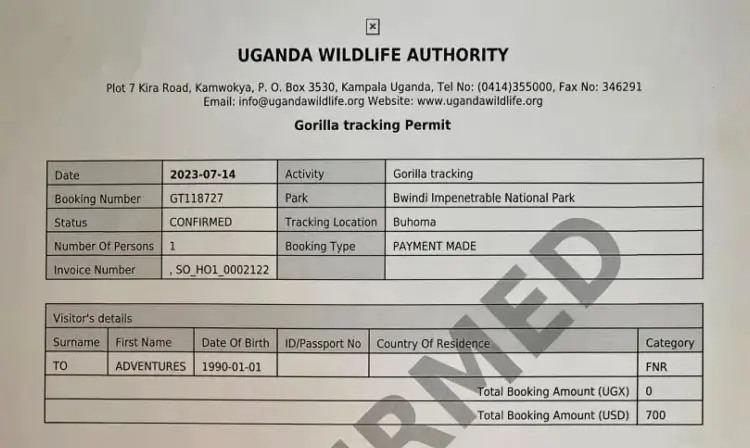
Rwanda has positioned itself as a luxury-only destination, with permits costing $1,500. Uganda maintains a middle ground, currently at $800 for foreign non-residents.
While Uganda is more accessible, the logic remains identical across the border. Both nations recognize that these animals are a finite resource.
A study published by the International Gorilla Conservation Programme highlights that tourism revenue is the single most consistent factor in the steady increase of the mountain gorilla population over the last three decades.
Your permit is not just a fee; it is a dividend paid into a biological savings account.
Is the Investment Worth It

The “real” cost is a reflection of what it takes to keep a wild place wild in the 21st century.
It covers the last-minute gorilla permit logistics, the trackers who wake up at 5:00 AM to locate the nests, and the specialized doctors from organizations like Gorilla Doctors who provide life-saving medical interventions in the bush.
Choosing a 3-day Bwindi gorilla trekking safari is a commitment to a specific type of travel. It is travel that acknowledges its own impact and pays the bill for its own sustainability.
The encounter is brief, but the financial footprint of that hour ensures that the next generation of gorillas—and the next generation of travelers—will have the same opportunity.

Frequently Asked Questions
1. Does the permit price include accommodation?
No, the permit fee paid to the UWA covers the park entry, the rangers, and the trekking experience itself. You will need to budget separately for lodging, transport, and food.
2. Can I get a refund if I don’t see the gorillas?
While sightings are nearly 99% guaranteed due to pre-trackers, the UWA offers a partial refund policy if you fail to see them due to movement or weather, though this is extremely rare.
3. Is gorilla trekking ethical for the animals?
Yes, provided strict protocols are followed. The presence of tourists funds the protection that prevents habitat loss and poaching, which are far greater threats than managed human observation.
4. Why is the price different for habituation?
A 3-day gorilla habituation Bwindi permit is more expensive because it allows four hours with the gorillas instead of one, offering a deeper look at the transition from wild to semi-habituated.
Every journey starts with a single step into the forest.
If you are ready to contribute to this conservation success story, you can plan a safari with us for your upcoming expedition.