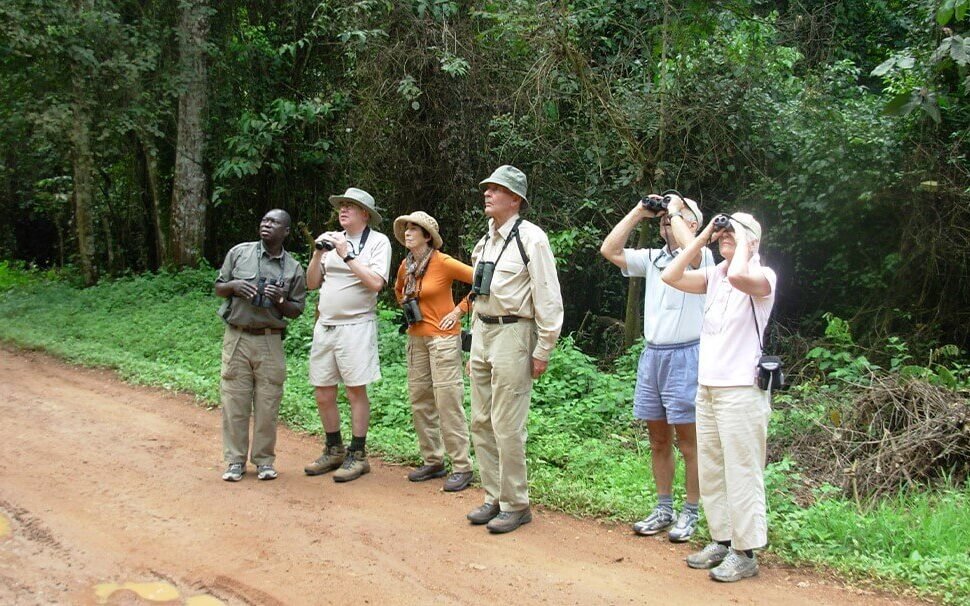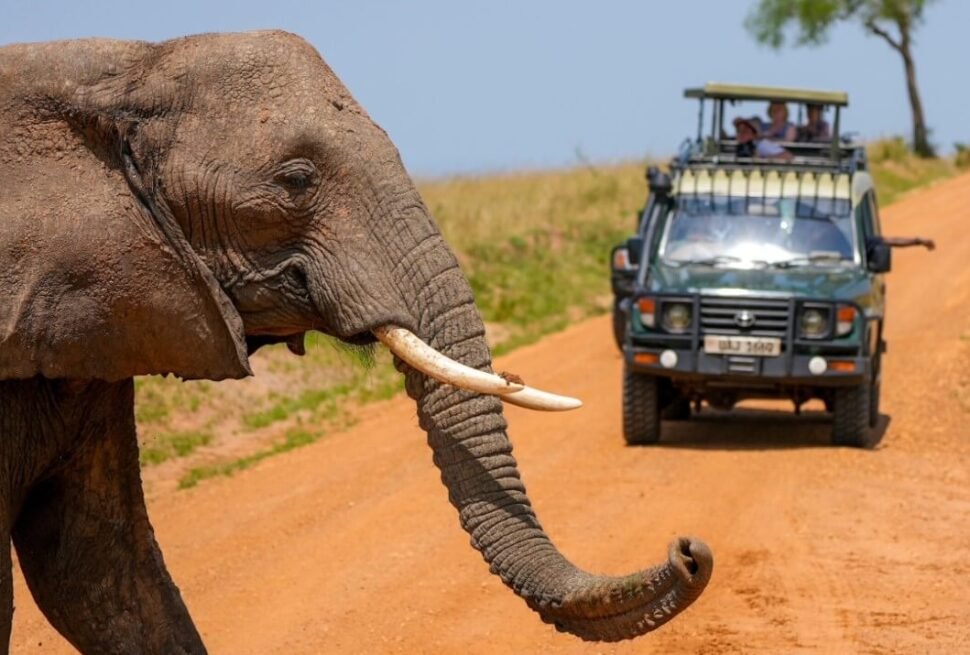

More than 600 bird species live within this park’s boundaries — more than the entire British Isles combined — compressed into a single wildlife corridor straddling the equator.
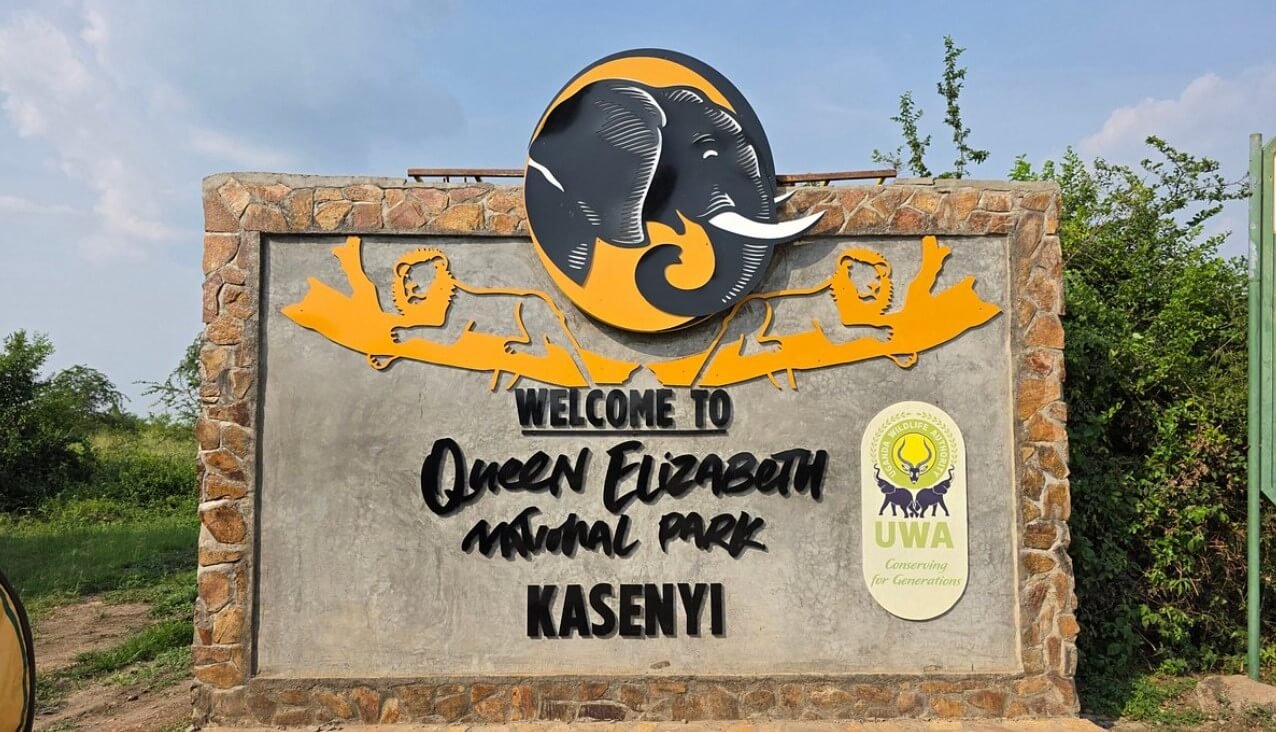
Queen Elizabeth National Park earns its reputation as Uganda’s most celebrated game reserve because no other park on the continent manages to pack this much ecological complexity into one landscape.
Four distinct ecosystems, a channel connecting two of Africa’s great lakes, and a population of lions that have quietly broken most of what we assume about big cat behavior.
There’s a tendency in mainstream travel writing to treat Queen Elizabeth as a convenient add-on to a gorilla trekking trip. That framing undersells it.
The park has its own logic, its own rhythms, and its own capacity to surprise even travelers who’ve spent serious time in East Africa.
Key Takeaways
- Queen Elizabeth National Park covers 1,978 sq km and spans four distinct ecosystems, from open savanna and crater lakes to forest and wetlands
. - The Kazinga Channel boat cruise is arguably the best wildlife encounter in Uganda, offering unusually close views of hippos, elephants, and waterbirds from the water
. - The Ishasha sector in the park’s south holds a rare population of tree-climbing lions found in only one other location on the continent
. - With over 600 recorded bird species, the park ranks among Africa’s top birding sites and contains more than half of Uganda’s total avian diversity
. - Queen Elizabeth pairs geographically and experientially with gorilla trekking in Bwindi, forming the backbone of Uganda’s most compelling multi-destination safari circuit
.
Queen Elizabeth Demands More Than a Day

Most visitors who come to Queen Elizabeth stay two to three nights. Spend that time only on the main Mweya Peninsula circuit, and you’ll see a great deal, but you’ll also miss roughly half of what the park actually offers.
The real breadth becomes visible only when you treat it as a destination in its own right rather than a stopover on the way to something else.
The Mweya Peninsula sits at the heart of the northern sector, giving access to the Kazinga Channel and the main game-drive tracks.
The southern Ishasha sector operates on an entirely different energy, quieter, more forested, and with a wildlife character shaped largely by the fig trees the lions favor. The two areas are separated by roughly three hours of driving through open acacia woodland, and they genuinely feel like separate parks.
For first-time visitors building a Uganda itinerary, the 6-day Uganda safari creates a proper arc through the park without rushing.
If you’re combining wildlife viewing with a primate experience, the 10-day Uganda primate and wildlife safari gives the most complete picture of what Uganda’s western corridor can offer in a single trip.
The Kazinga Channel Boat Cruise

The Kazinga Channel runs roughly 40 km through the heart of the park, connecting Lake George to Lake Edward.
Twice daily, boats leave the Mweya jetty for a two-hour cruise that consistently ranks among the best wildlife experiences in East Africa. The numbers go some way to explaining why.
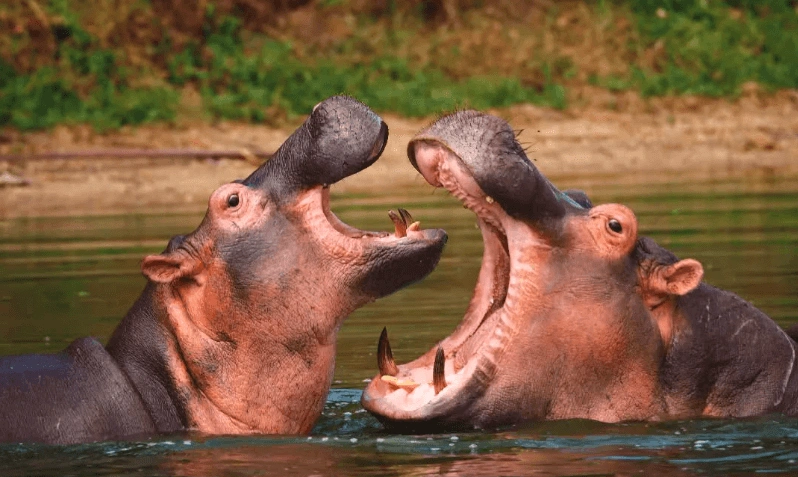
The channel holds one of the highest hippopotamus concentrations in Africa, an estimated 5,000 animals across both lakes and the channel itself.
Buffalo come down to drink in herds that sometimes stretch hundreds of meters along the bank. Elephants wade chest-deep with an unhurried confidence, trunks raised above the waterline. From the boat, you’re watching animals behave exactly as they would without you there.
Game drives put you at the savanna level. The boat cruise puts you at water level with animals that have effectively decided to ignore you. That shift in perspective changes what you see and how you see it.
Birders especially benefit. Malachite kingfishers, African fish eagles, and pink-backed pelicans are almost guaranteed. African skimmers, one of the more sought-after species in Uganda, appear during certain seasons.
The timing of your visit affects wildlife distribution across the park, including along the channel, so seasonal planning matters more here than many itinerary planners acknowledge.
Tree-Climbing Lions and What They Actually Mean

The lions of Ishasha attract a lot of attention and, as a result, a certain amount of skepticism. Are they genuinely unusual? Yes. Is the behavior fully understood? No, and that’s more interesting than the marketing version of the story.
Tree-climbing lions occur with any consistency in only two places: Ishasha and the Lake Manyara region of Tanzania. The Ishasha population favors large fig trees, and to a lesser extent, acacias, particularly in the heat of the afternoon.
Researchers have proposed several explanations: relief from ground-level insects, better sightlines for locating prey, or learned behavior passed down through generations within the pride. None of these explanations is settled.
What’s clear is that the behavior is socially transmitted rather than instinctive, which means watching it is watching culture as much as biology.
The Ishasha sector receives far fewer visitors than the northern Mweya area, and that works in your favor. Encounters here tend to feel genuinely unscripted.
The 8-day Uganda wildlife safari includes dedicated time in Ishasha, which is the right approach. Rushing through on a half-day circuit rarely delivers, and the lions don’t perform on schedule.
It’s worth saying plainly: lions in Uganda are under pressure. Retaliatory killings outside park boundaries happen when livestock is lost, and the Ishasha population isn’t large. Encounters are real but not guaranteed. That uncertainty is part of what makes them worth traveling for.
Birdwatching at Scale

Uganda holds somewhere between 1,060 and 1,080 recorded bird species, depending on the current checklist.
Queen Elizabeth National Park accounts for more than 600 of those, meaning a single park contains over half the country’s avian diversity.
The reason is the habitat mosaic: savanna birds, wetland specialists, forest-edge species, and afromontane birds from the Maramagambo Forest all converge here.
A focused two-day birding effort in the right areas can realistically produce over 200 species without extraordinary luck.
Shoebills, among the most sought-after birds in Africa, are occasionally sighted in the wetlands near Katwe and along the channel margins. Daily sightings aren’t guaranteed, but the habitat is right, and the possibility alone draws serious listers from around the world.
The Maramagambo Forest adds a separate layer entirely, with multiple hornbill species, African crowned eagles, and the elusive African grey parrot, none of which appear on the standard savanna circuit.
For birders building a Uganda itinerary, the 5-day Uganda primates safari can be structured to include birding-specific stops across both the park and the forest sectors.
The Combination That Makes Sense

Geographically, Queen Elizabeth and Bwindi Impenetrable National Park sit within a few hours of each other along Uganda’s western edge. This proximity is the backbone of Uganda’s most popular safari circuit.
The contrast between open savanna wildlife viewing and a close encounter with mountain gorillas in dense montane forest is sharp enough that the two experiences never feel repetitive.
Most travelers who combine gorilla trekking with a wildlife safari move between the two parks over five to ten days, sometimes adding a rest day at Lake Bunyonyi between intense encounters.
For travelers with more time, the 10-day primate and wildlife safari builds out the full western Uganda arc in a way that feels complete rather than rushed.
If gorillas are part of your planning, it’s worth reading through how Bwindi’s four sectors differ before committing to a routing.
Some sectors sit closer to Queen Elizabeth; others require longer drives. The logistics shape the experience more than most pre-trip reading acknowledges.
What Mainstream Travel Writing Tends to Skip
Queen Elizabeth National Park is routinely packaged around three selling points: lions, elephants, and a boat cruise. That picture is accurate but incomplete.
The park shares a boundary with the Democratic Republic of Congo across Lake Edward. Cross-border dynamics affect everything from poaching pressure to security assessments in the southern sector.
Oil is also part of the story: licensed exploration blocks exist near the park’s boundaries, and conservationists have raised sustained concerns about what extraction could mean for the watershed, the Kazinga Channel, and the wildlife corridor that extends into DRC.
This doesn’t deter a visit. However, travelers who approach protected areas as passive entertainment tend to miss the stakes that make conservation meaningful.
The Uganda Wildlife Authority and organizations like WWF Uganda publish regular updates on these pressures. Reading them before you arrive changes how you experience what you see.
When you choose a responsible operator for your Queen Elizabeth safari, you’re also deciding where your fees go.
Lodges with transparent community revenue-sharing arrangements exist in this corridor. The difference between those and purely commercial operations is real.
Practical Planning

1. Getting There
Mweya Peninsula sits roughly 420 km from Kampala. The drive takes five to six hours via Fort Portal or slightly longer via Masaka, depending on your starting point. Charter flights to Kasese airstrip or directly to Mweya are available for travelers with tighter schedules.
If you’re arriving from Kigali and pairing the park with gorilla trekking, the route runs through Uganda’s southwestern corridor. Understanding how to get into Uganda and which visa arrangements apply to your nationality early in the planning process prevents complications later.
2. When to Visit
The park operates year-round, and major wildlife is visible in every season. The drier months of June through August and December through February produce firmer tracks and better concentrations of animals near water.
Wet seasons bring lush vegetation and excellent birding, with migratory species substantially augmenting the resident population.
For most visitors, pairing Queen Elizabeth with Bwindi, June through August, offers the cleanest balance across both destinations.
3. Safety
Uganda receives strong marks from travelers who visit, and the park itself is well-managed.
That said, the safety picture in Uganda is more layered than either alarming headlines or breezy reassurances suggest. The southern sector’s proximity to the DRC border carries some geographic complexity.
Getting a current, ground-level security briefing from your operator before arrival matters more than reading generalized travel advisories in isolation.
4. Cost and Budgeting
Park entry fees are set by the Uganda Wildlife Authority at $50 per person per day for non-resident adults at the time of writing.
Accommodation runs from budget banda options to mid-range lodges and high-end properties with channel views. Boat cruise and game drive fees are charged separately.
If gorilla permits are part of your trip, the full cost breakdown for Uganda gorilla trekking is worth reviewing alongside your lodge quotes. Safari costs in Uganda are generally lower than comparable Rwanda circuits, a point the Uganda versus Rwanda comparison covers in useful detail.
Frequently Asked Questions

1. What animals will I see at Queen Elizabeth National Park?
The park holds African elephants, lions, leopards, African buffalo, hippos, Uganda kob, topi, warthogs, and over 600 bird species.
Chimpanzees live in Kyambura Gorge and the Maramagambo Forest. Tree-climbing lions are specific to the Ishasha sector, and sightings depend on time of day and which game drive areas are covered.
2. How long should I spend at Queen Elizabeth?
Two nights is the practical minimum to fit in the Kazinga Channel cruise and at least one full game drive. Three to four nights allow you to include Ishasha and give meaningful time for birding.
The 4-day Uganda safari is the most compact itinerary that does genuine justice to the park without feeling rushed.
3. Can I combine Queen Elizabeth with gorilla trekking in Bwindi?
Yes, and the two parks are frequently visited together. Bwindi is roughly two to four hours from the Ishasha sector, depending on road conditions.
The gorilla trekking and safari combination guide covers routing, timing, and logistics in detail.
4. Is Queen Elizabeth National Park safe to visit?
For the vast majority of visitors, yes. The park is well-managed and receives thousands of international travelers each year.
The broader Uganda safety context is worth reading, and getting an up-to-date briefing from your operator before arrival is always sensible.
5. What’s the best way to book a Queen Elizabeth safari?
Working with a licensed Ugandan operator with established lodge relationships and current park knowledge gives you the most reliable experience.
You can review itinerary options and start building your safari here, or reach out to our team directly to discuss a custom routing.
Queen Elizabeth National Park rewards travelers who arrive with genuine curiosity. The wildlife is real, the scale is impressive, and the ecological and political complexity give the place a texture that most game reserves don’t have.
Whether you’re planning a standalone wildlife circuit or building the full western Uganda route with gorilla trekking, it belongs near the center of the itinerary.
Start planning your safari or, if mountain gorillas are part of your trip, secure your gorilla permit before finalizing your dates.